









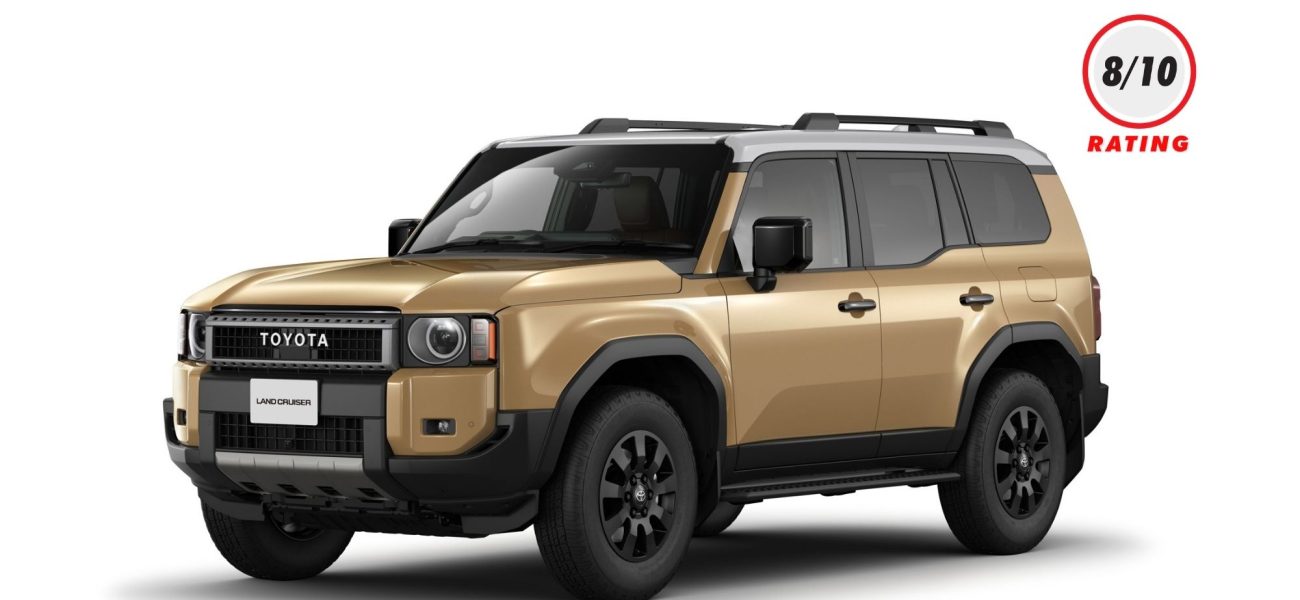
Toyota Land Cruiser Prado Review
CarNews KE explores why the Land Cruiser Prado has been Kenya's main serious SUV for three decades, covering five generations from J90 to J250, and what buyers should consider before purchasing one.

CN Quick Verdict
Overall Rating: 8/10
- Best For: Buyers who need one vehicle for city driving, upcountry travel and genuine off-road use, and who prioritise resale value and parts support
- Starting Price (Kenya, used): From approx. KSh 1.6 million (J120, petrol, 2005-2008)
- Starting Price (Kenya, new): From approx. KSh 16.1 million (J250 GX diesel, CFAO Mobility Kenya)
- Engine Featured: 2.8-litre 1GD-FTV turbodiesel and 2.7-litre 2TR-FE petrol (current J250), plus notes on 3.0L/3.4L J120 and 2.7L/3.0L/2.8L J150 engines
- Transmission: 8-speed automatic (J250) | 5- or 6-speed automatic (J150) | 4-speed automatic (J120), full-time or part-time 4WD across generations
- Real-World Fuel Economy: 11-13 km/L (2.8L diesel, J250); 7-9 km/L (2.7L petrol, city driving); 8-11 km/L across older J120/J150 petrol units, based on owner and dealer-reported figures
- Main Competitors: Nissan Patrol, Mitsubishi Pajero / Pajero Sport, Isuzu MU-X, Land Rover Defender
CN Quick Facts
| What We Like | Things to Consider |
|---|---|
| ✔ Proven off-road hardware across every generation | ✘ Body-on-frame ride is firmer than unibody rivals |
| ✔ Strong low-range 4WD and locking-differential capability | ✘ New J250 pricing has climbed sharply |
| ✔ Diesel engines with genuine towing and load-carrying ability | ✘ Third-row space and boot are tight on pre-J250 generations |
| ✔ Deep, affordable parts network shared with the Hilux | ✘ Safety technology varies significantly by generation and trim |
| ✔ Best-in-class resale value in Kenya’s used market | ✘ Fuel economy trails smaller crossovers |
| ✔ Wide range of generations and price points to choose from | ✘ Higher J250 grades reach Kenya mainly via import, not official dealers |
| ✔ Seven-seater with the third row folding flat |
What's in this Article
What Is the Toyota Land Cruiser Prado?
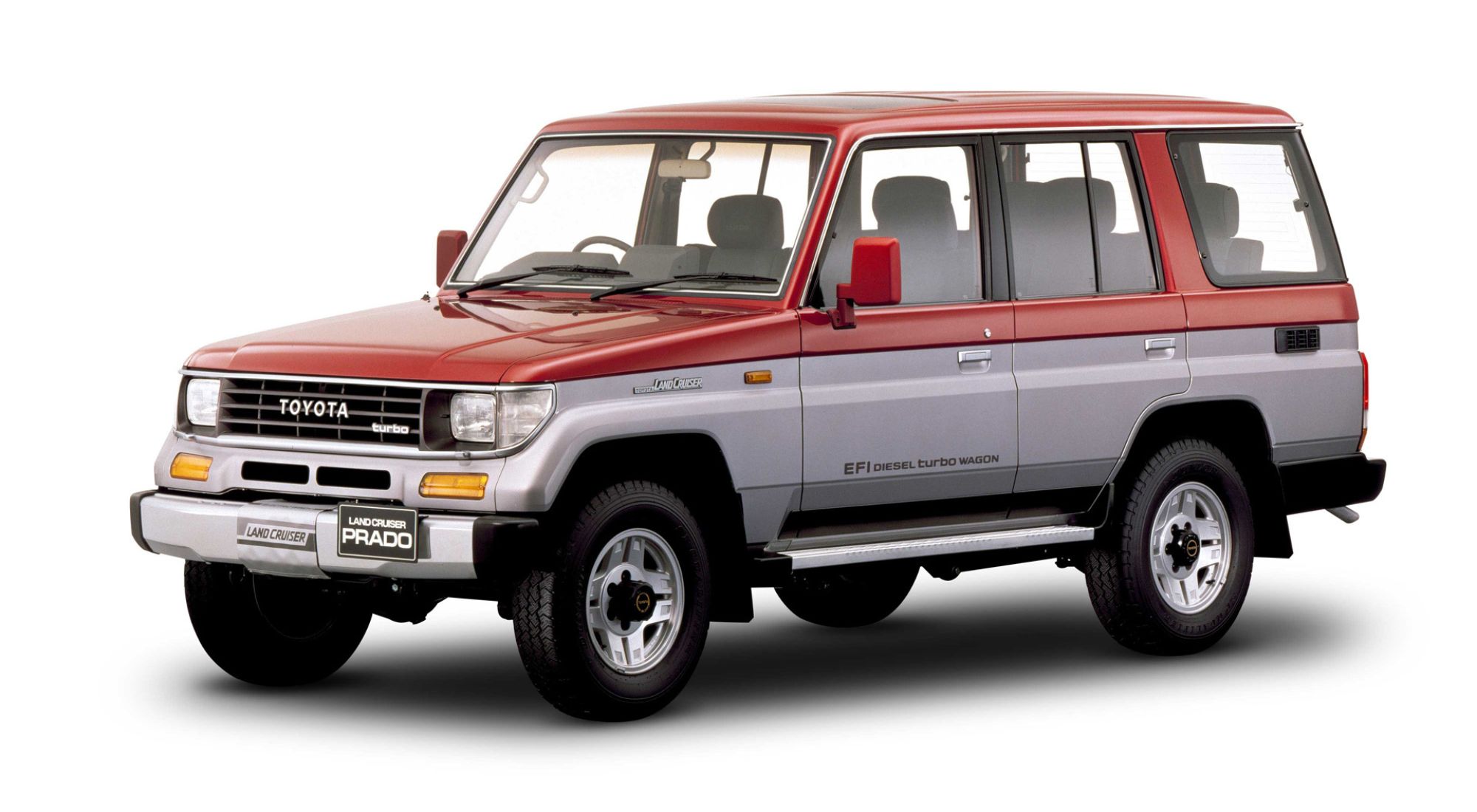
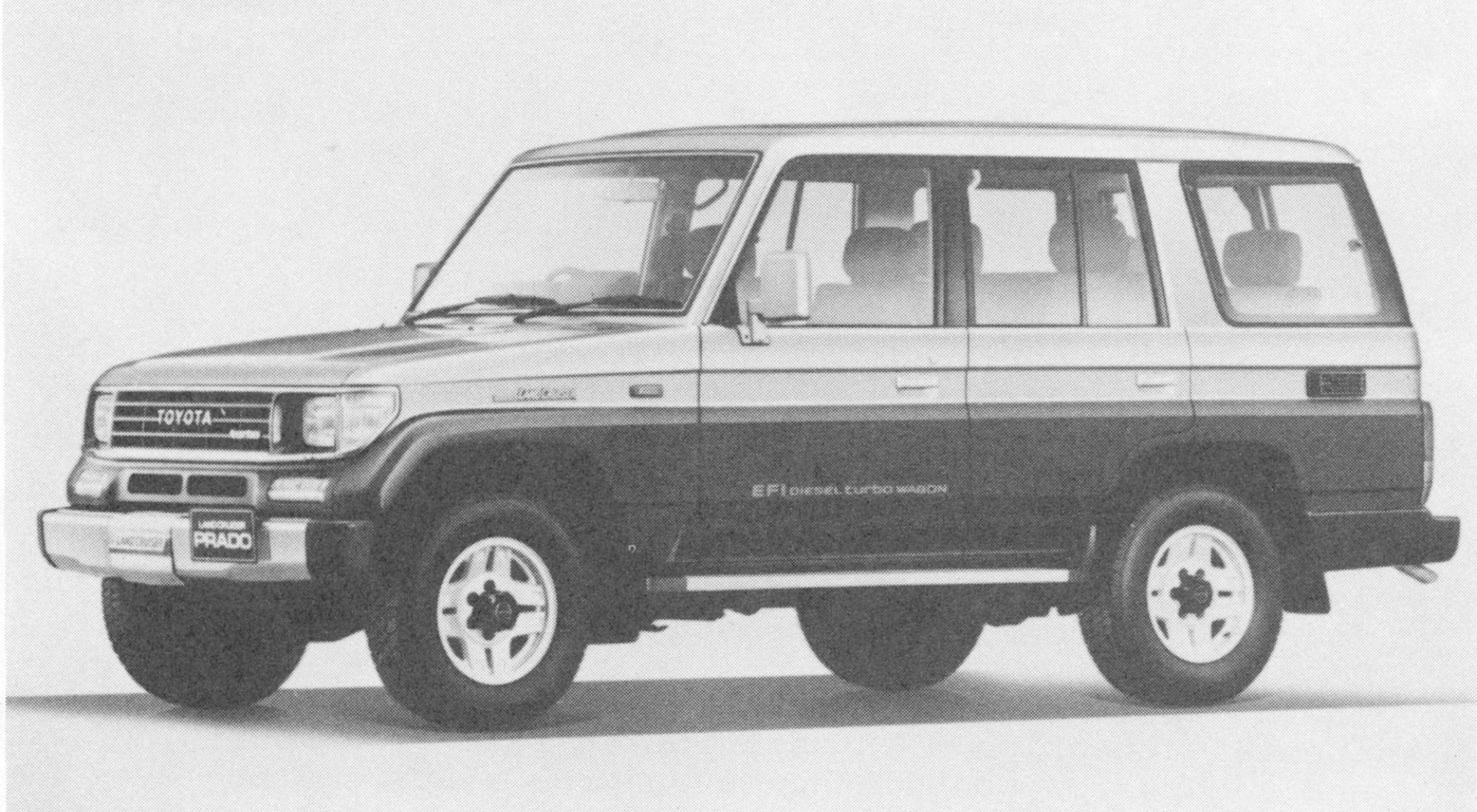
The Toyota Land Cruiser Prado is a mid-size, body-on-frame SUV that Toyota split off the rugged 70-series Land Cruiser in 1990 to create something shorter, lighter and easier to live with day to day. It kept the low-range transfer case and ladder-frame toughness that make the full-size Land Cruiser famous, while trimming the size and cost enough to become a genuine family and fleet vehicle. In Kenya, it has been sold continuously since the 1990s and remains the default choice for buyers who need one SUV capable of both the Nairobi CBD and a rutted upcountry road.
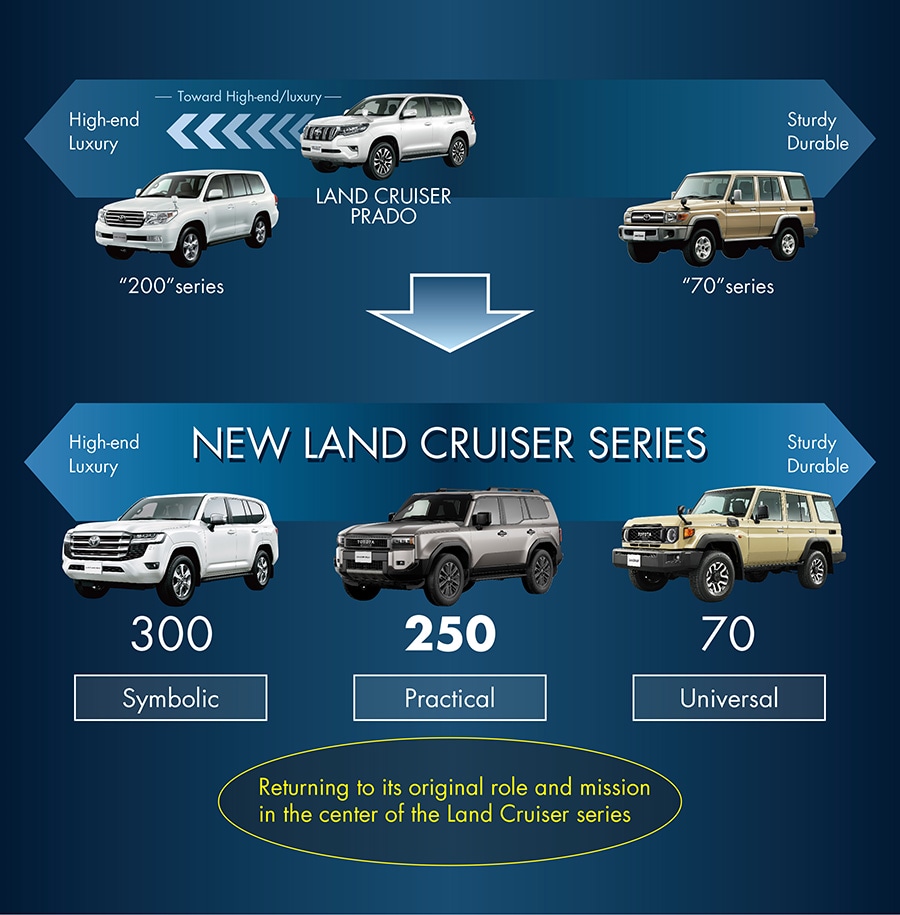
Outside Japan and Africa, the Prado has worn other badges: as the Lexus GX470 and GX460 in the United States during the J120 and J150 eras, and simply as the “Land Cruiser” for the current J250 in North America. In Kenya and most of the world, it has always been, and remains, the Prado. The “Prado” name derives from the Portuguese word for “meadow” or “field.”
The current, second-generation Axio rides on Toyota’s E160 platform, introduced in May 2012. It brought a smaller footprint than its predecessor but more rear knee room, along with a shift to 1.3-litre and 1.5-litre engines that improved both performance and fuel economy. A 1.8-litre option and, from August 2013, a petrol-hybrid variant using Toyota’s Hybrid Synergy Drive system rounded out the range.
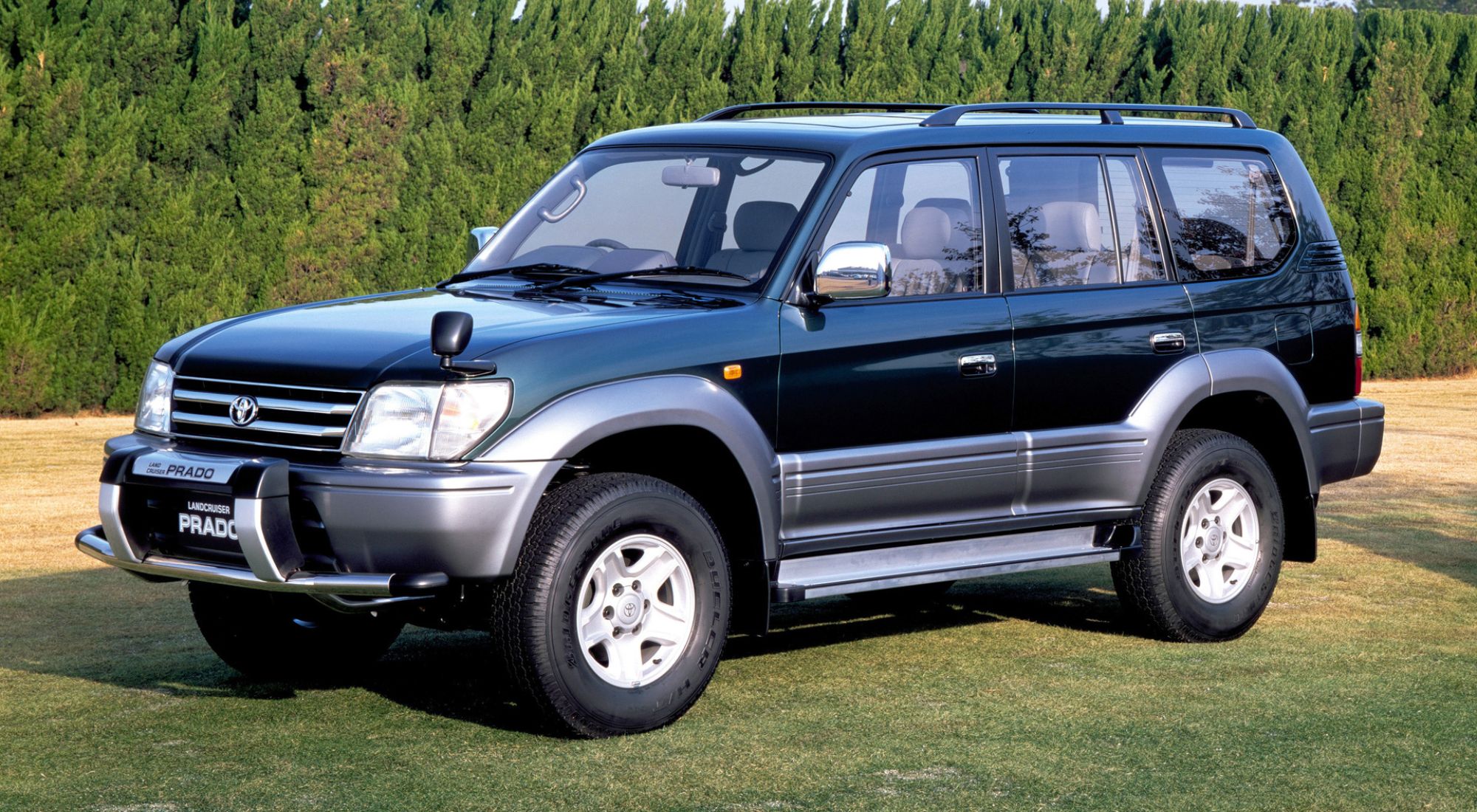
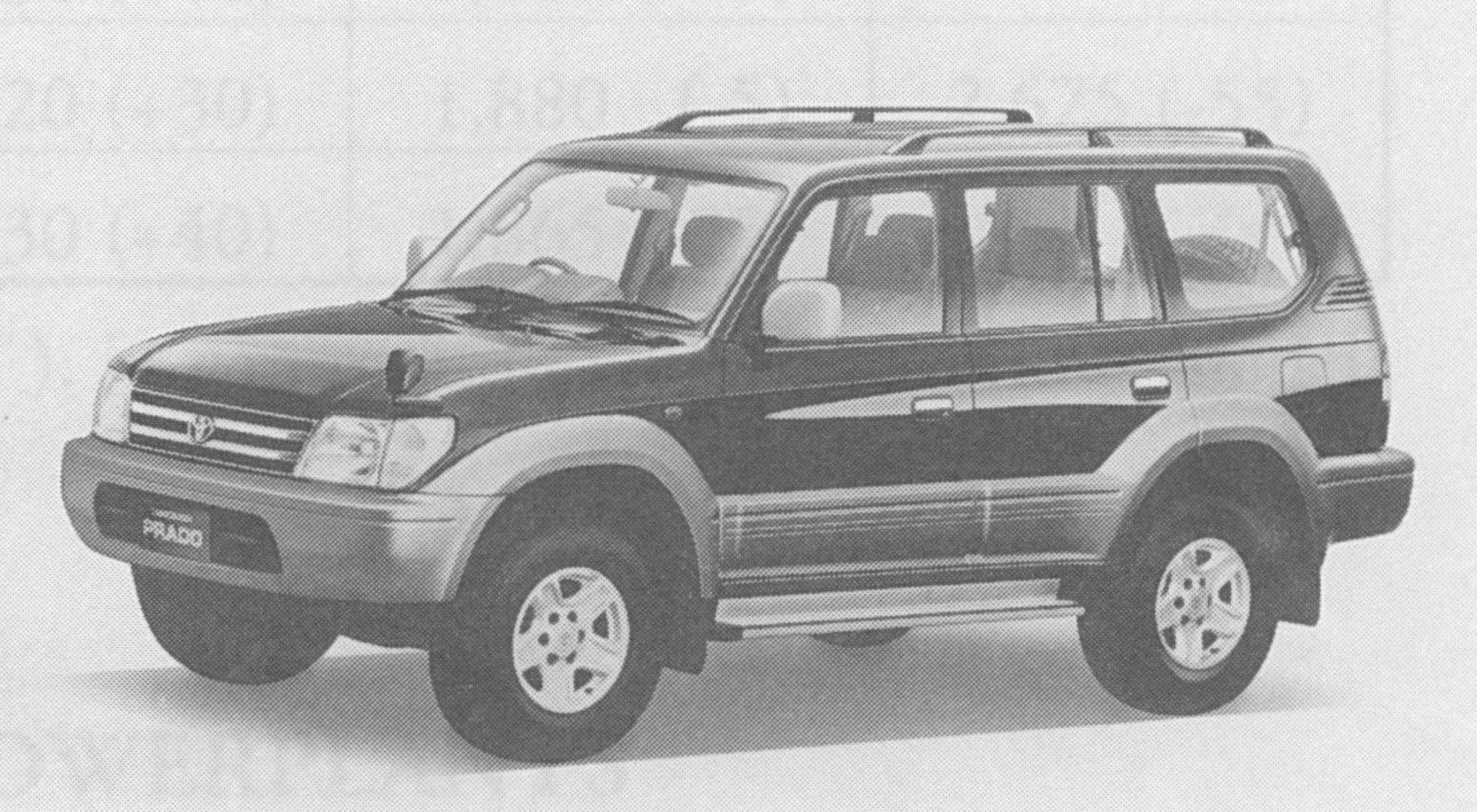
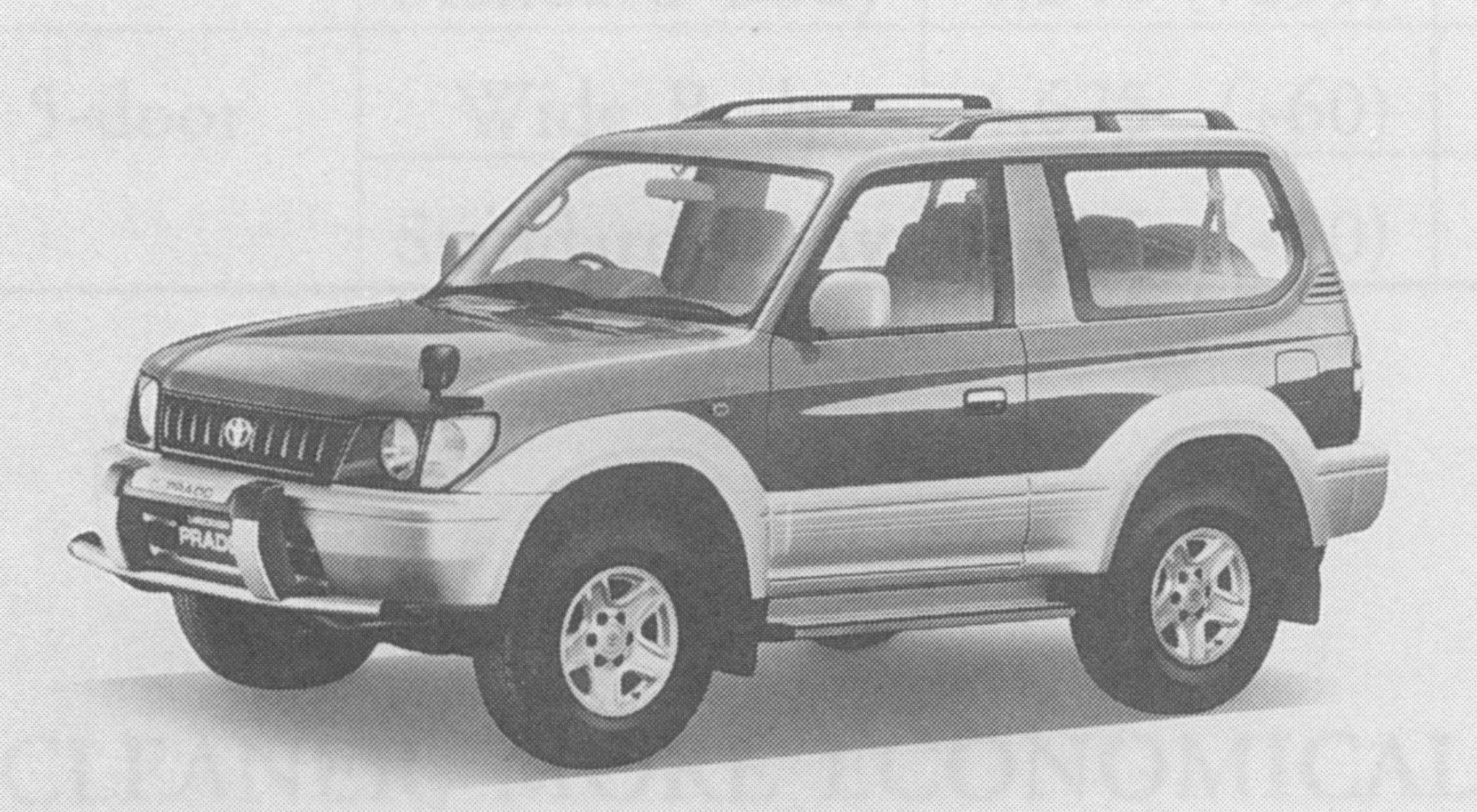
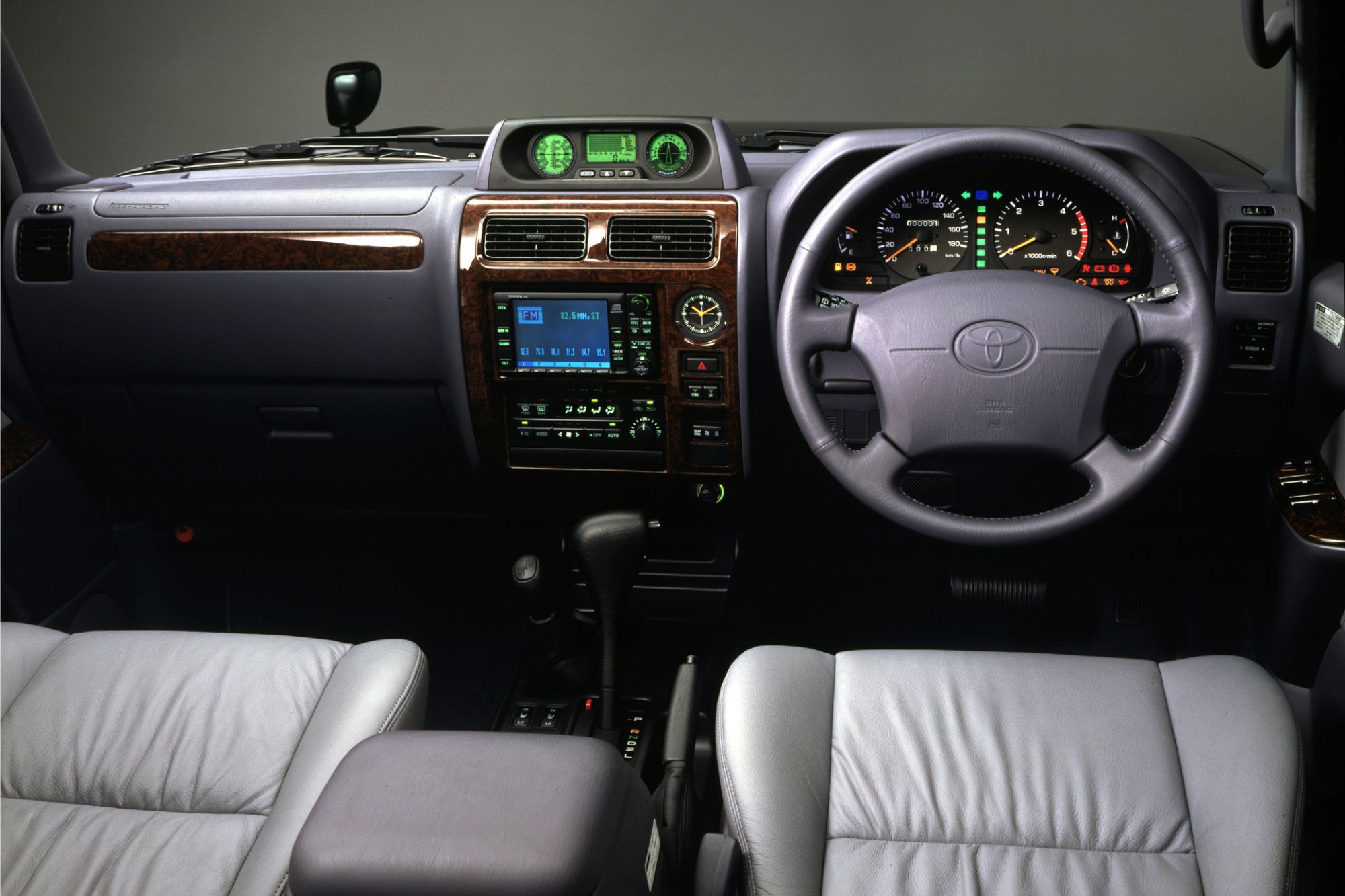
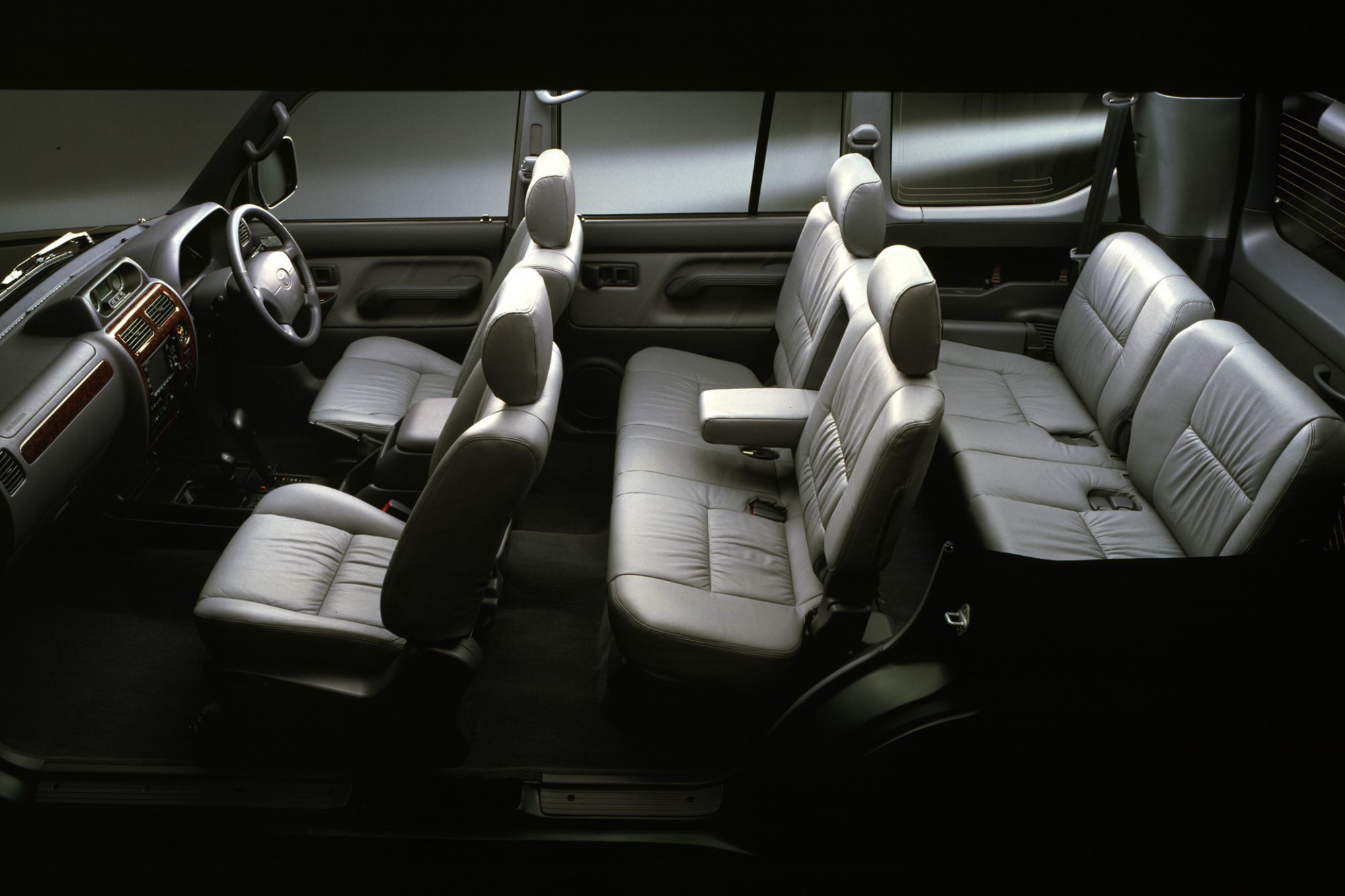
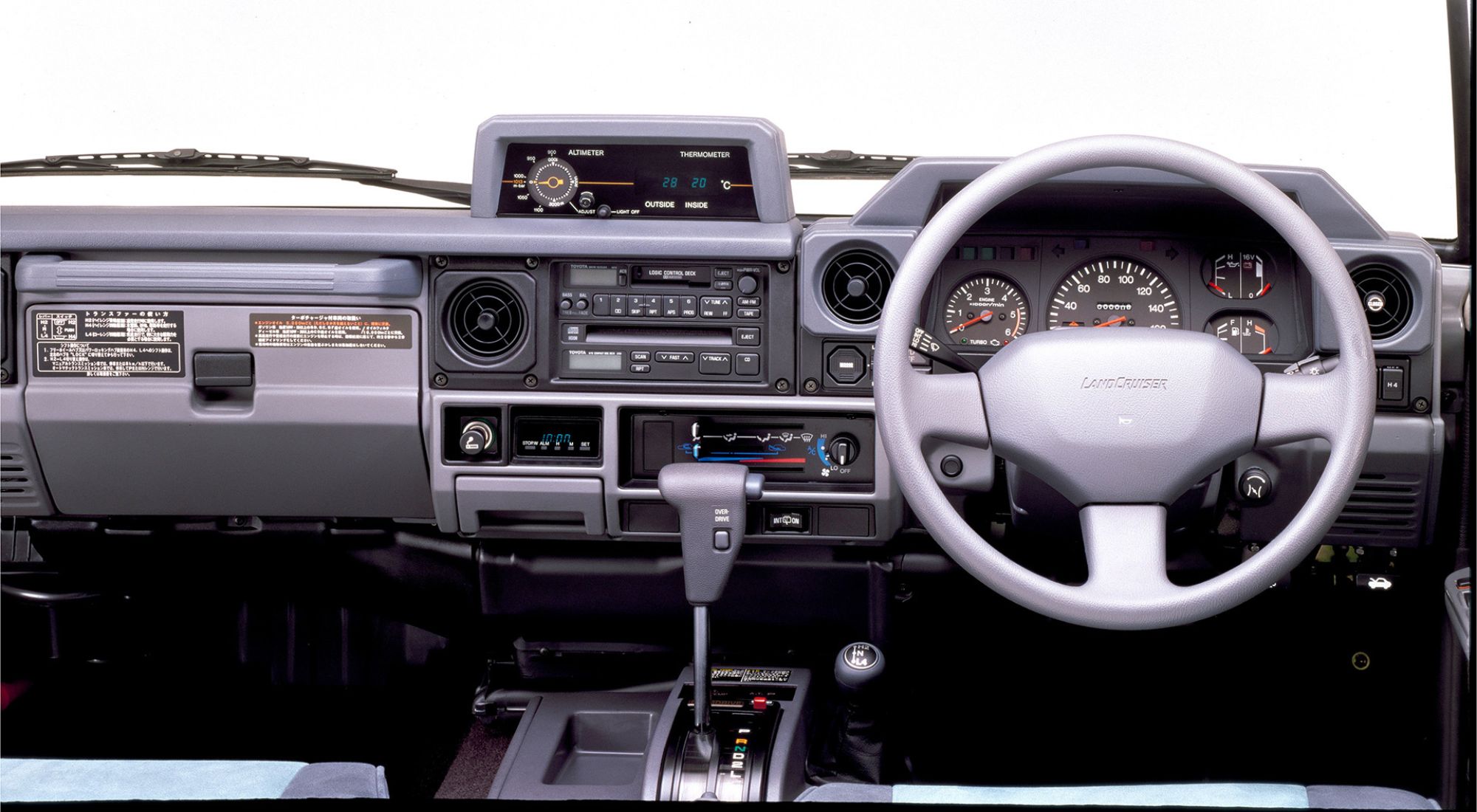
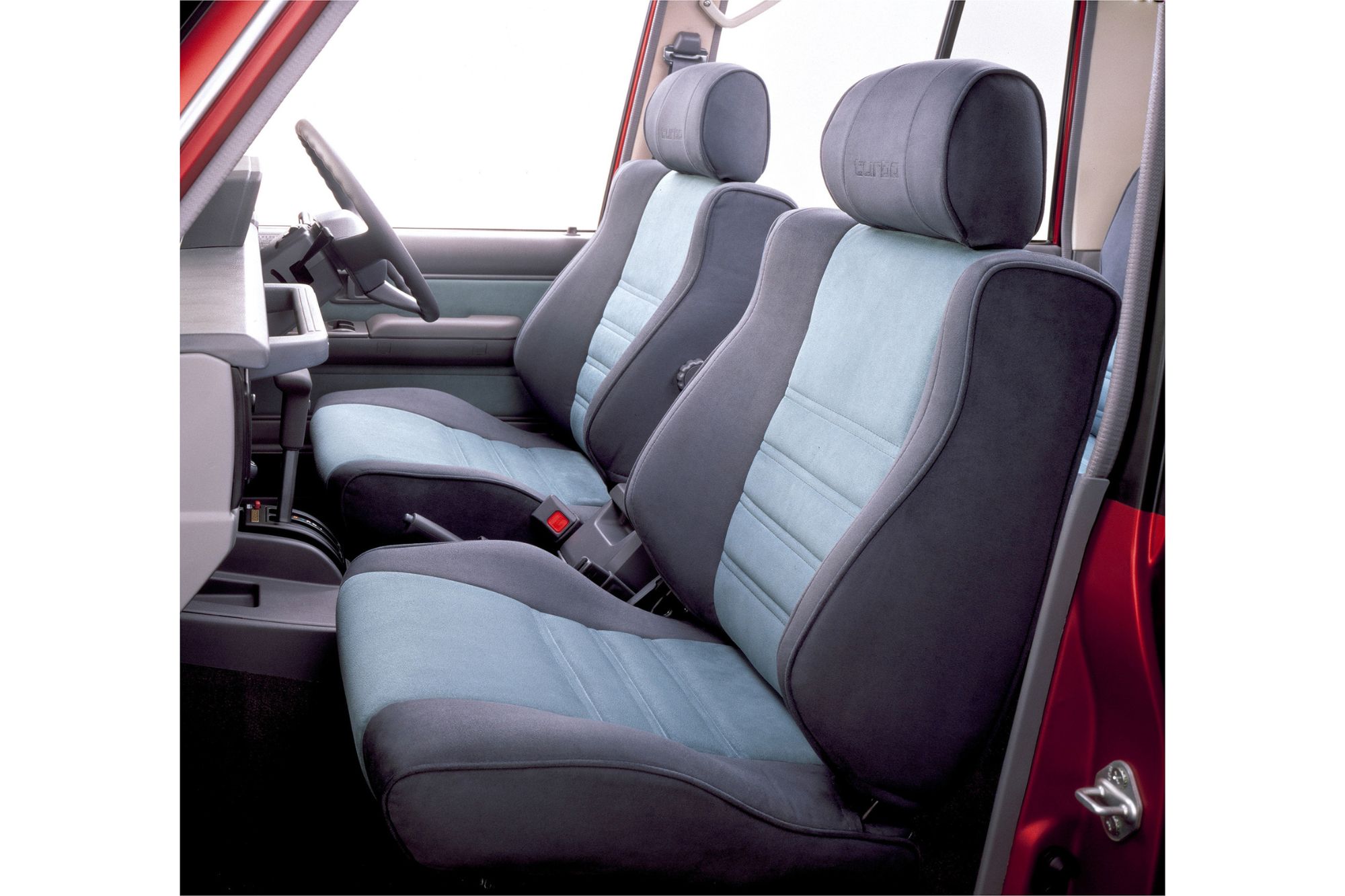
The J120 (2002-2009) is the generation that made the Prado a continental standard across East Africa. It is mechanically straightforward; mechanics from Nairobi to Kampala know it inside out, and parts are everywhere, which keeps it a popular budget entry point on Kenya’s used market today.
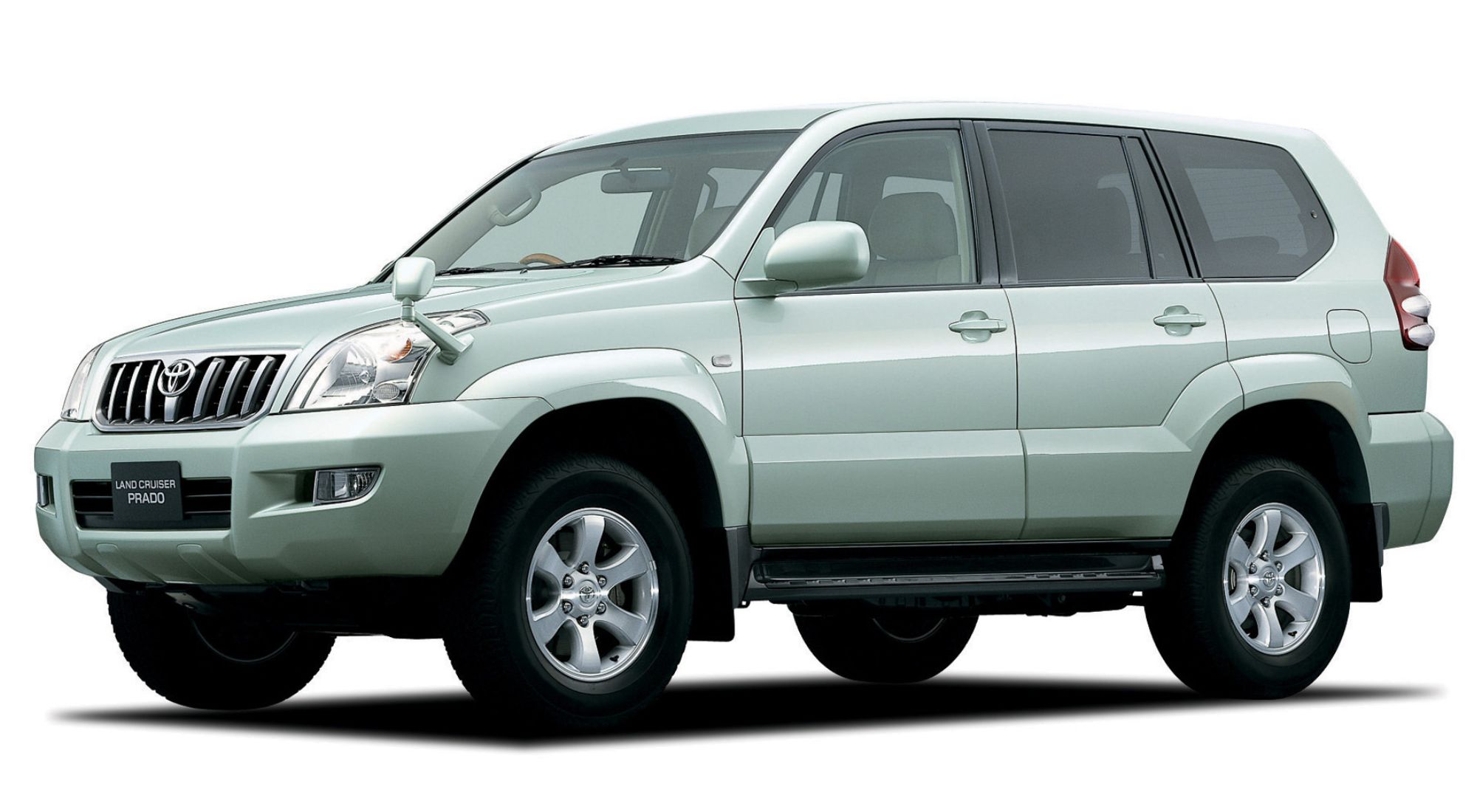
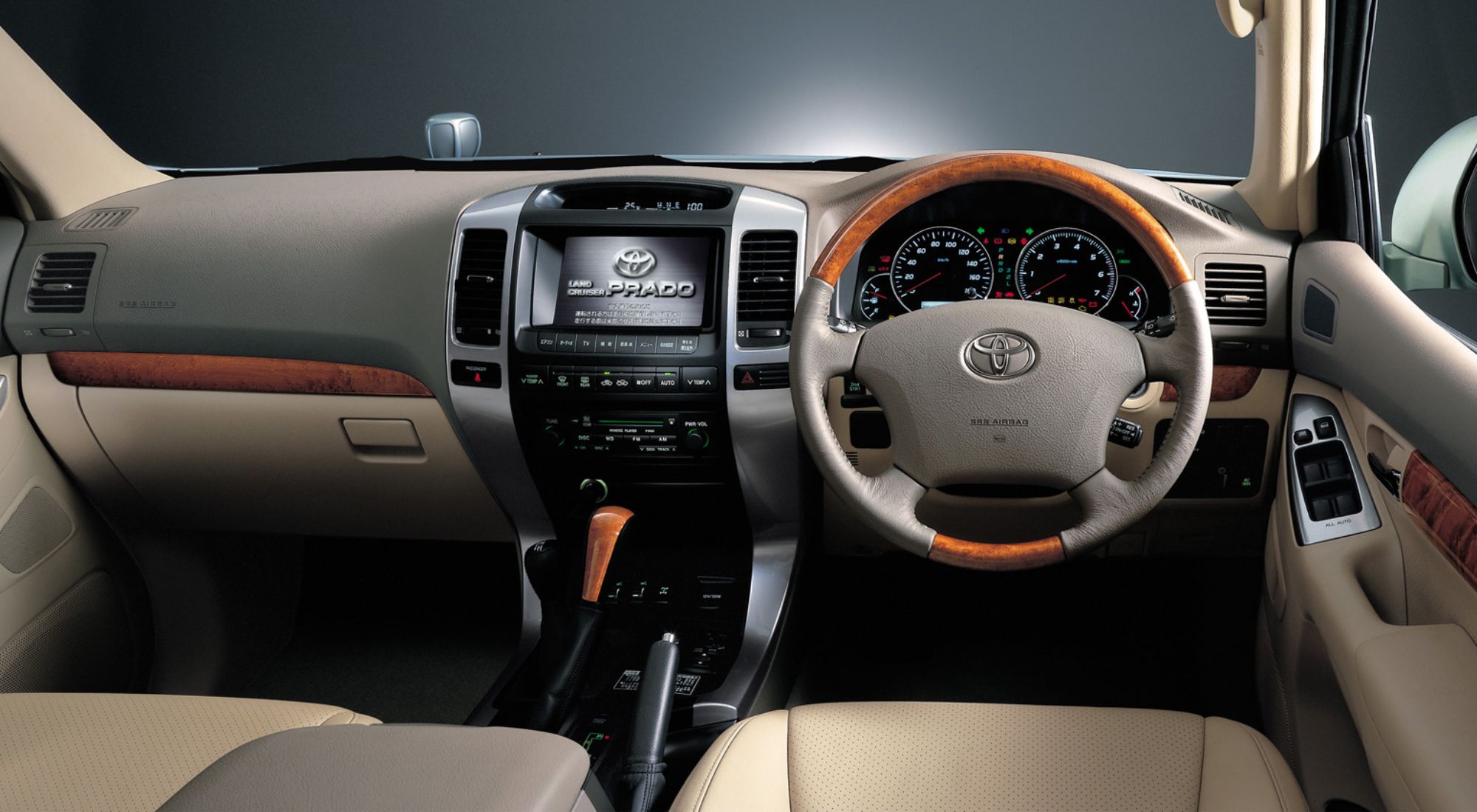
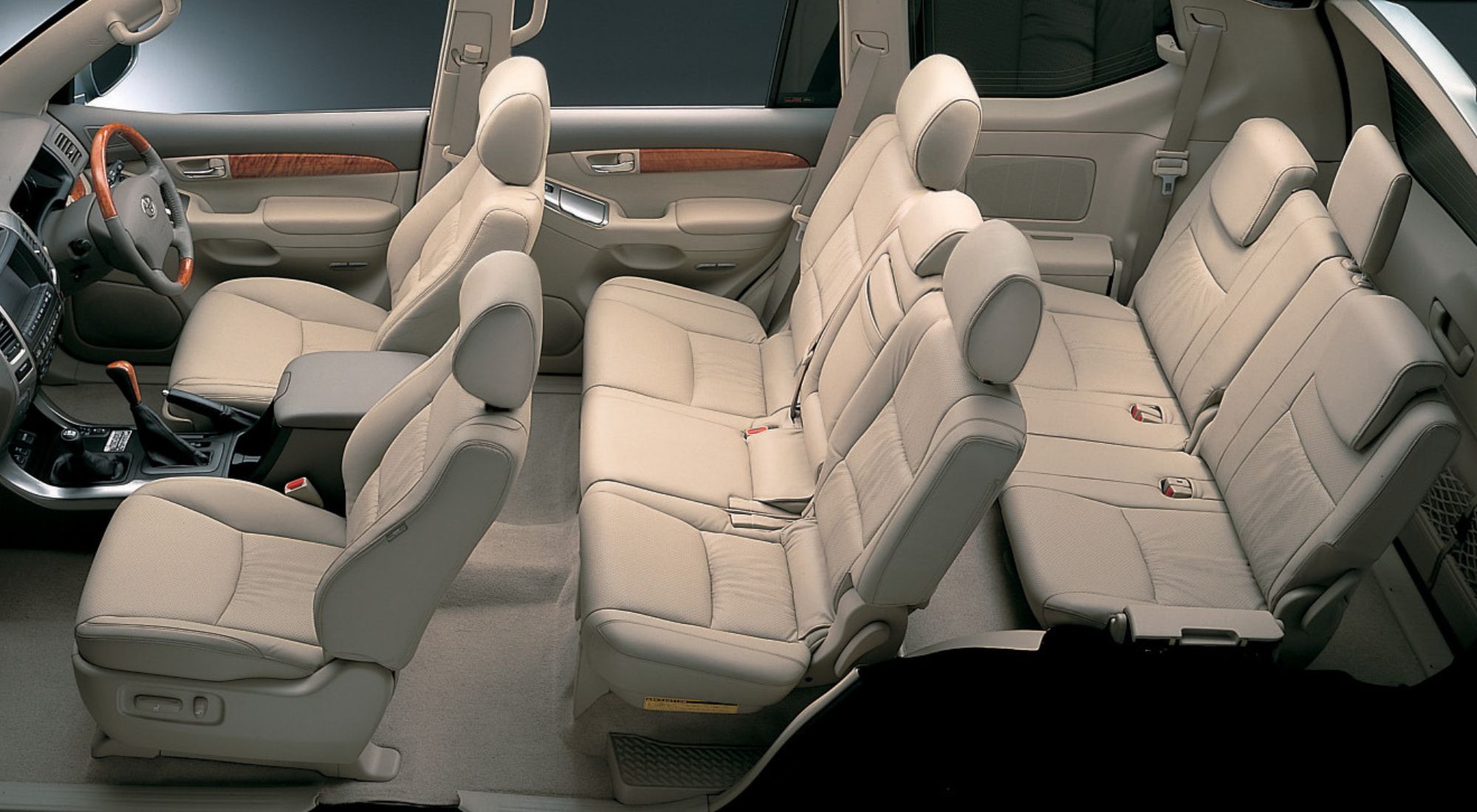
The J150 ran for an unusually long fourteen years (2009-2024), refreshed in 2013 and again in 2017-18. From 2015, the Japanese-market lineup gained the 2.8-litre 1GD-FTV turbodiesel alongside the older 3.0-litre unit, and the 2017 update brought a sharper front end, LED lighting on higher grades, and the TX-L and TZ-G trims familiar to Kenyan buyers today.
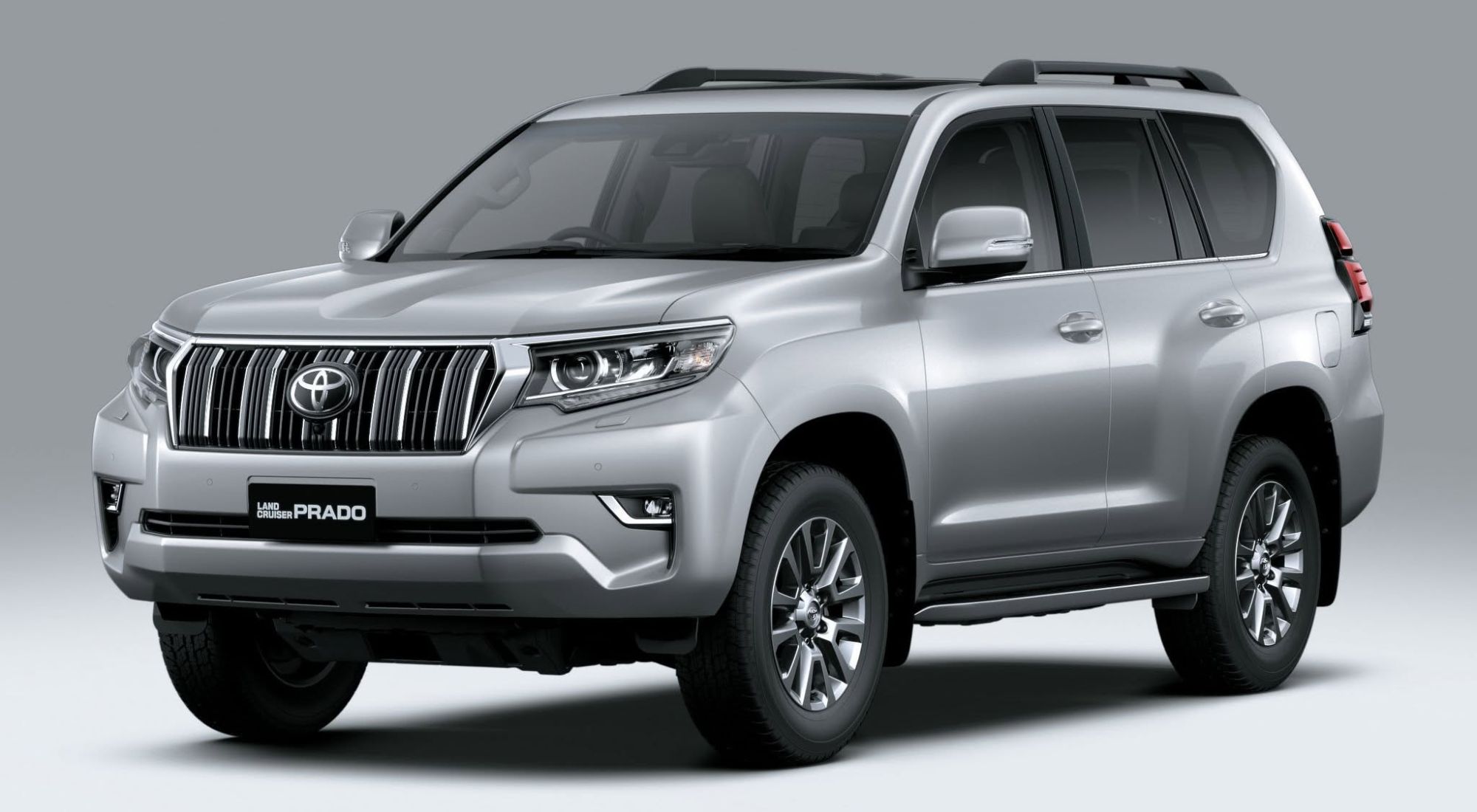 2021 Toyota Land Cruiser J150 Prado – 4th Generation
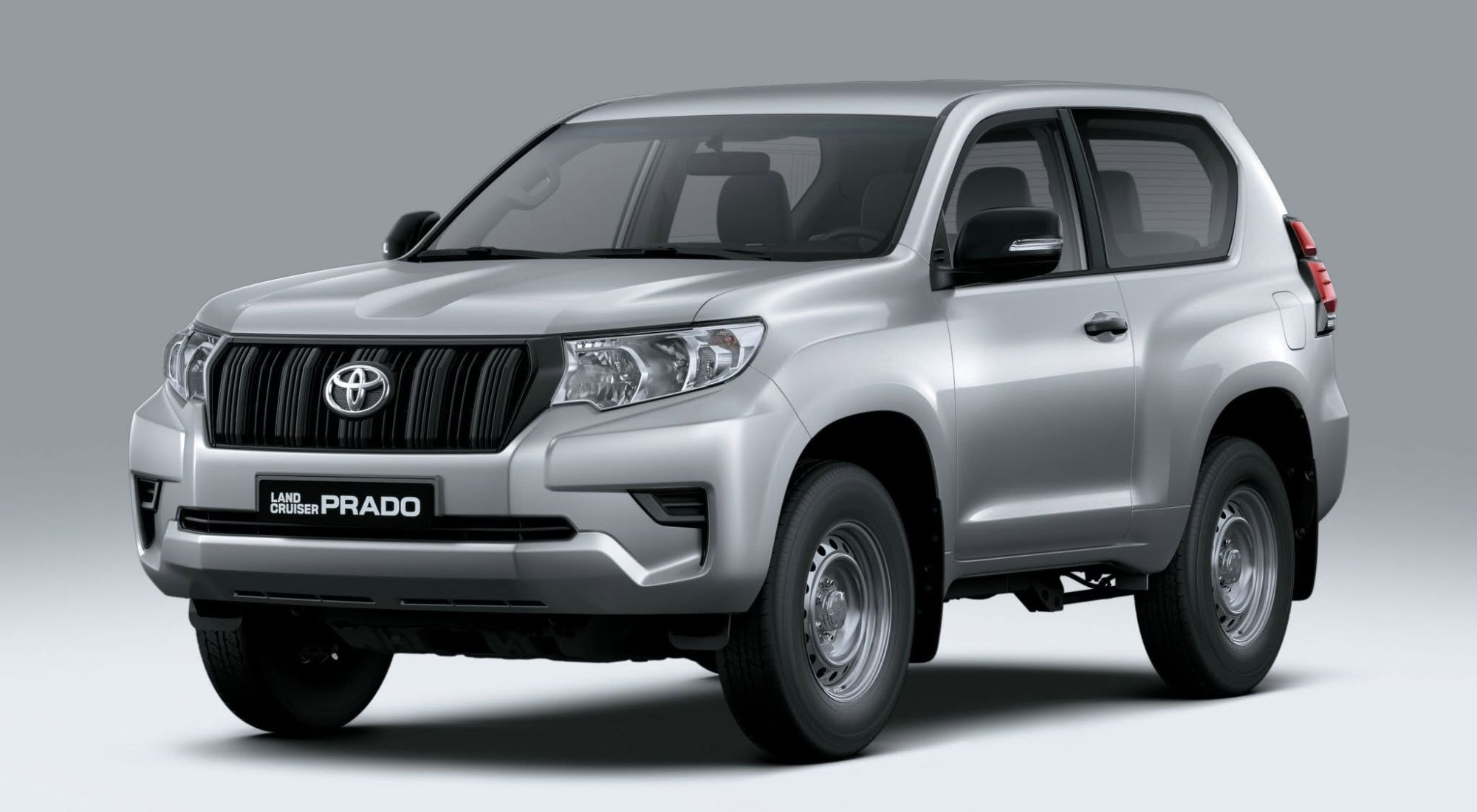 2021 Toyota Land Cruiser J150 Prado – 4th Generation
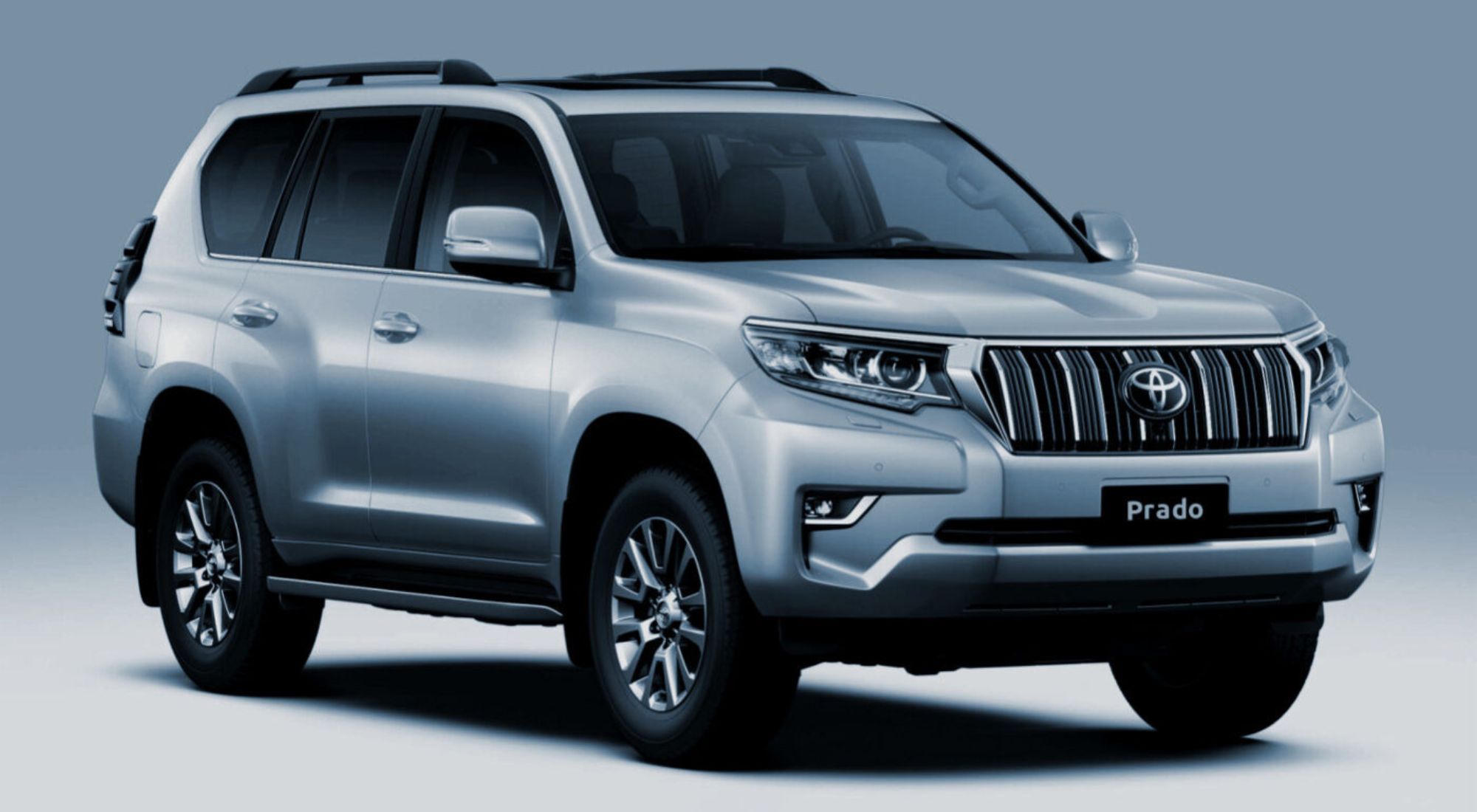 2021 Toyota Land Cruiser J150 Prado – 4th Generation
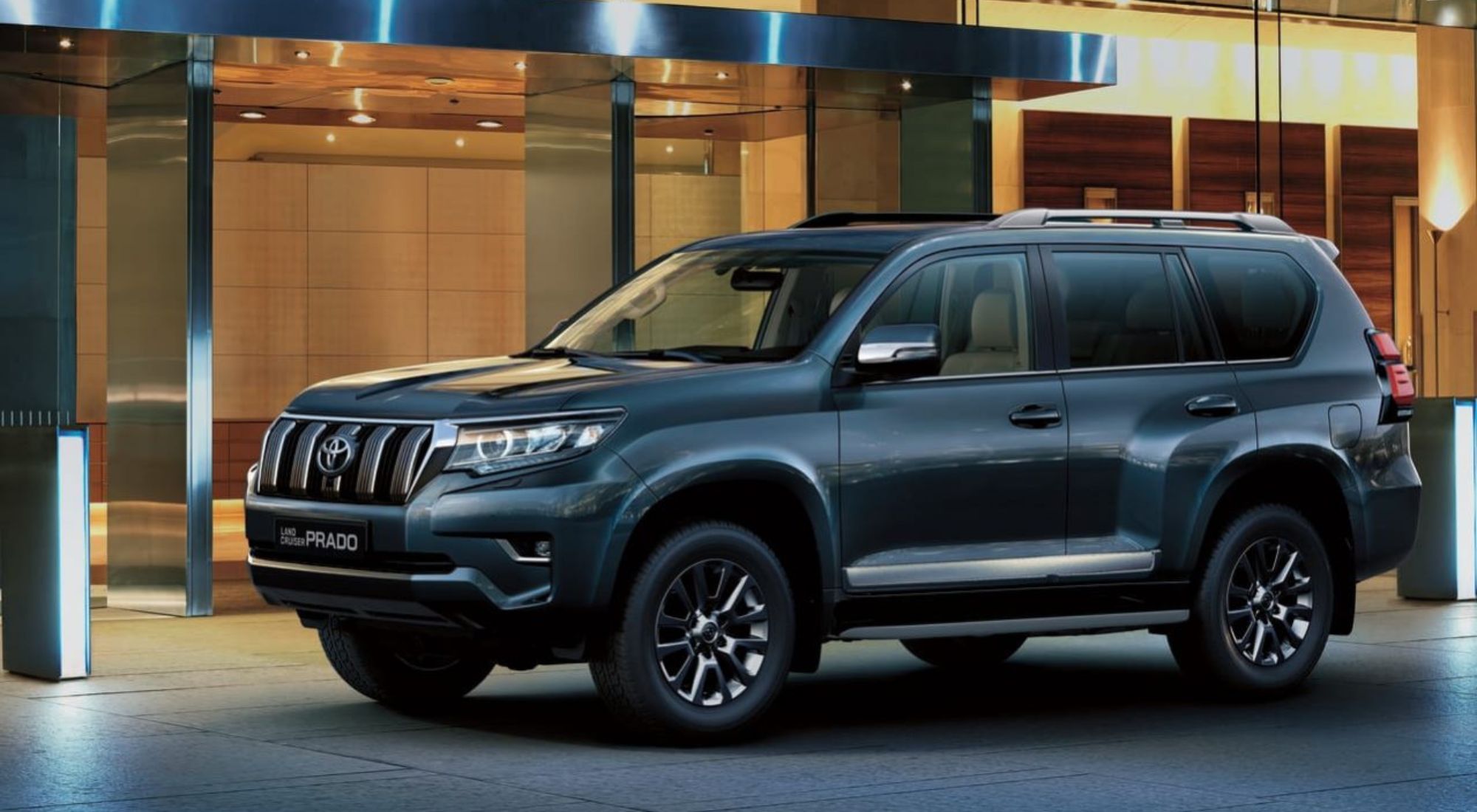 2021 Toyota Land Cruiser J150 Prado – 4th Generation
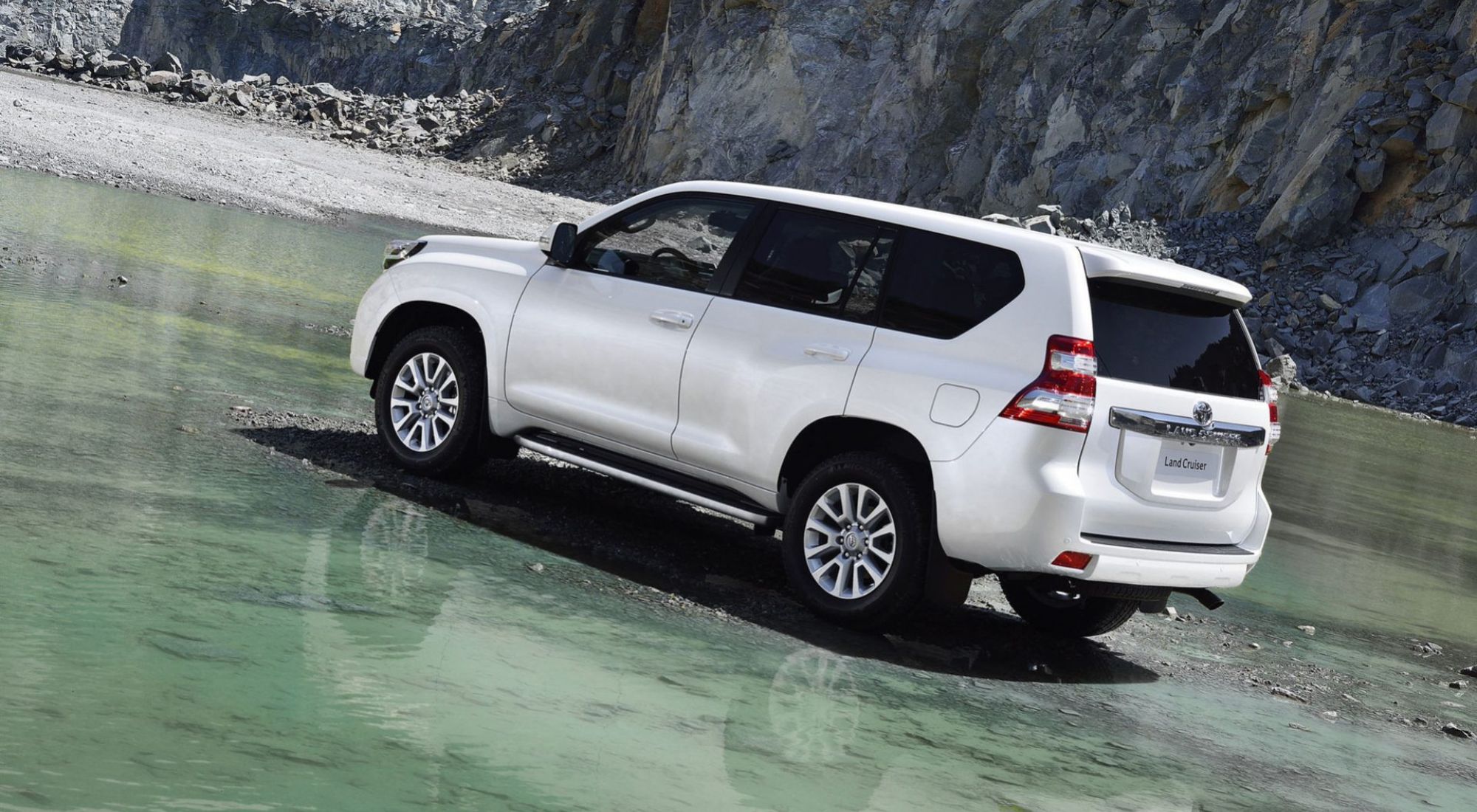 2021 Toyota Land Cruiser J150 Prado – 4th Generation
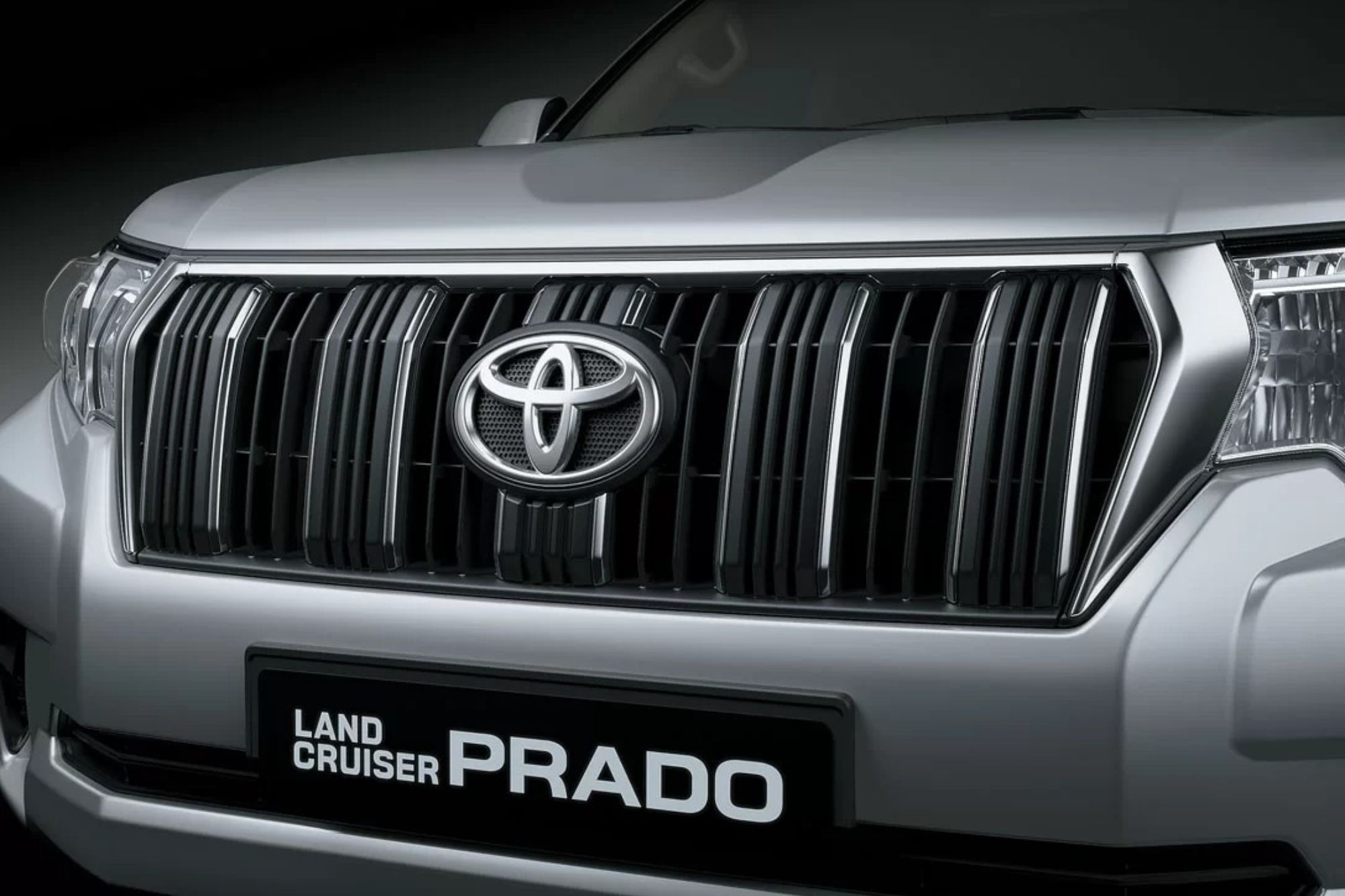 2021 Toyota Land Cruiser J150 Prado – 4th Generation
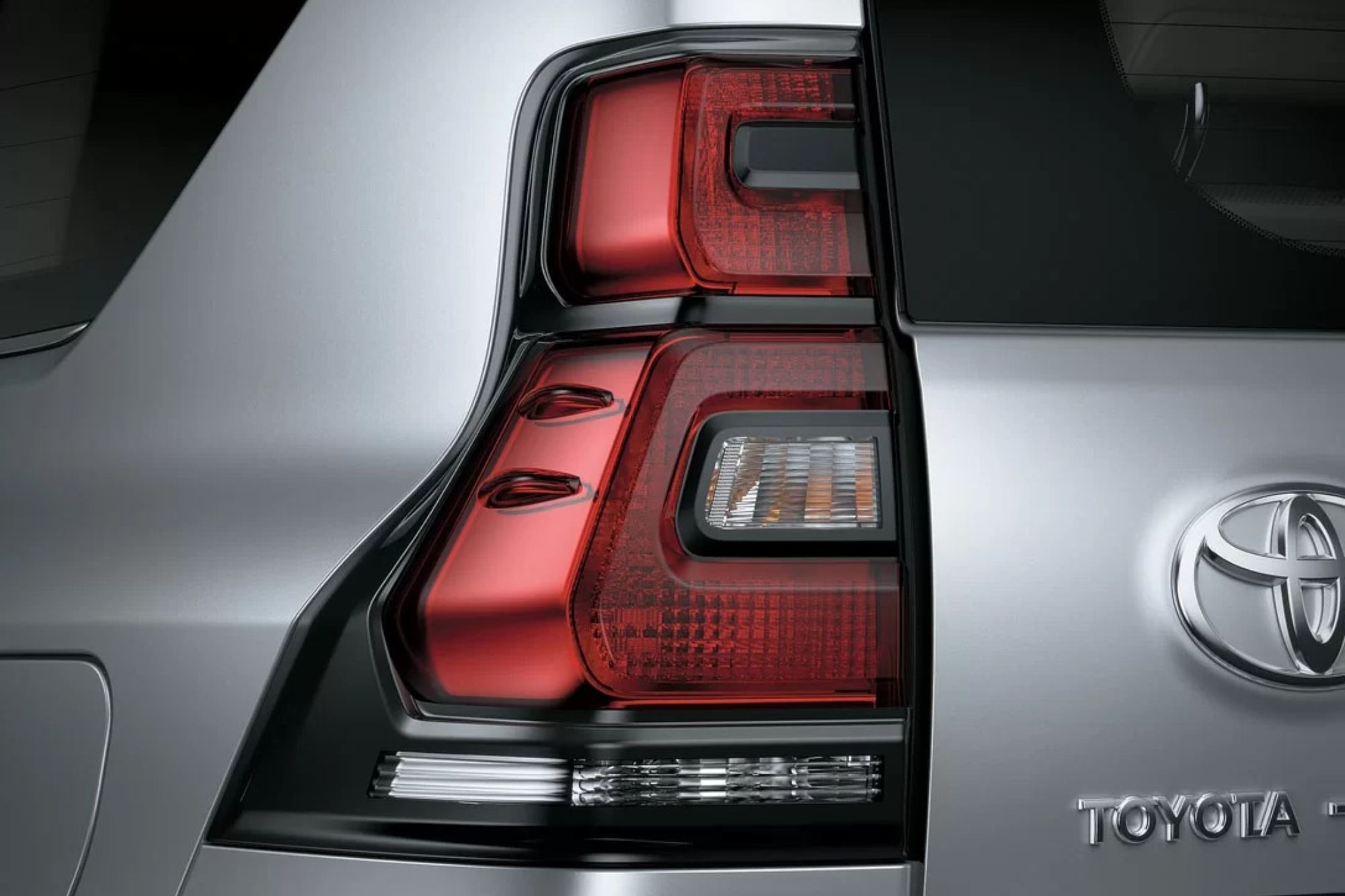 2021 Toyota Land Cruiser J150 Prado – 4th Generation
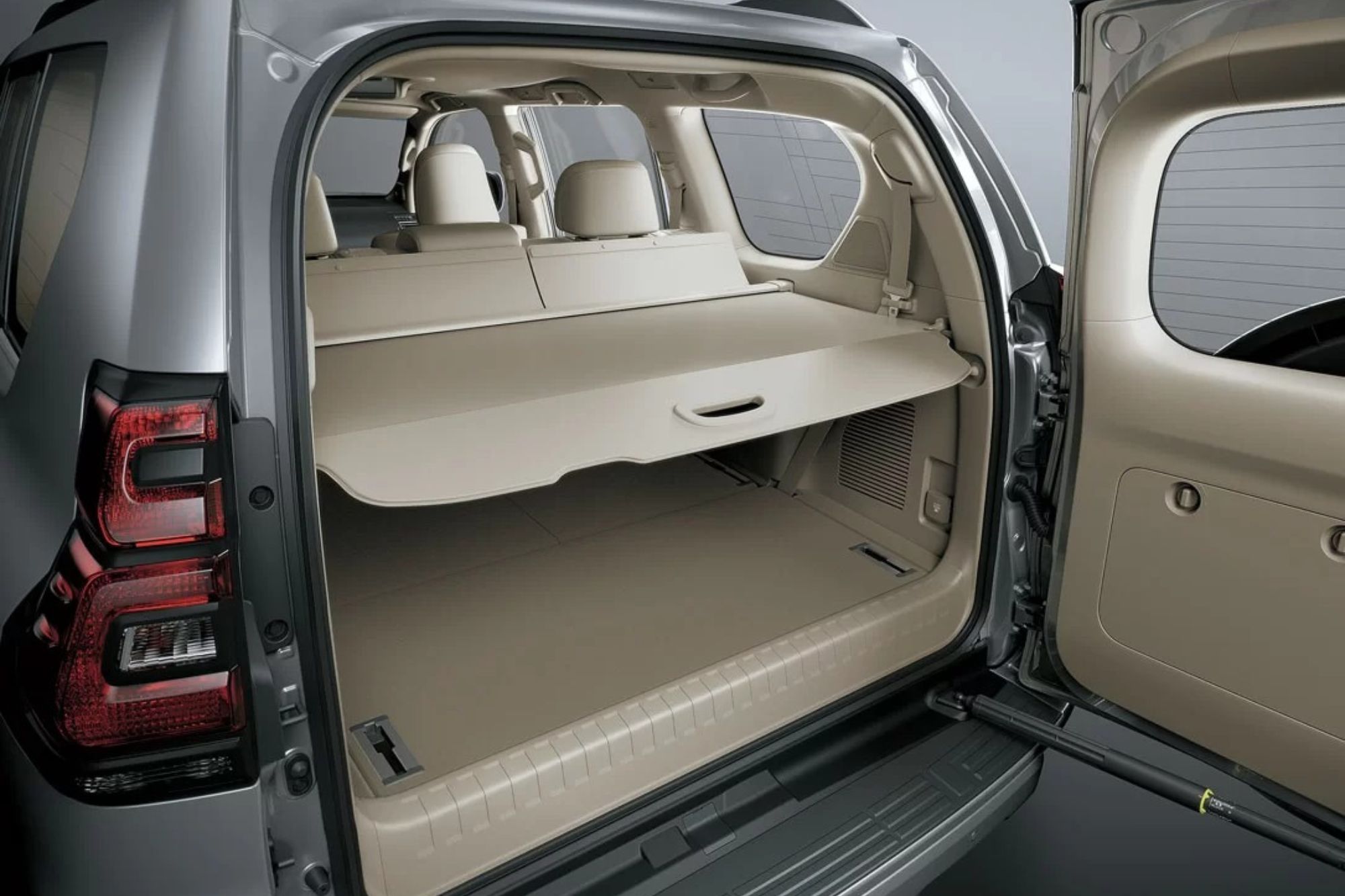 2021 Toyota Land Cruiser J150 Prado – 4th Generation Boot space
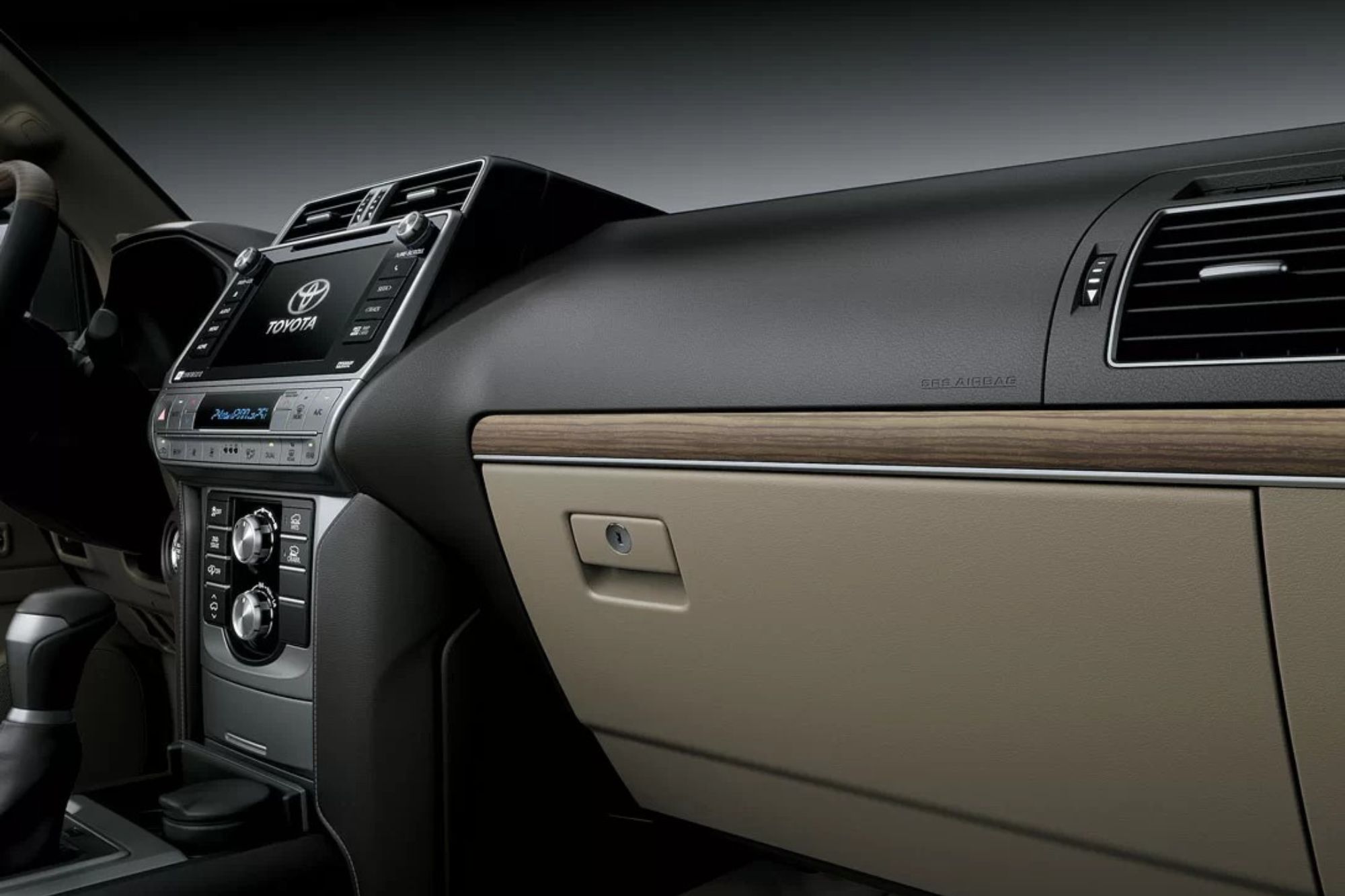 2021 Toyota Land Cruiser J150 Prado – 4th Generation Interior
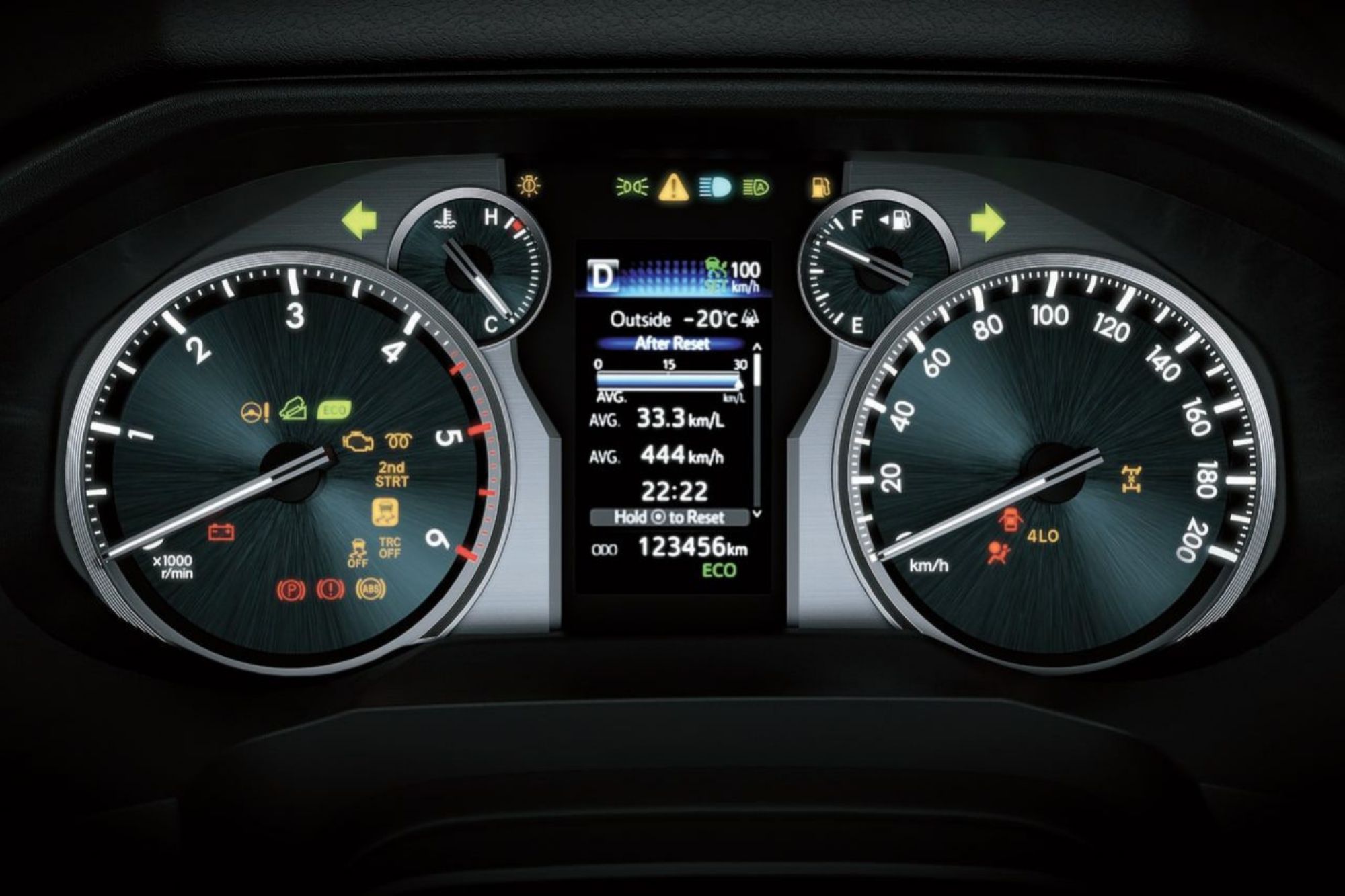 2021 Toyota Land Cruiser J150 Prado – 4th Generation Instrument Cluster
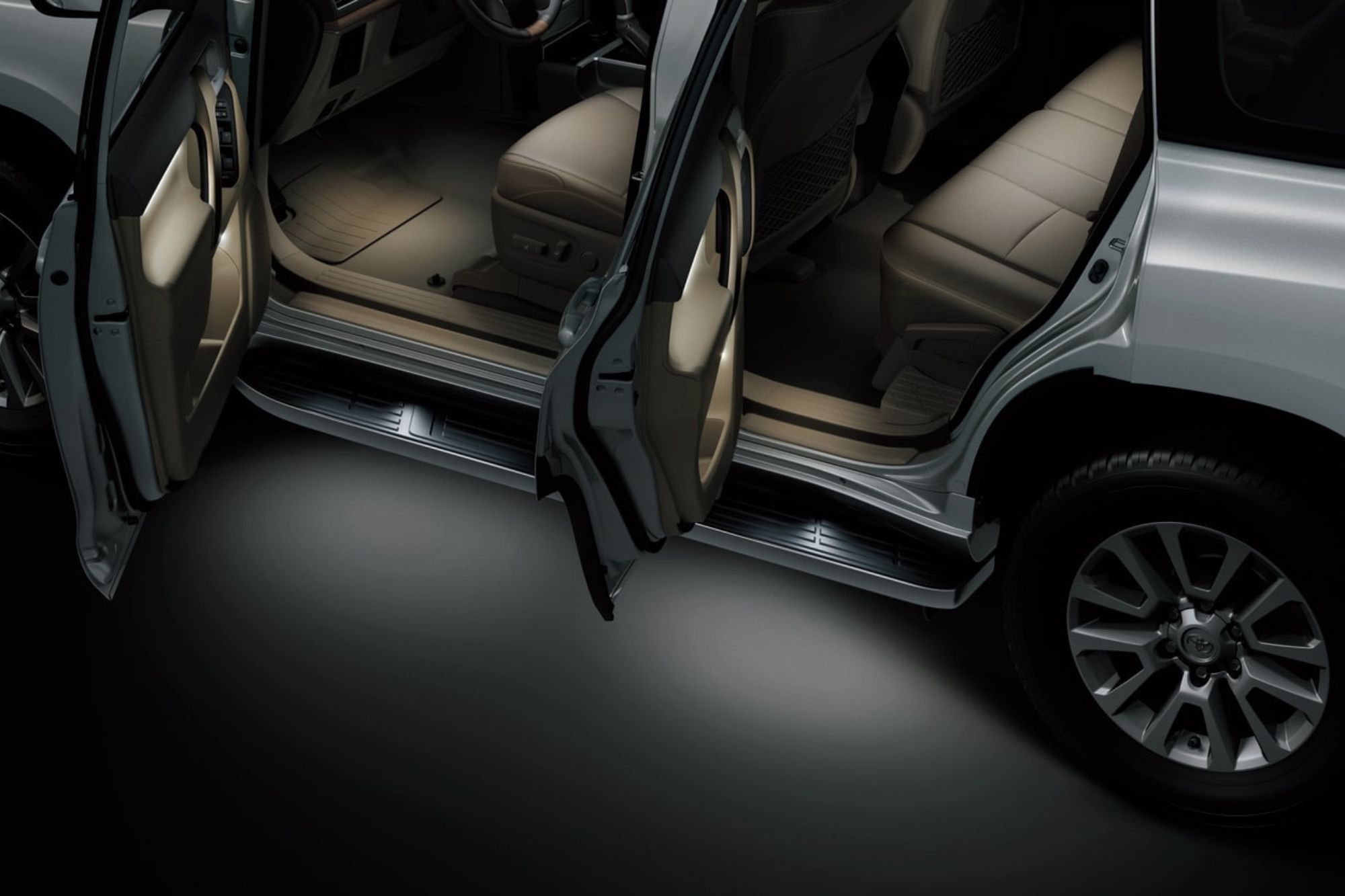 2021 Toyota Land Cruiser J150 Prado – 4th Generation Interior
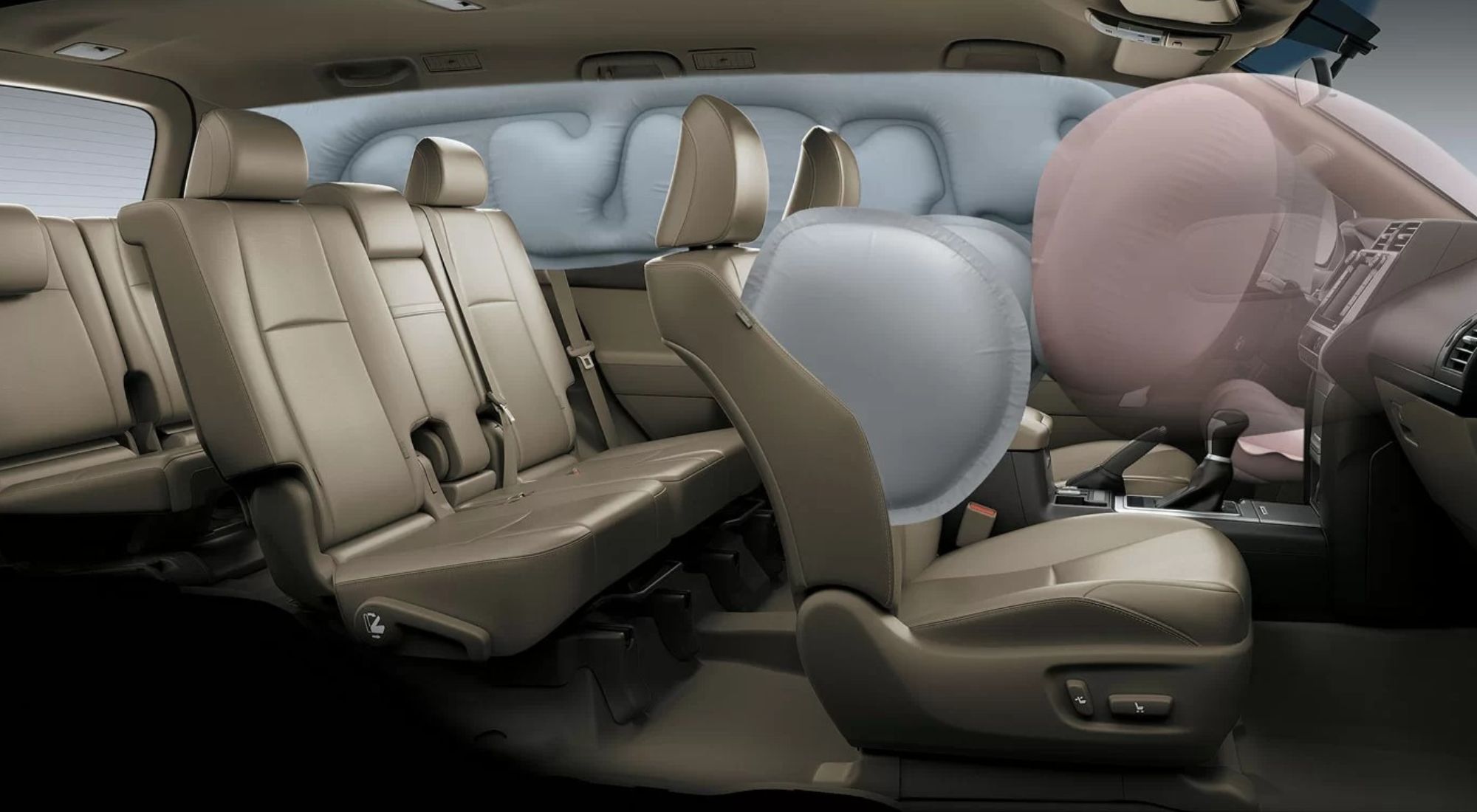 2021 Toyota Land Cruiser J150 Prado – 4th Generation Interior
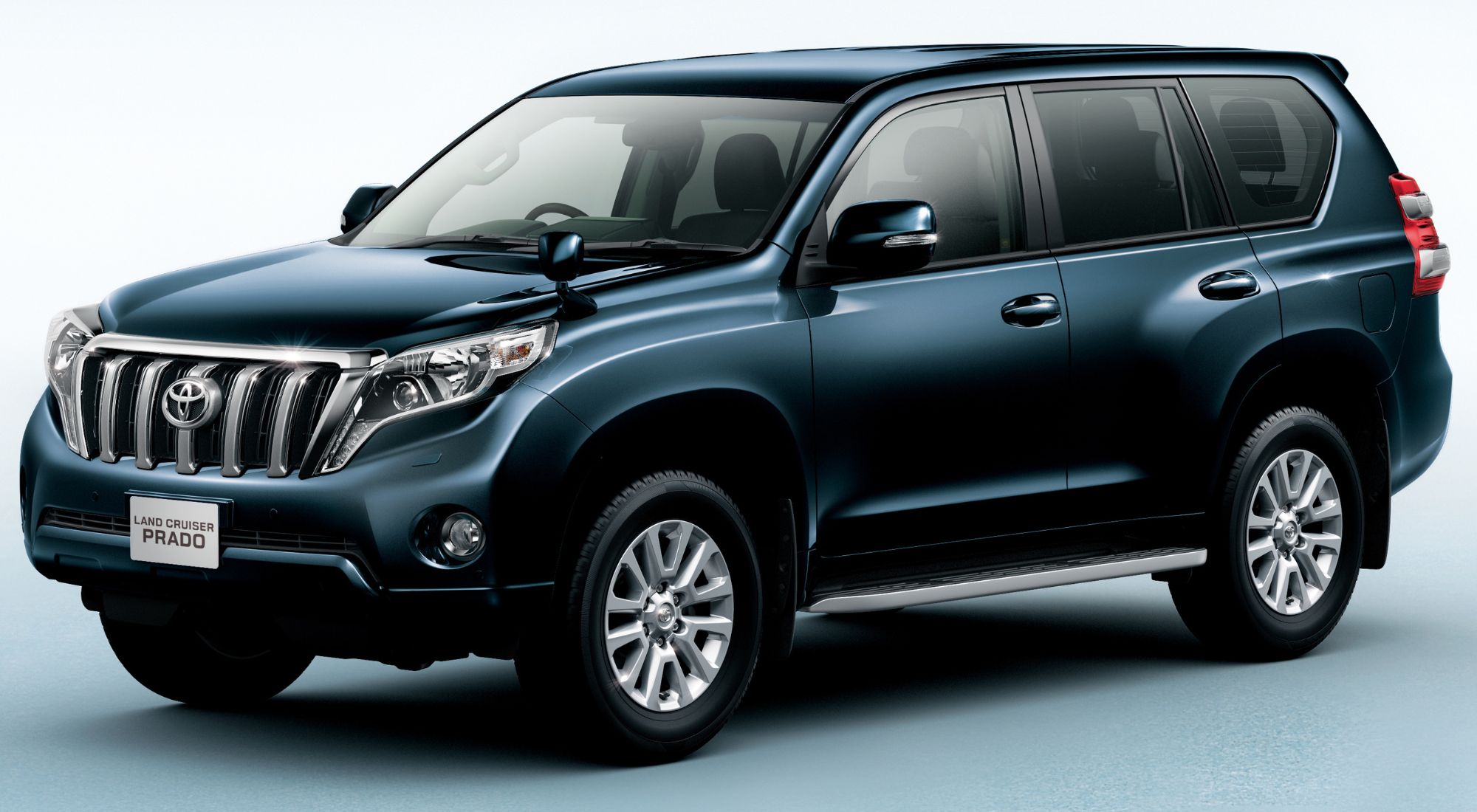 2013 Toyota Land Cruiser J150 Prado – 4th Generation
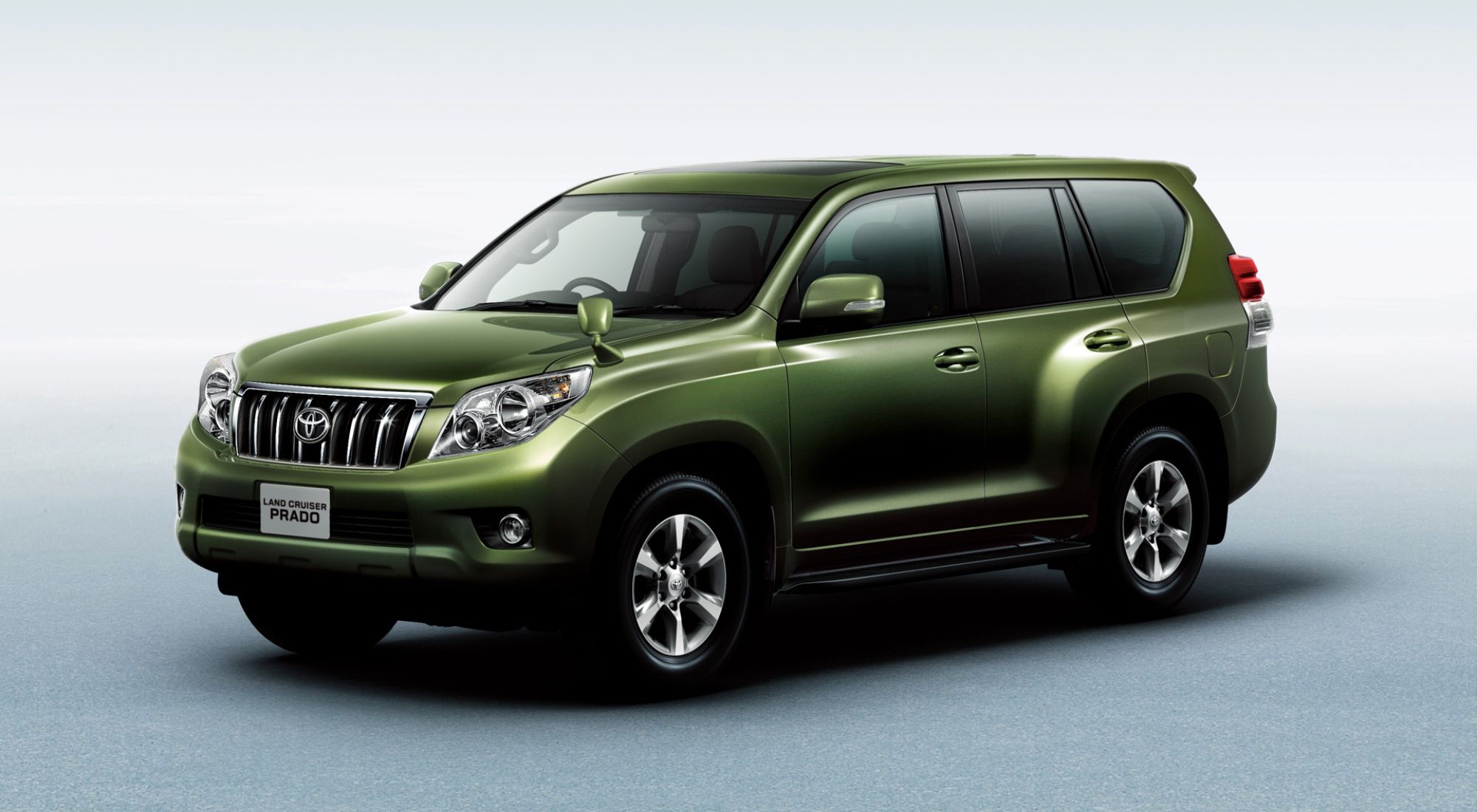 2009 Toyota Land Cruiser J150 Prado – 4th Generation
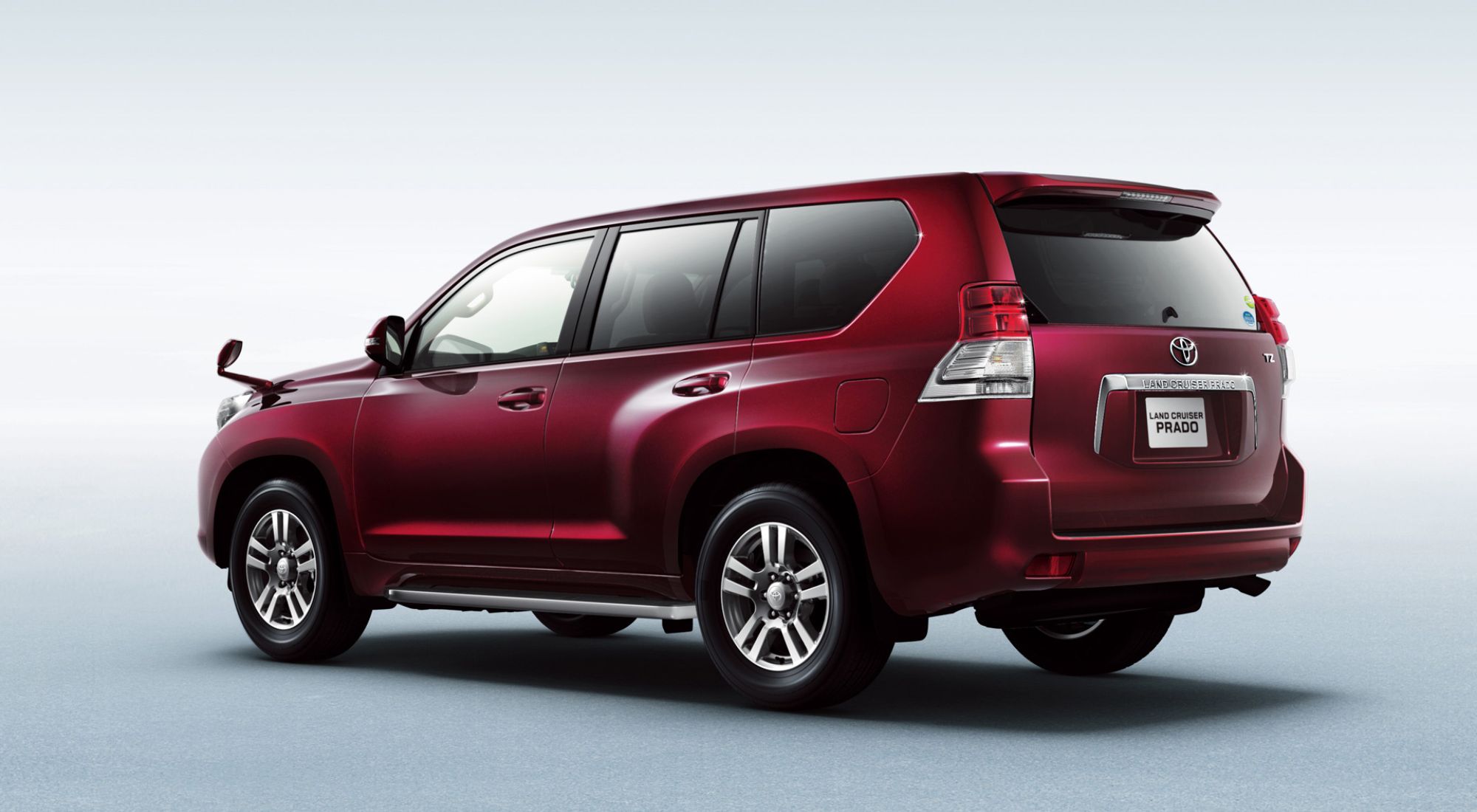 2009 Toyota Land Cruiser J150 Prado – 4th Generation
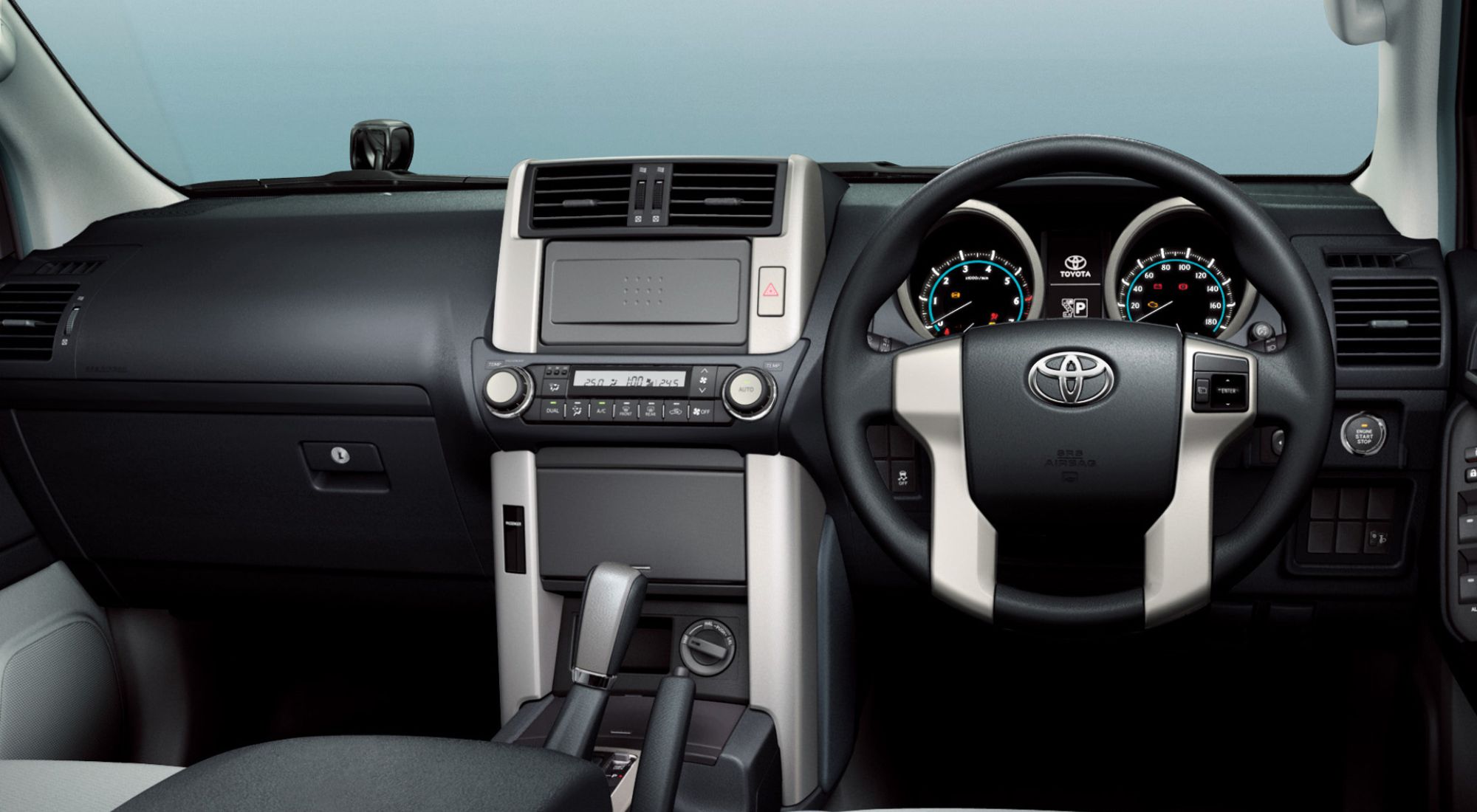 2009 Toyota Land Cruiser J150 Prado – 4th Generation Interior
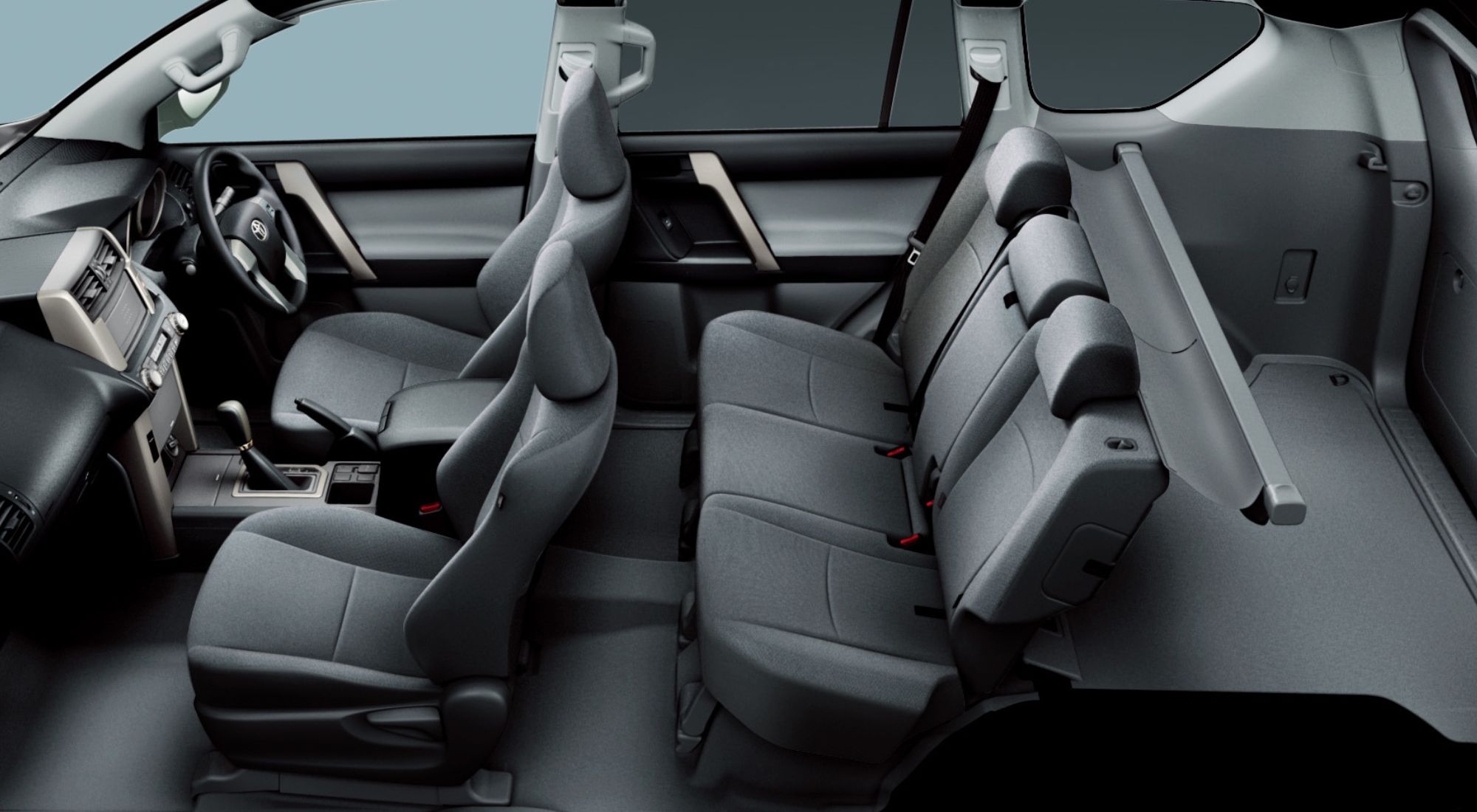 2009 Toyota Land Cruiser J150 Prado – 4th Generation Interior
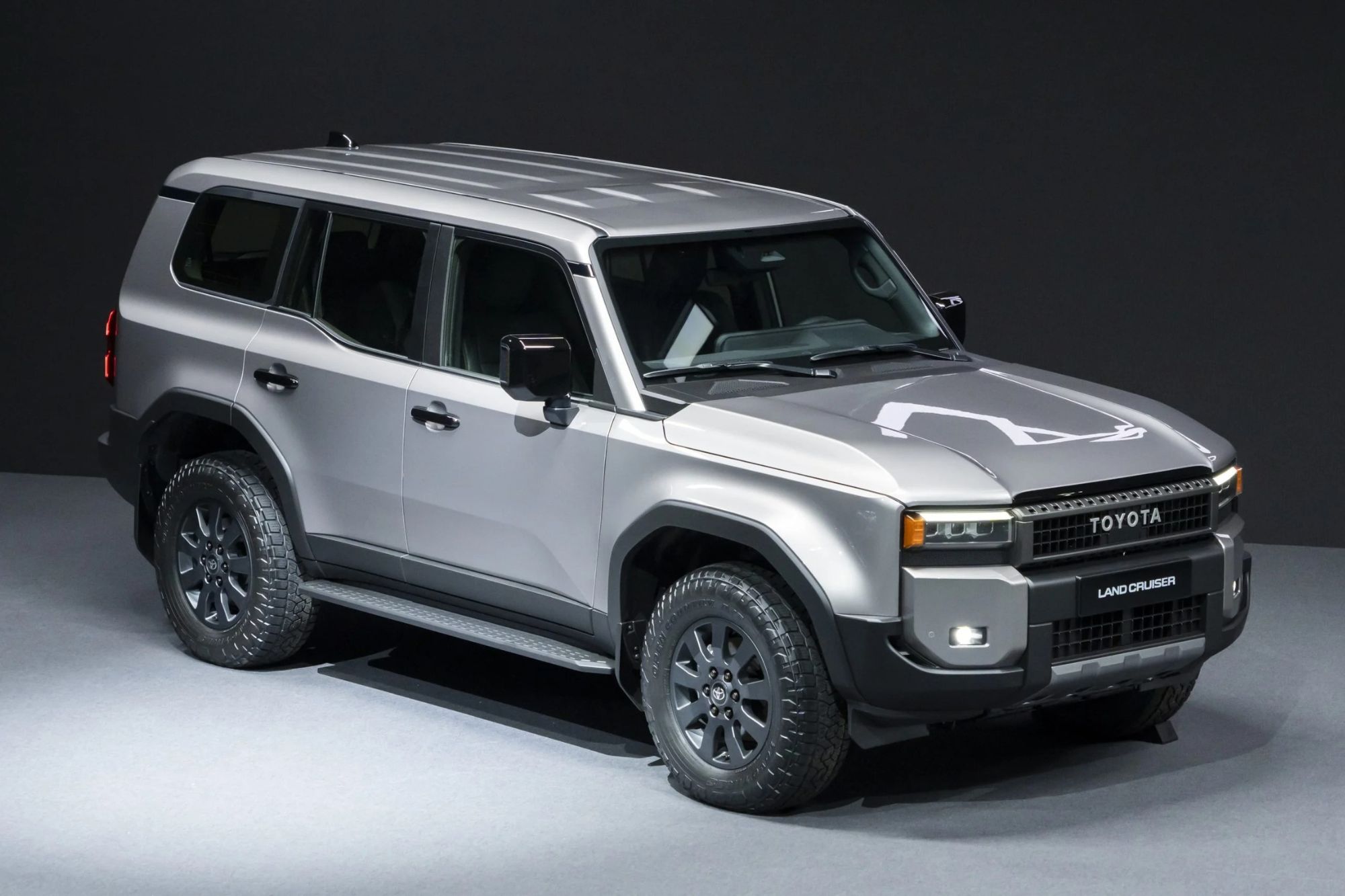
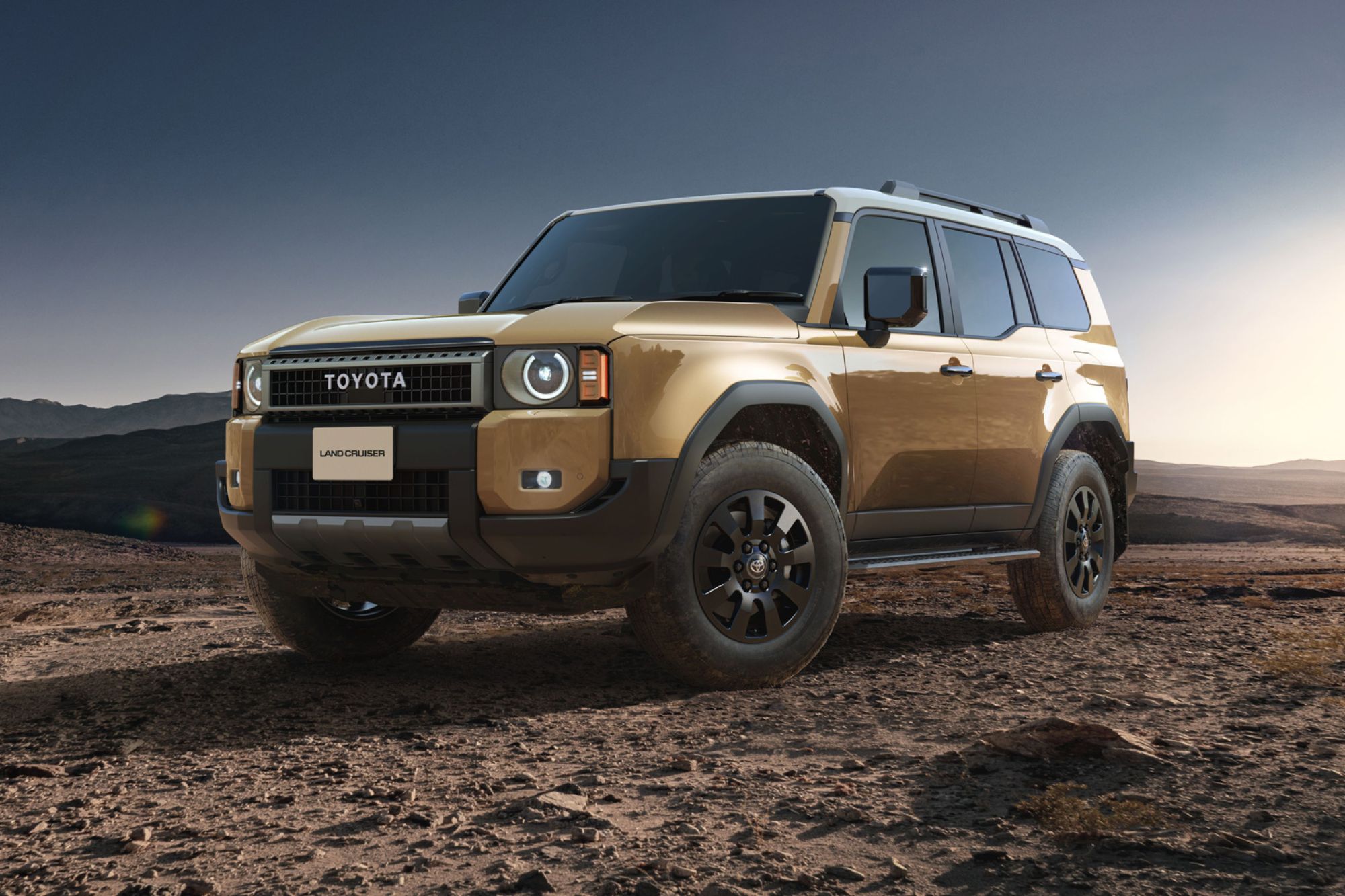
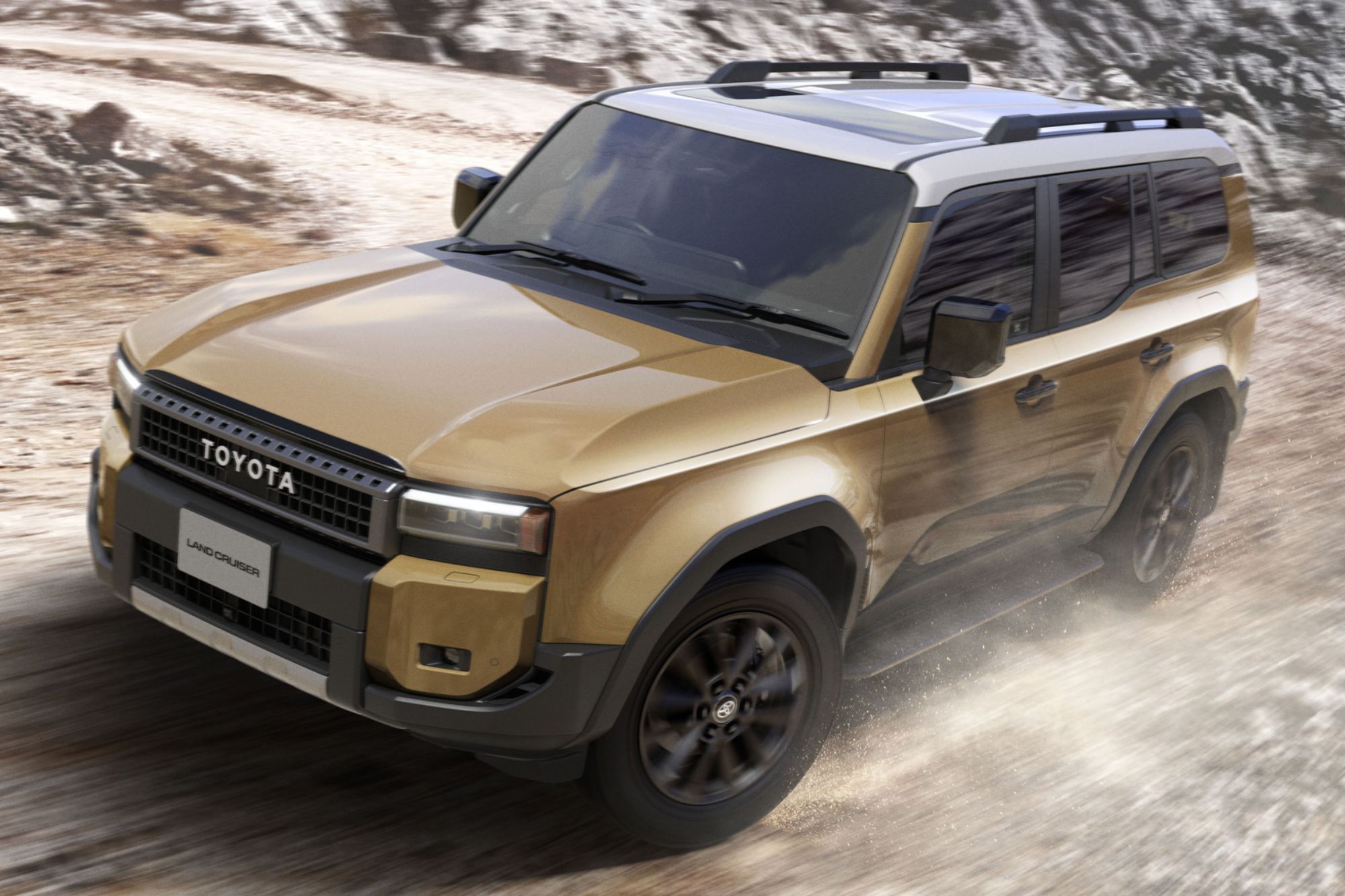
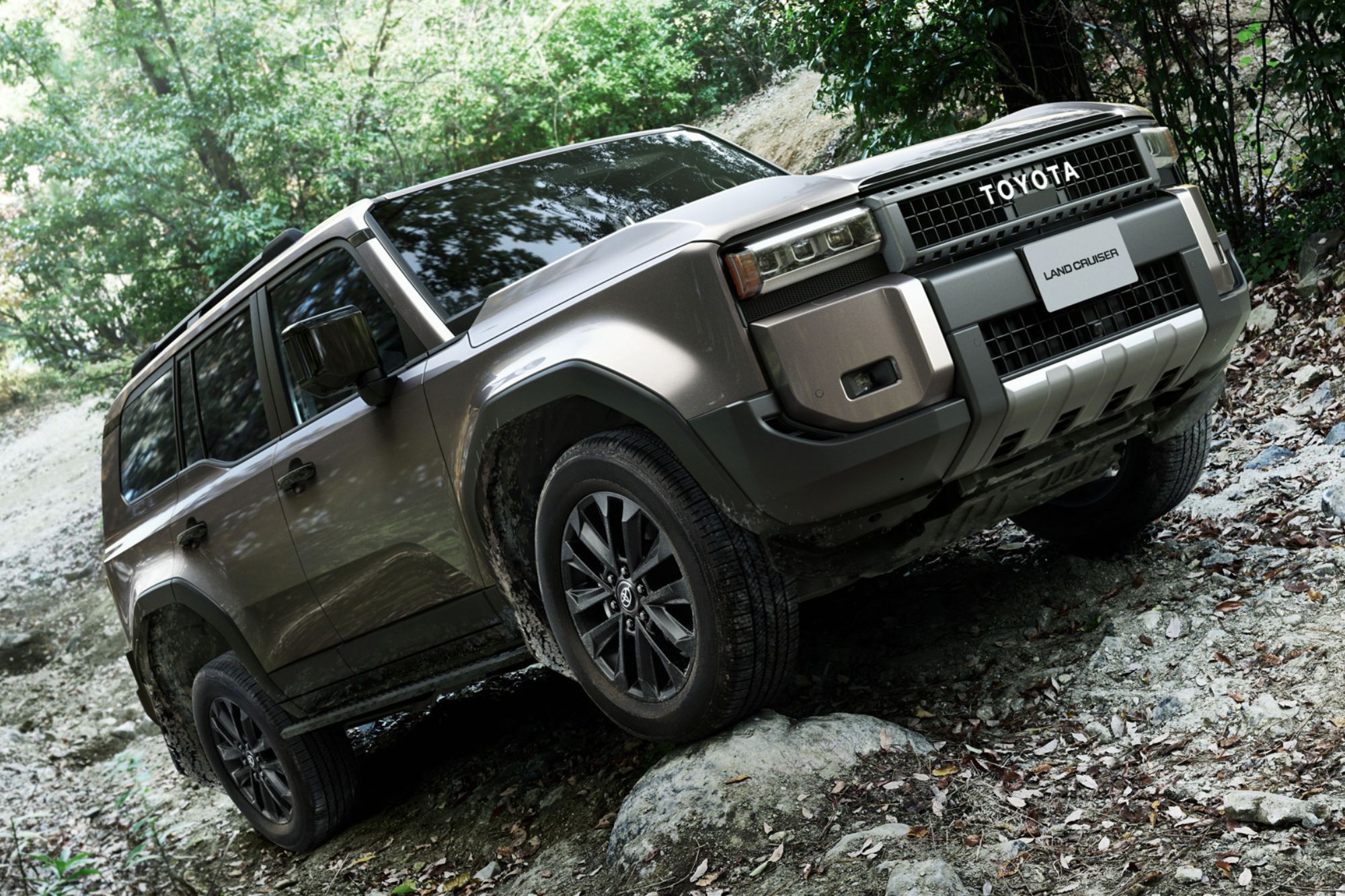
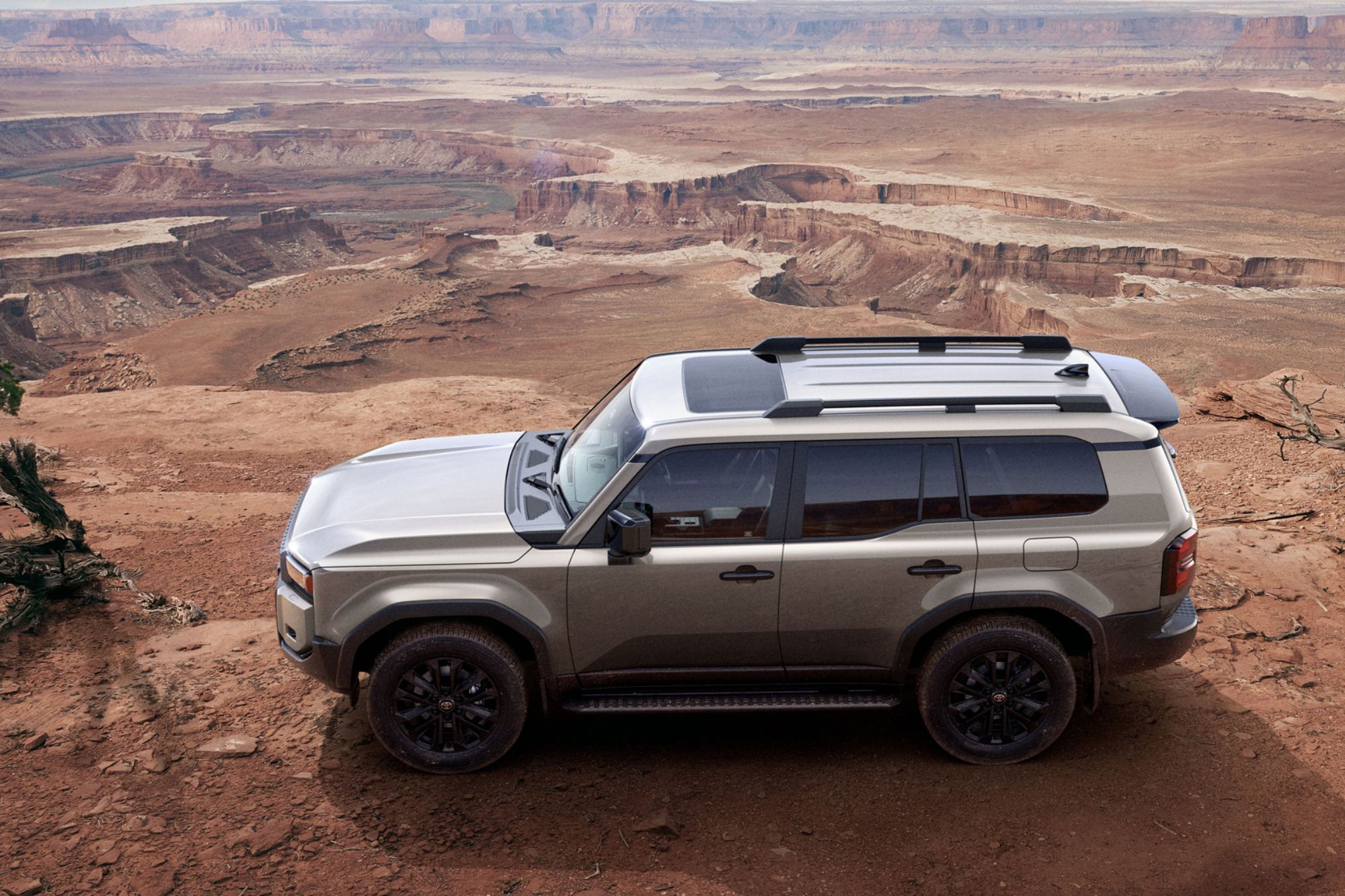
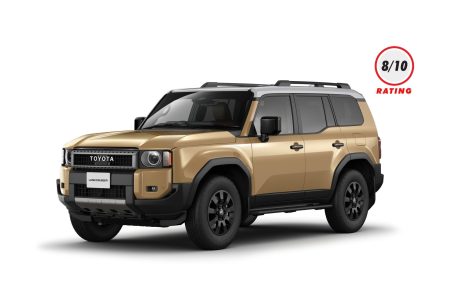
The J250 (2024-present) is the biggest change to the Prado formula since 2009. It sits on the same GA-F platform as the Land Cruiser 300 and Lexus GX, swaps hydraulic steering for electric power steering, and trades the outgoing model’s rounded body for boxy, FJ60-inspired styling.
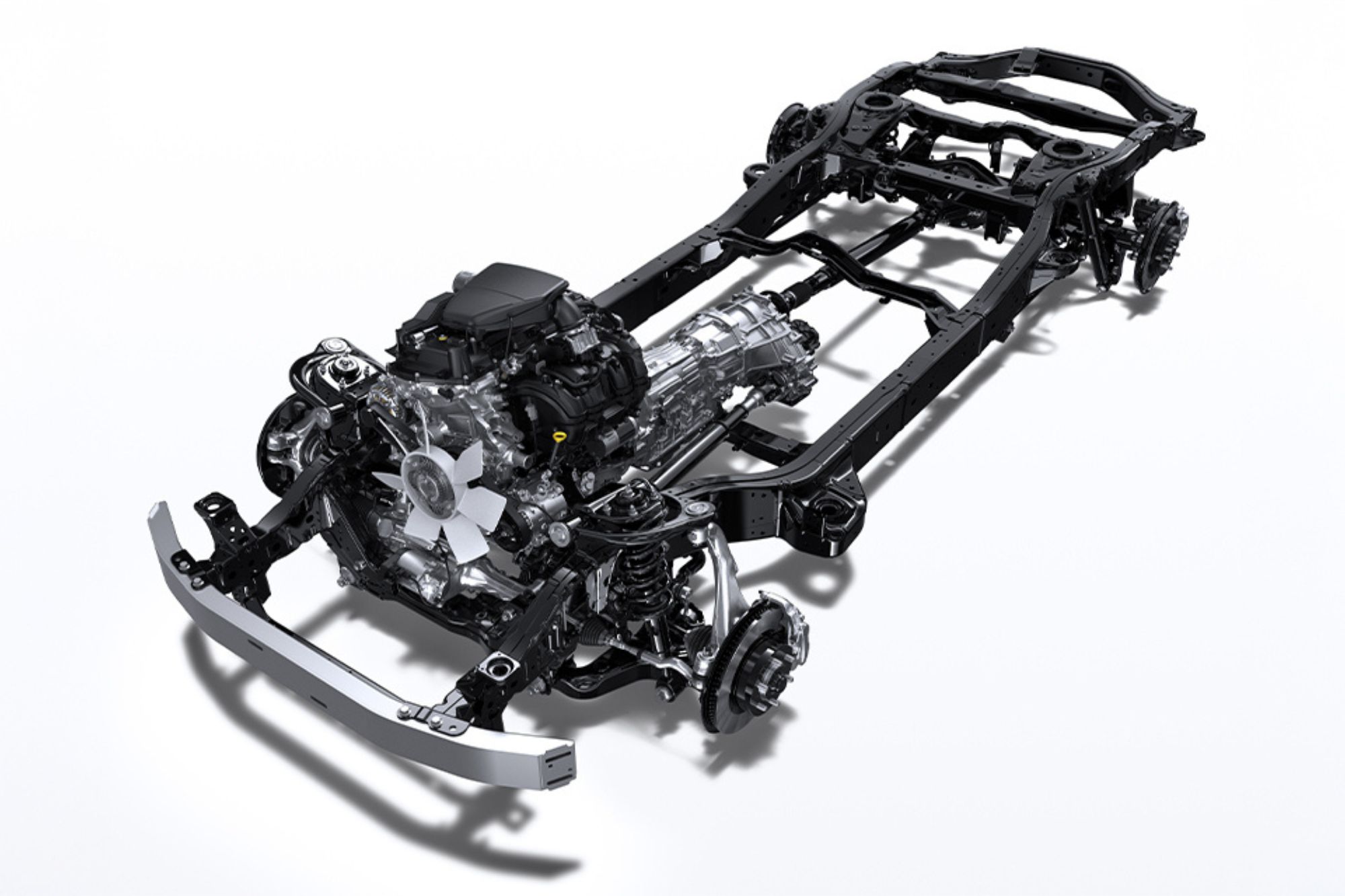
Exterior Design
What Does the Toyota Land Cruiser Prado Look Like?
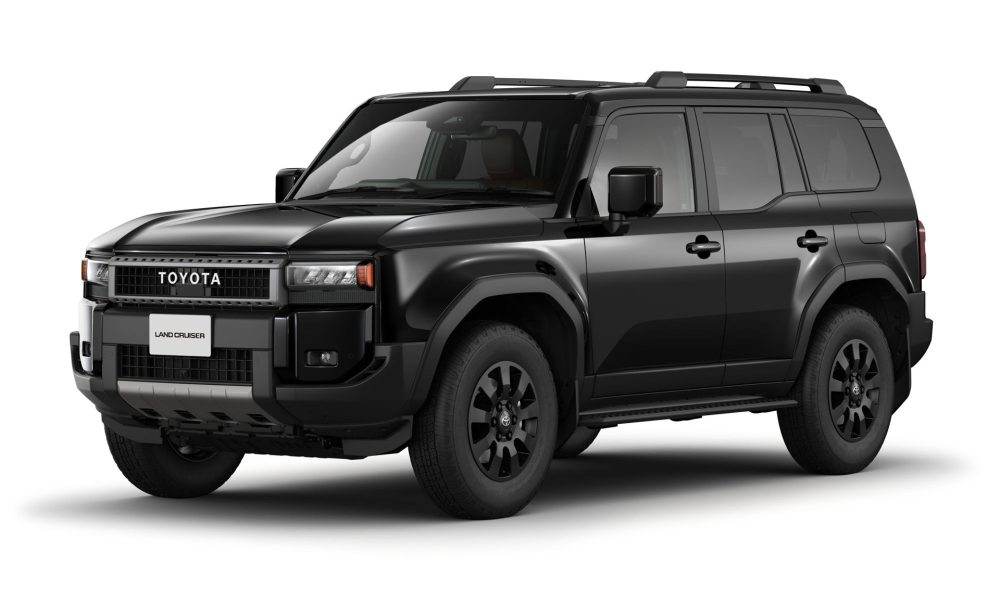
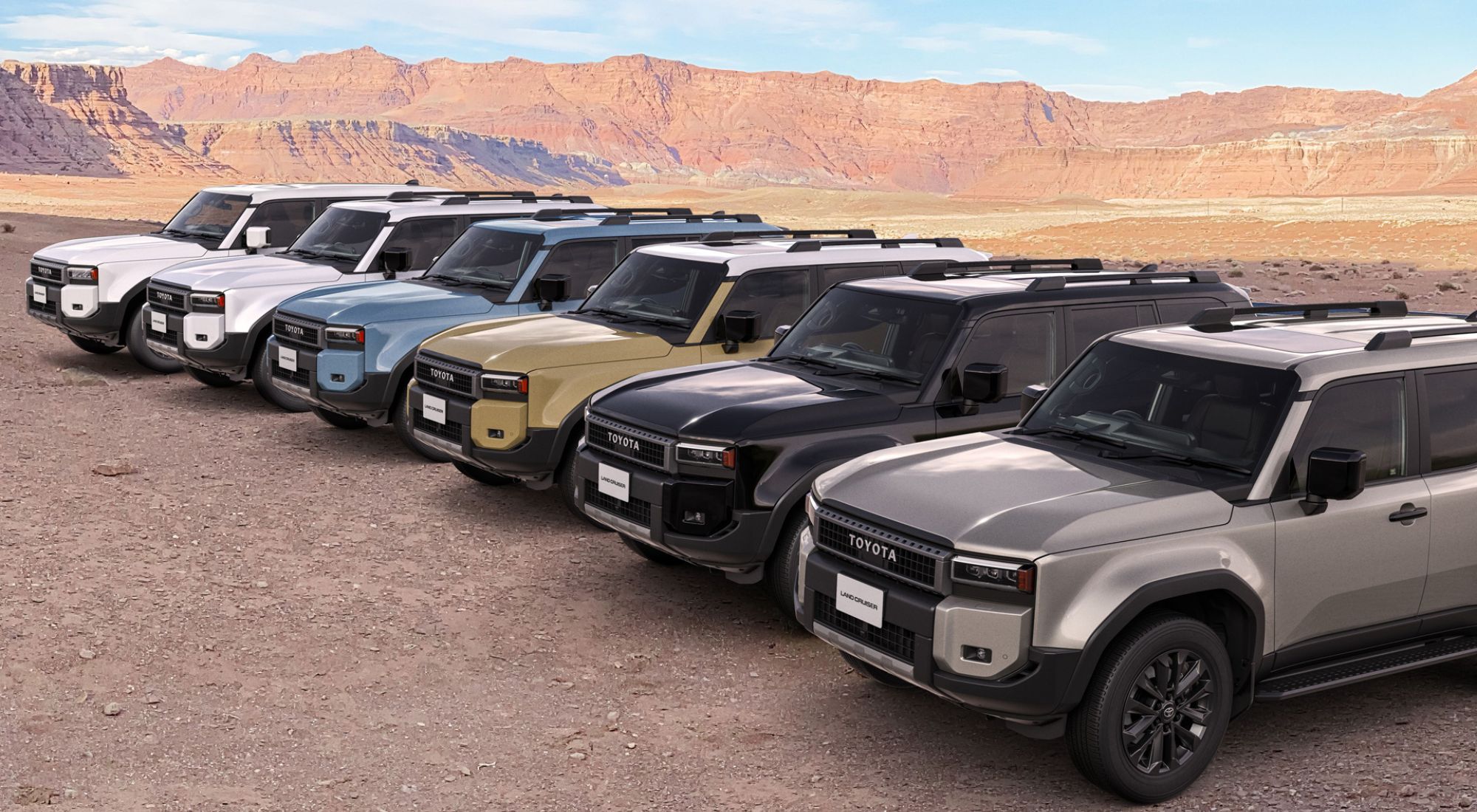
Styling has moved gradually from the rounded, softer J90 and J120 towards the more resolved, somewhat boxy J150, before the J250 doubled back to a deliberately retro, upright design borrowing heavily from the 1980s FJ60 Land Cruiser. Across every generation, the silhouette stays tall and slab-sided, prioritising cabin space and visibility over aerodynamic sleekness.
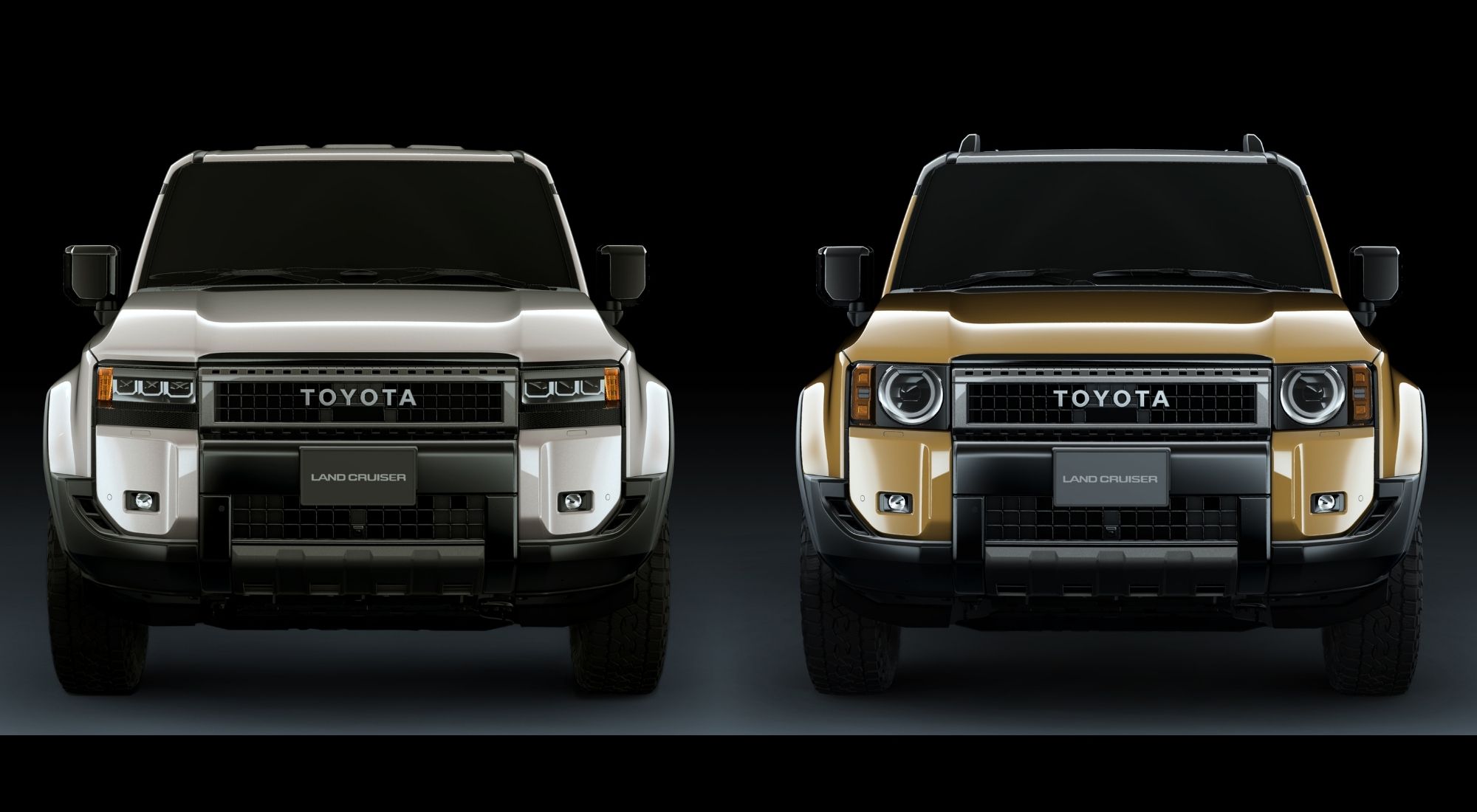
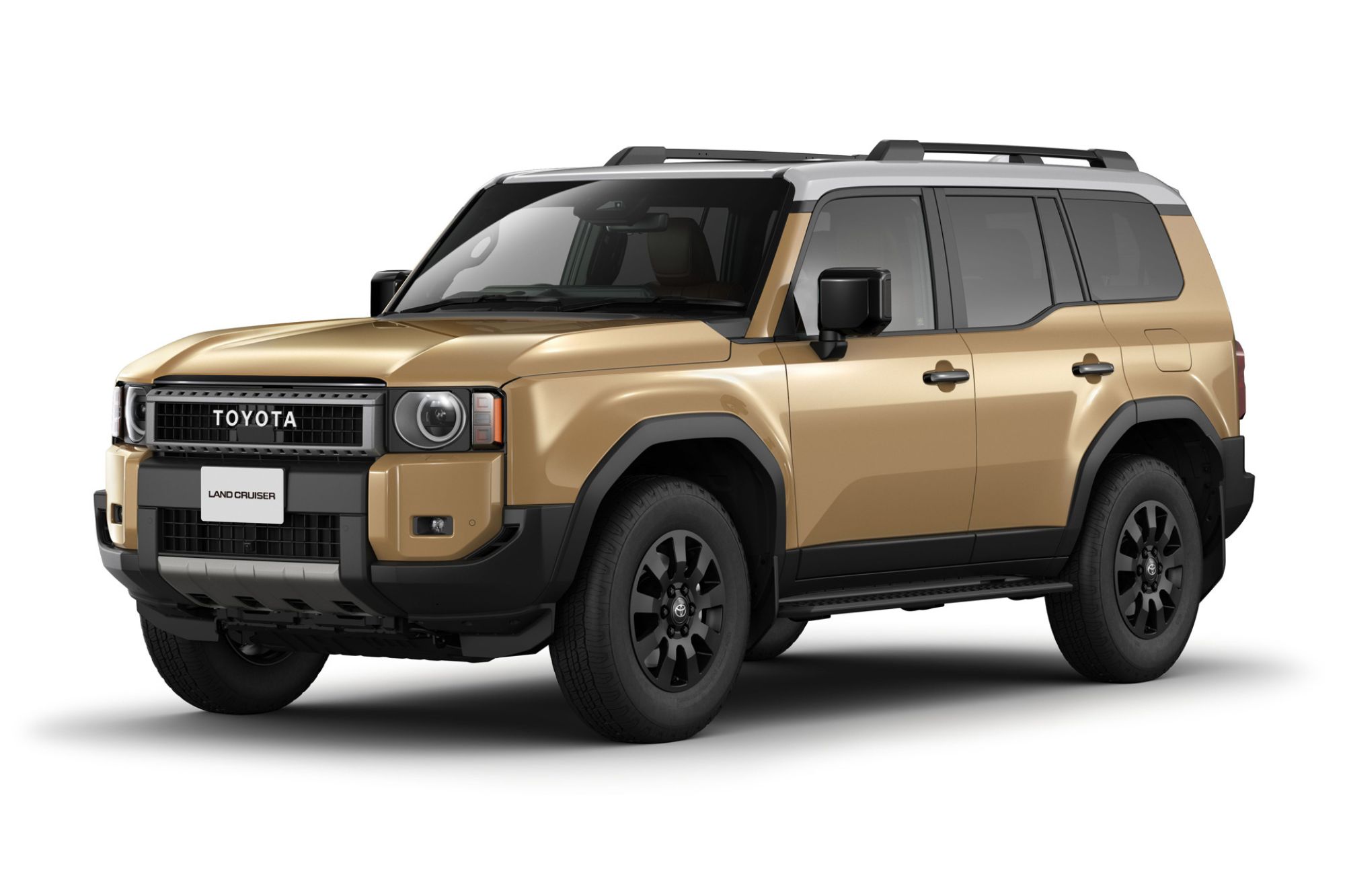
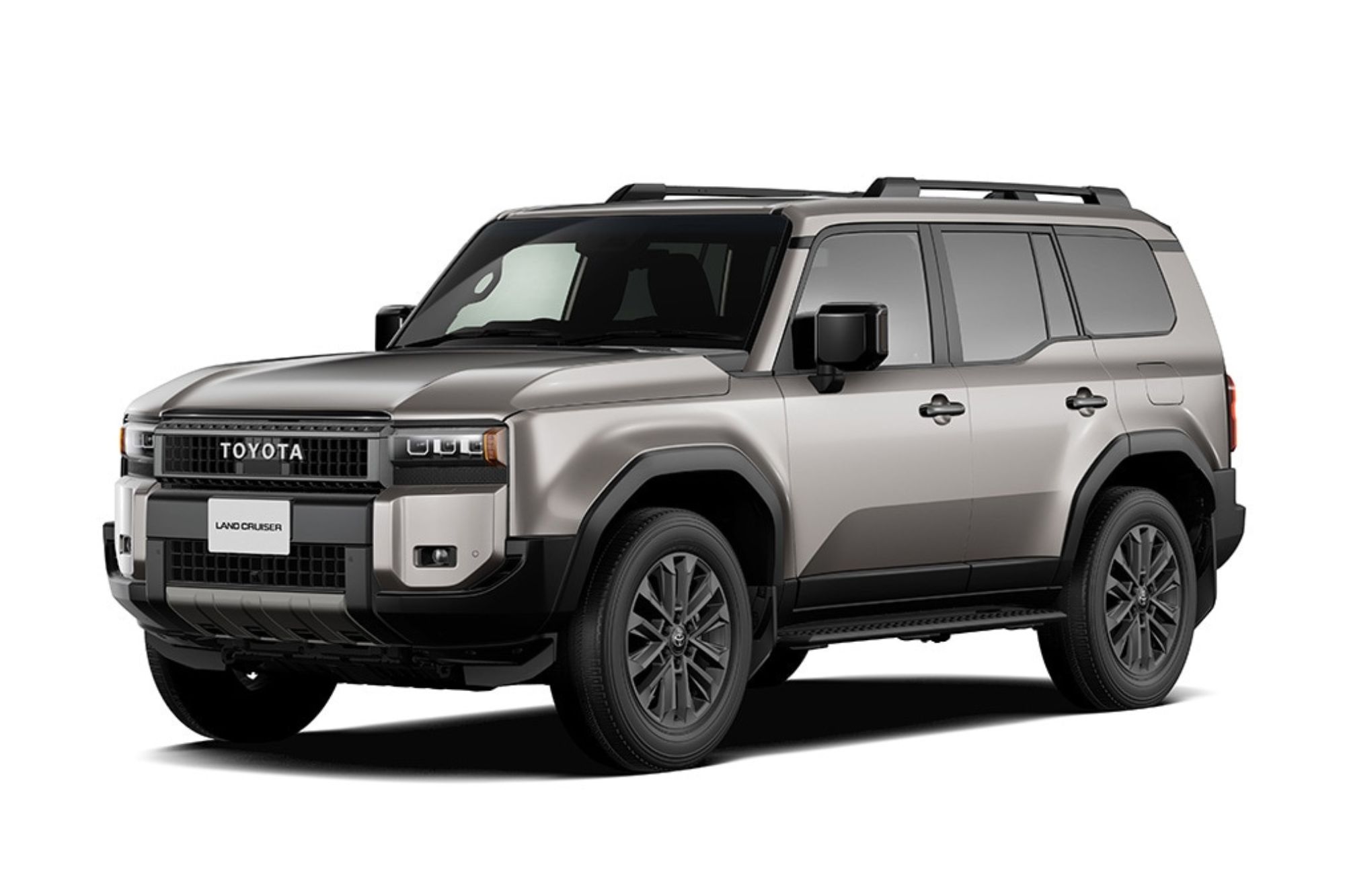
On the current J250, headlight shape is a quick way to identify grade: entry and mid trims run slim rectangular LED units, while the retro-themed First Edition and range-topping grades use round headlights modelled on the FJ62. On the outgoing J150, the clearest visual marker is the 2017 facelift, which brought a sharper grille, optional LED headlights, and a bolder front bumper compared with the softer pre-2017 nose.

How Big Is the Toyota Land Cruiser Prado?
- Dimensions (L x W x H, J250): 4,930 x 1,980 x 1,935 mm, varies by grade
- Wheelbase (J250): 2,850 mm
- Ground clearance: Approx. 215-221 mm across the J150 and J250, among the best in its class
- Kerb weight: Approx. 2,000-2,490 kg depending on generation, engine and grade
- Doors: 5
- Seating: 5 or 7, depending on trim and generation
- Min. Turning Radius: Approx. 5.7-5.9 m
Is the Toyota Land Cruiser Prado Built for Kenyan Roads?
Yes, more so than almost anything else on sale here. Ground clearance in the 215-221 mm range clears the deep potholes and rutted murram that trouble lower cars, and the low-range transfer case and locking differentials found on higher grades give it genuine capability well beyond tarmac. This is the Prado’s core selling point in Kenya, and the reason it remains the default choice for safari operators, NGOs and upcountry buyers.
Interior & Practicality
What Is the Cabin Like on the Inside?
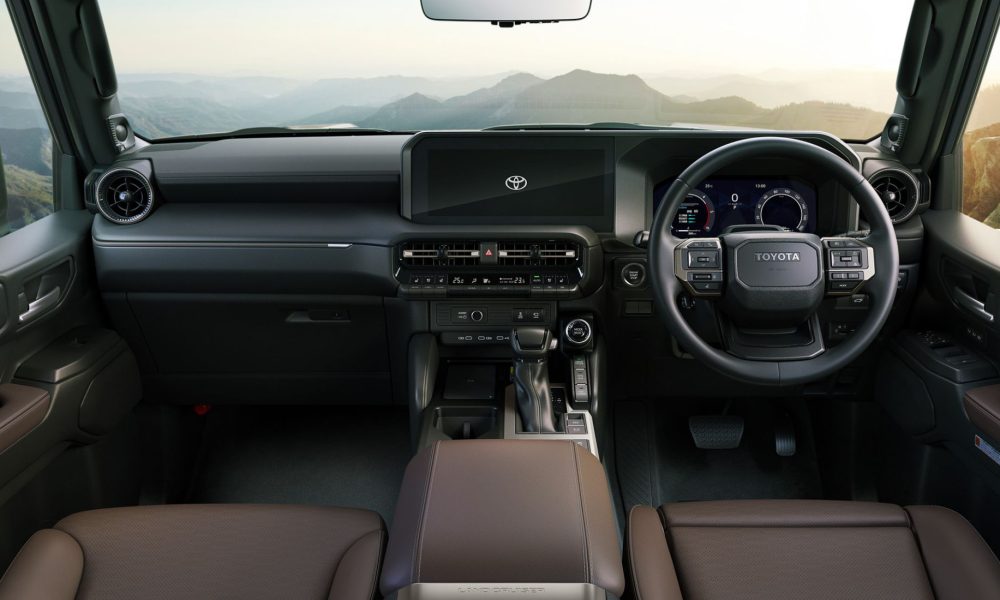
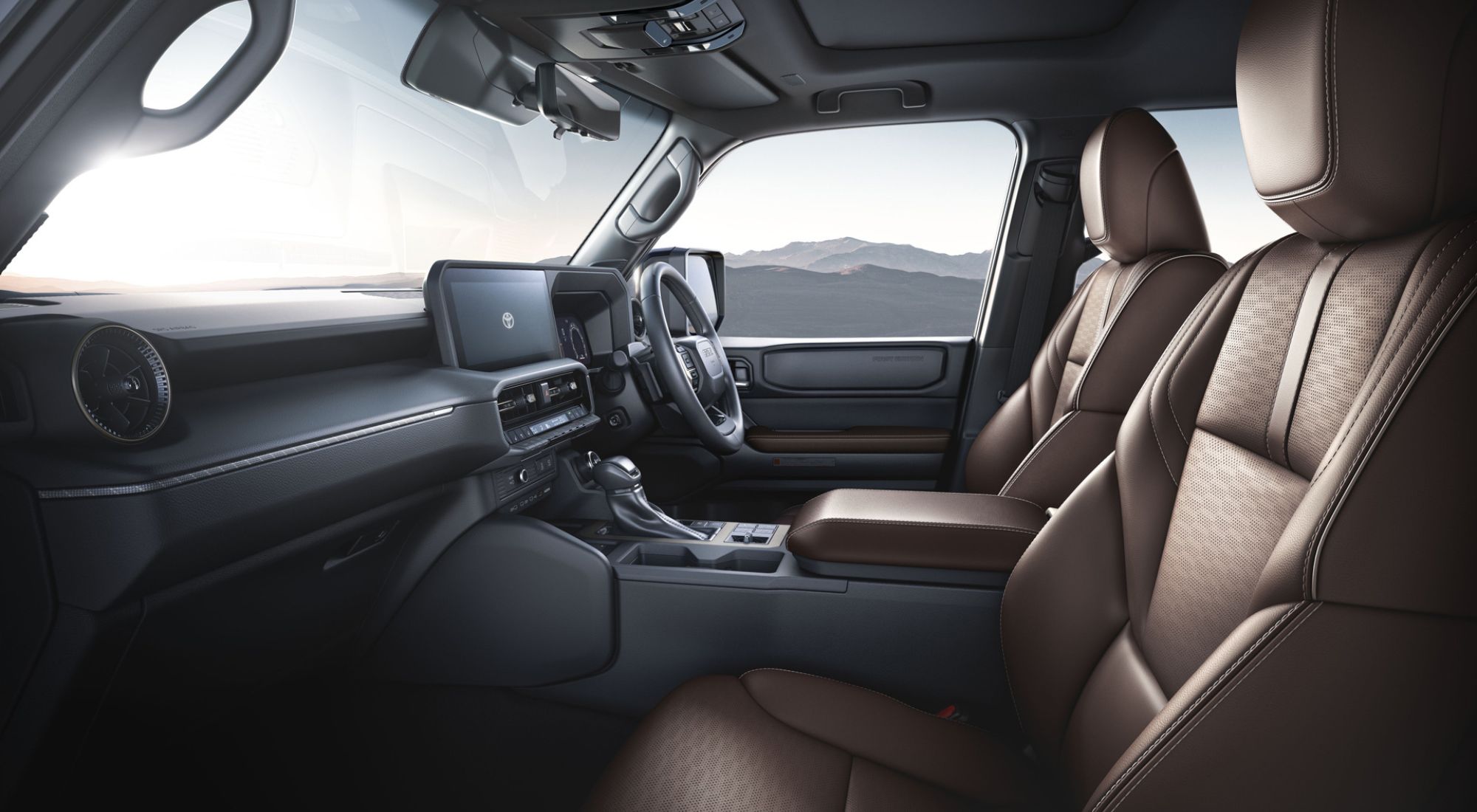
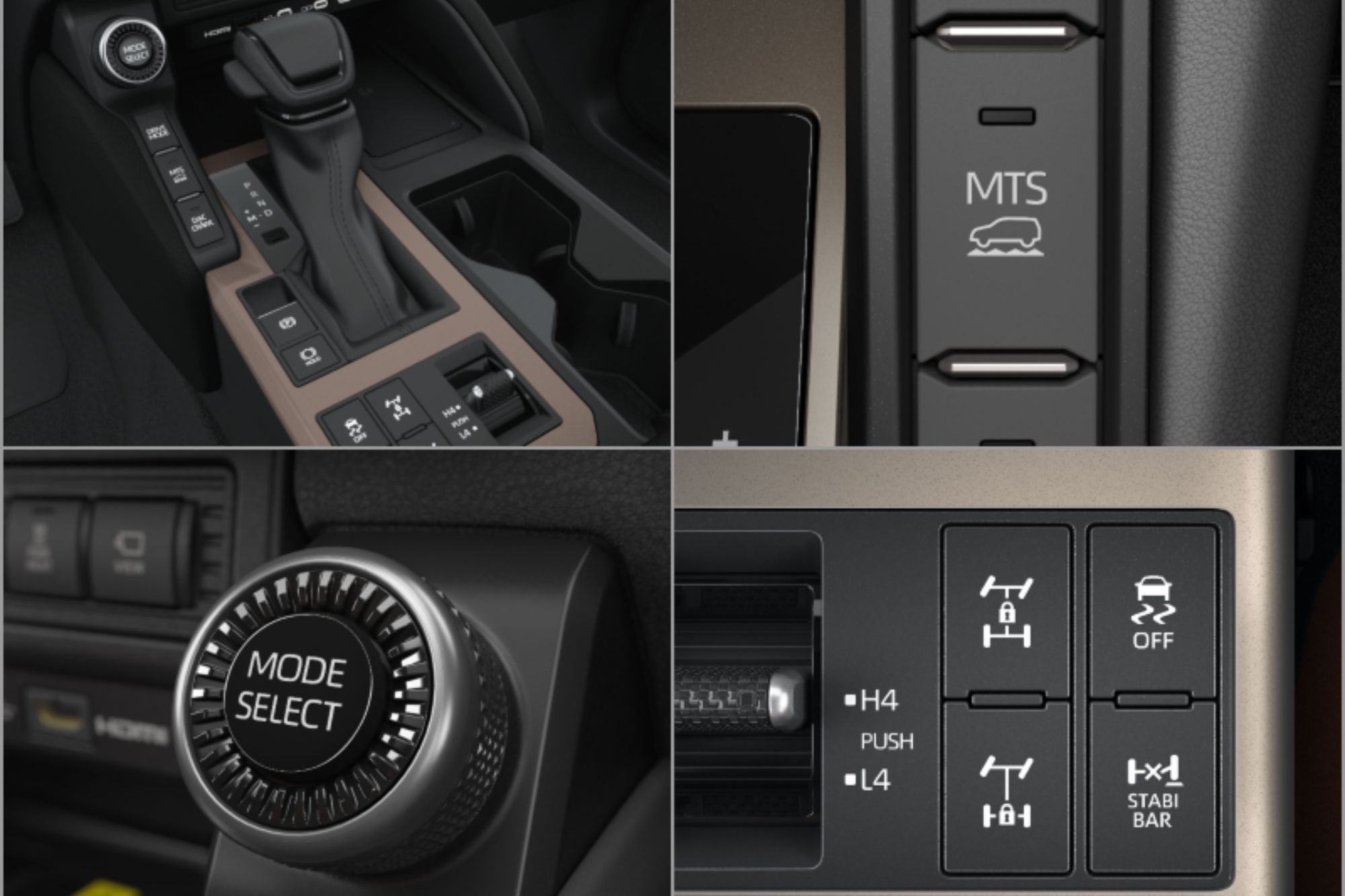
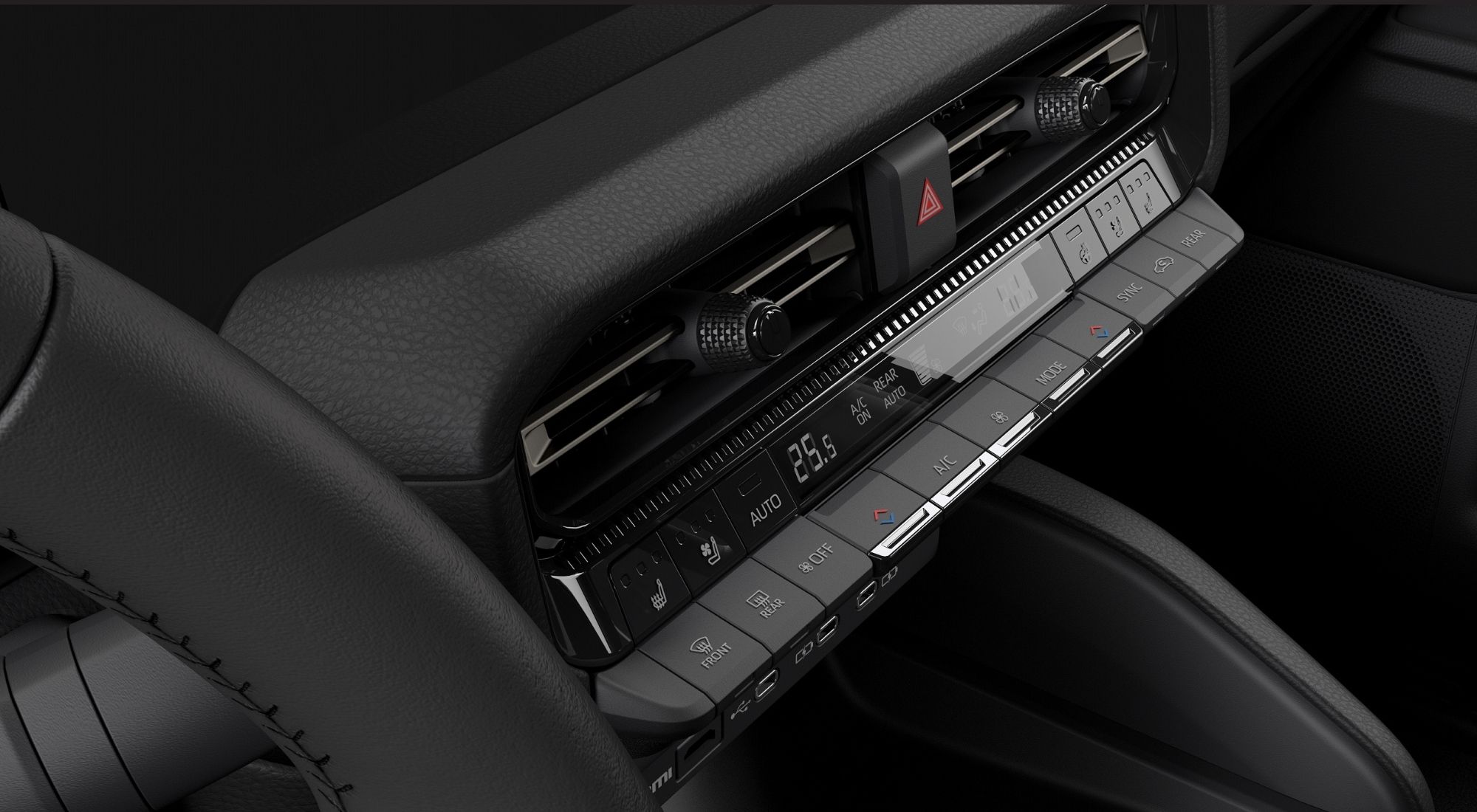
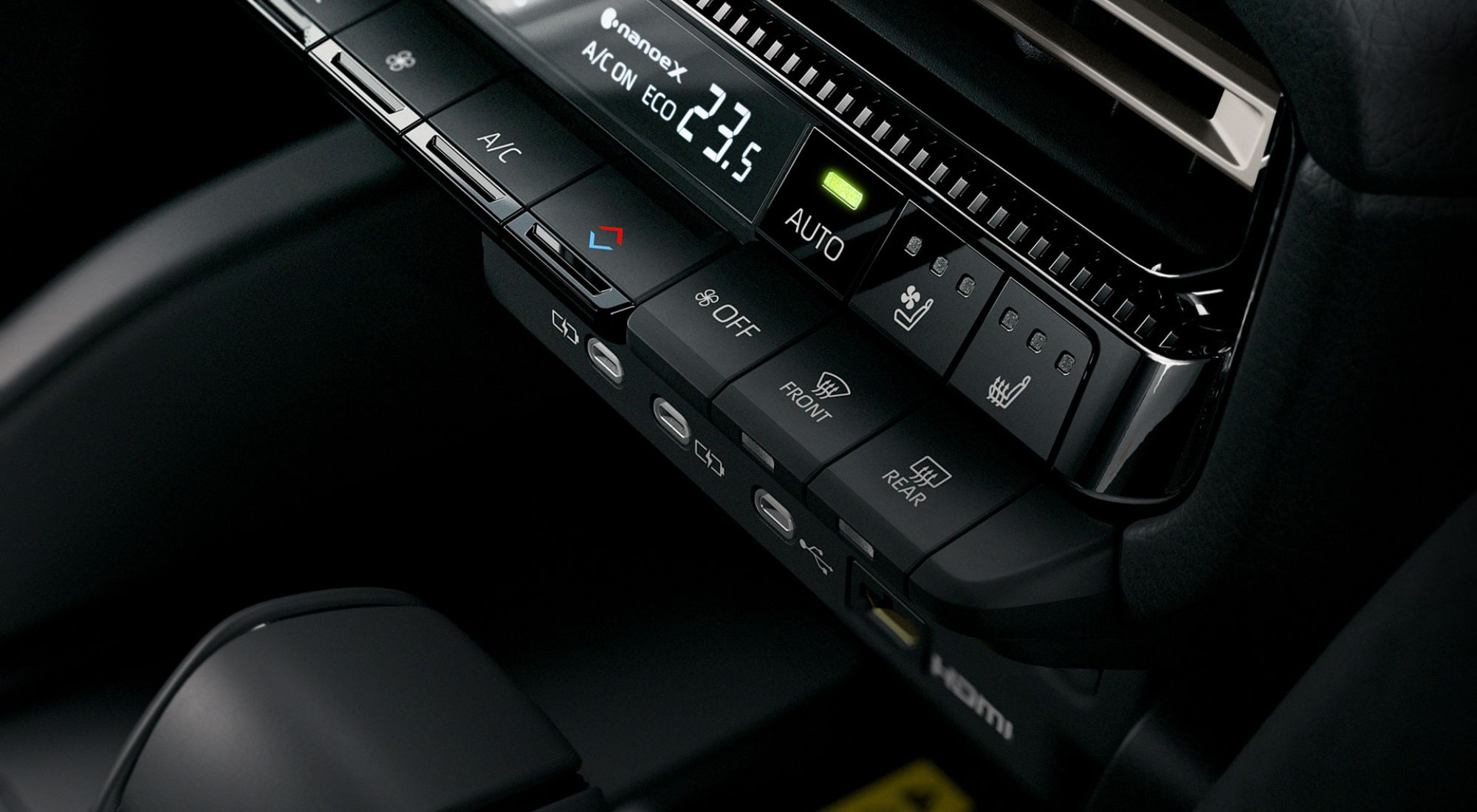
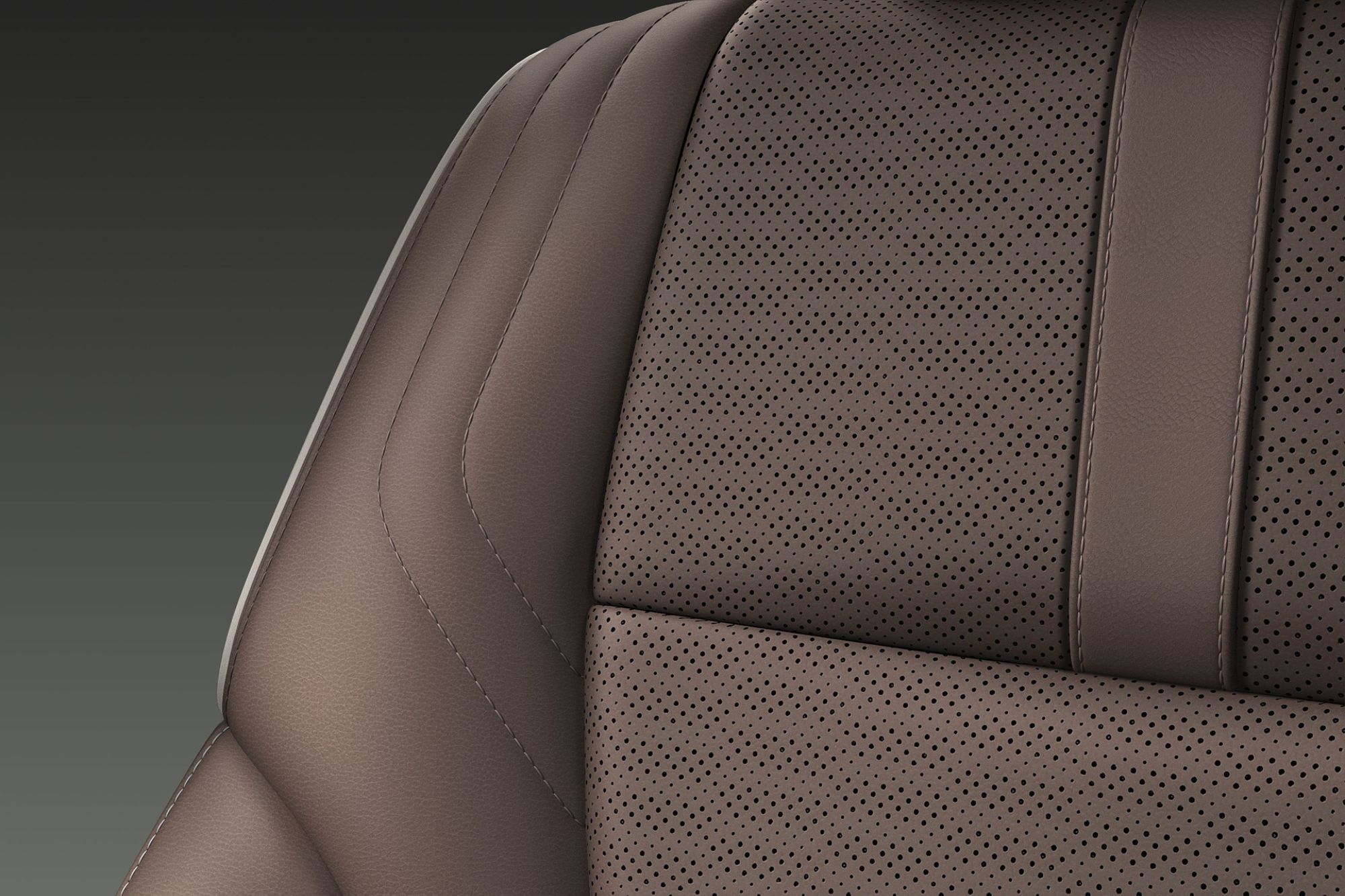
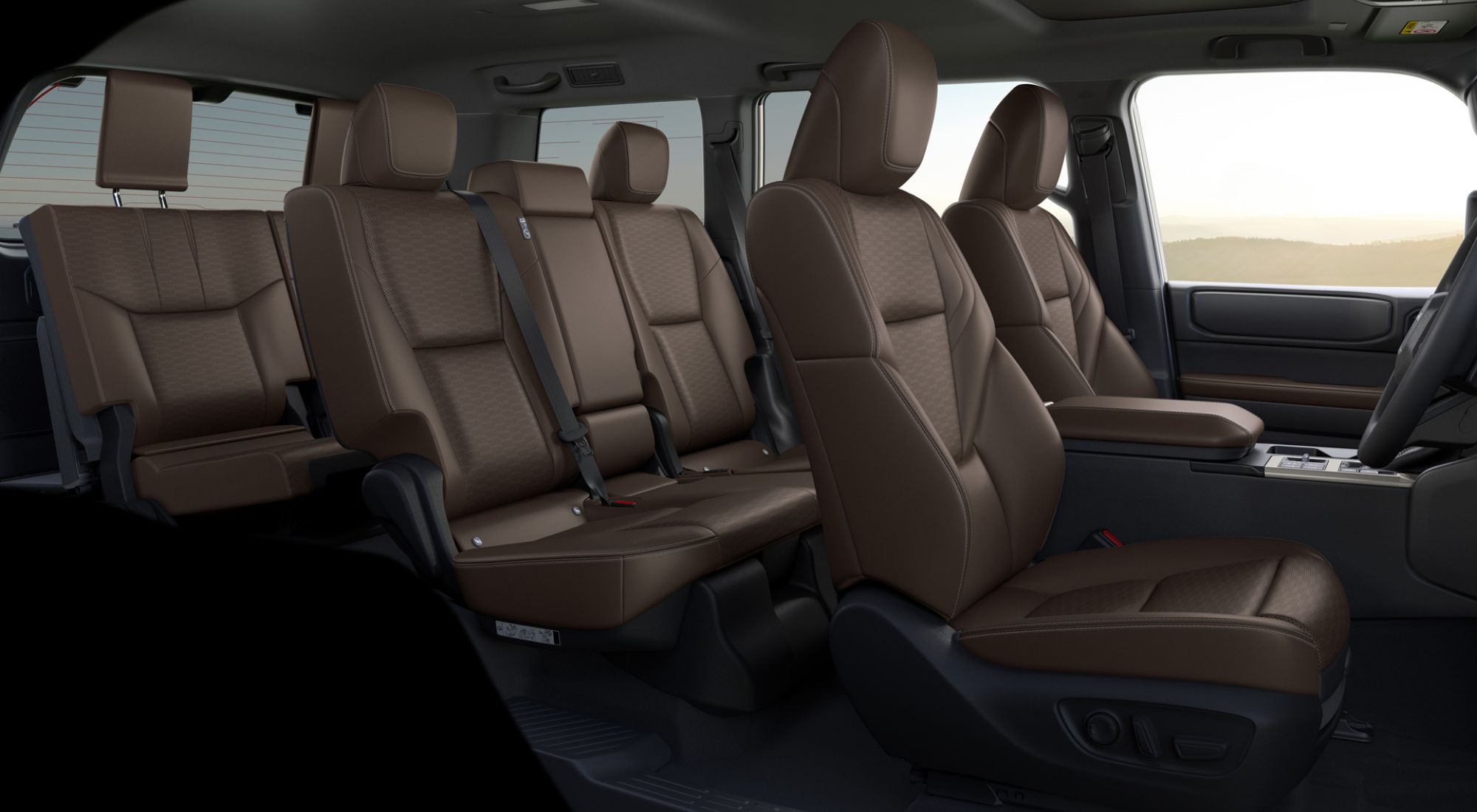
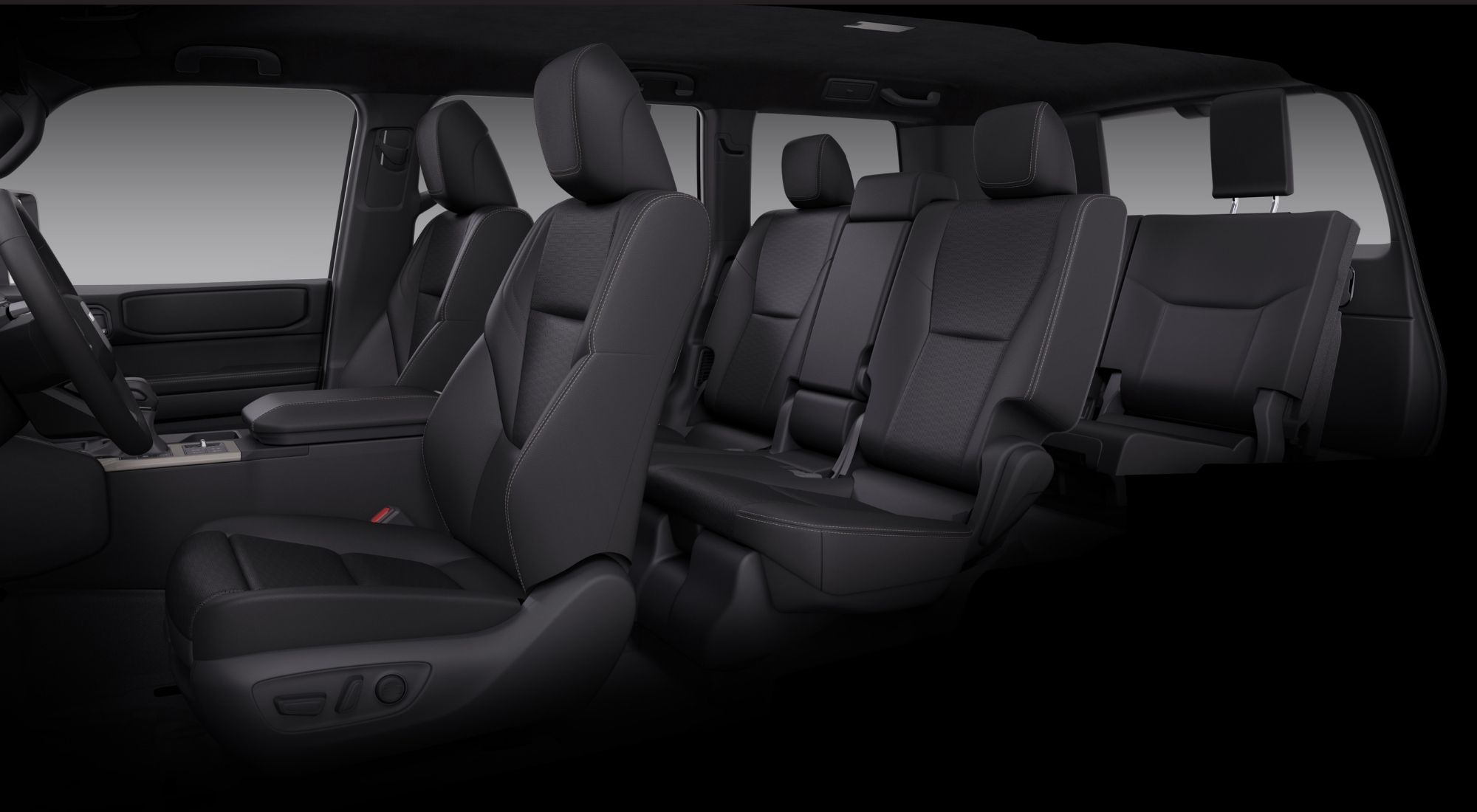
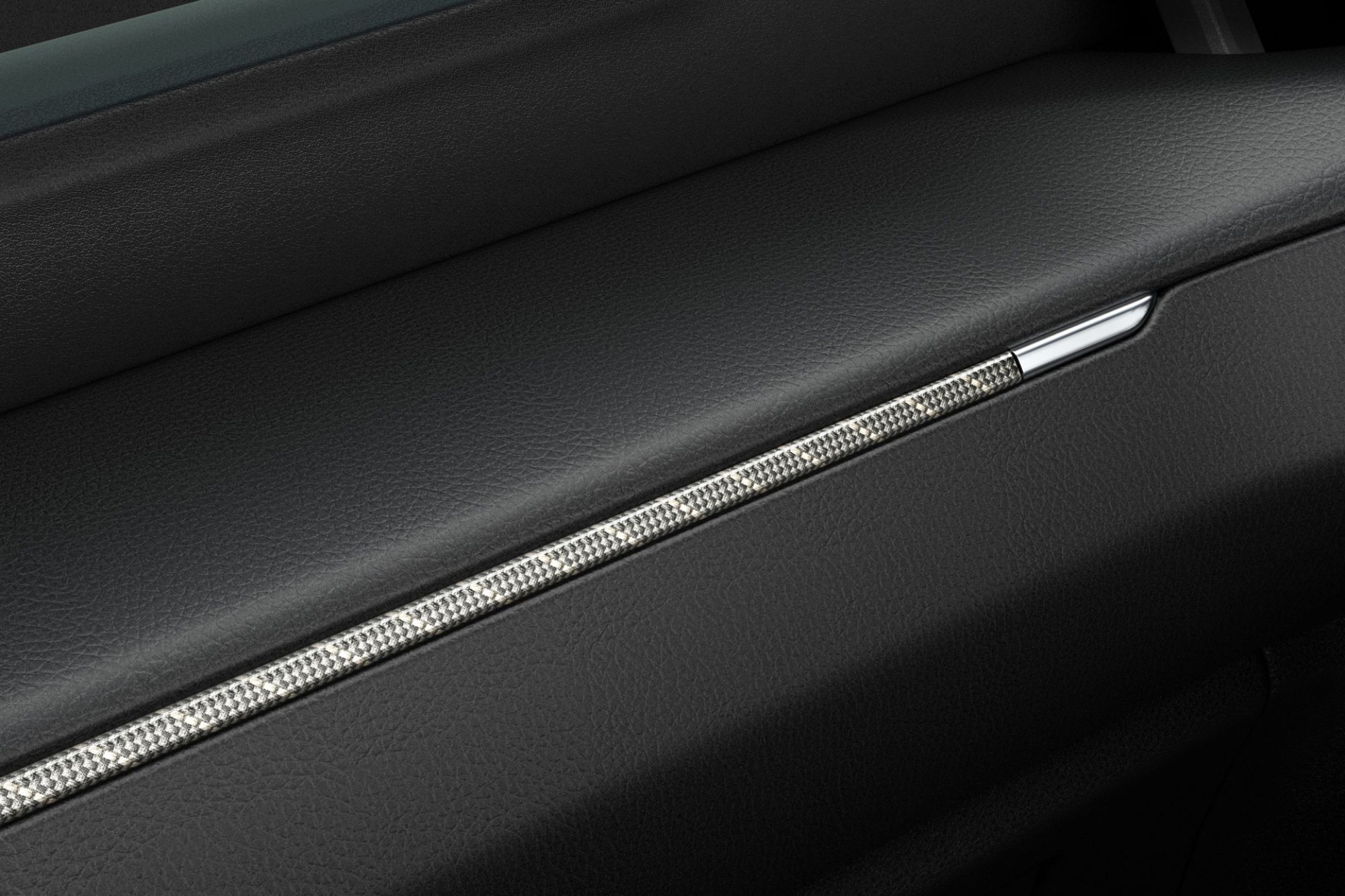
Interior quality has improved steadily across generations, from the utilitarian J90 and J120 to the more refined J150, and now the tech-heavy J250. On the current generation, the dashboard uses a horizontal layout with large, glove-friendly buttons rather than touch-heavy panels, a deliberate concession to usability in dusty or wet conditions. Higher J250 trims add dual 12.3-inch displays, while entry grades keep things simpler with smaller screens and fabric upholstery.
How Comfortable Is the Toyota Prado?
Front seats are supportive and well suited to long upcountry drives, and the tall seating position gives a commanding view of the road. Rear space is generous on the long-wheelbase J150 and J250, though the third row on pre-J250 generations is best reserved for children or short trips rather than adults on long journeys.
How Practical Is the Toyota Prado?
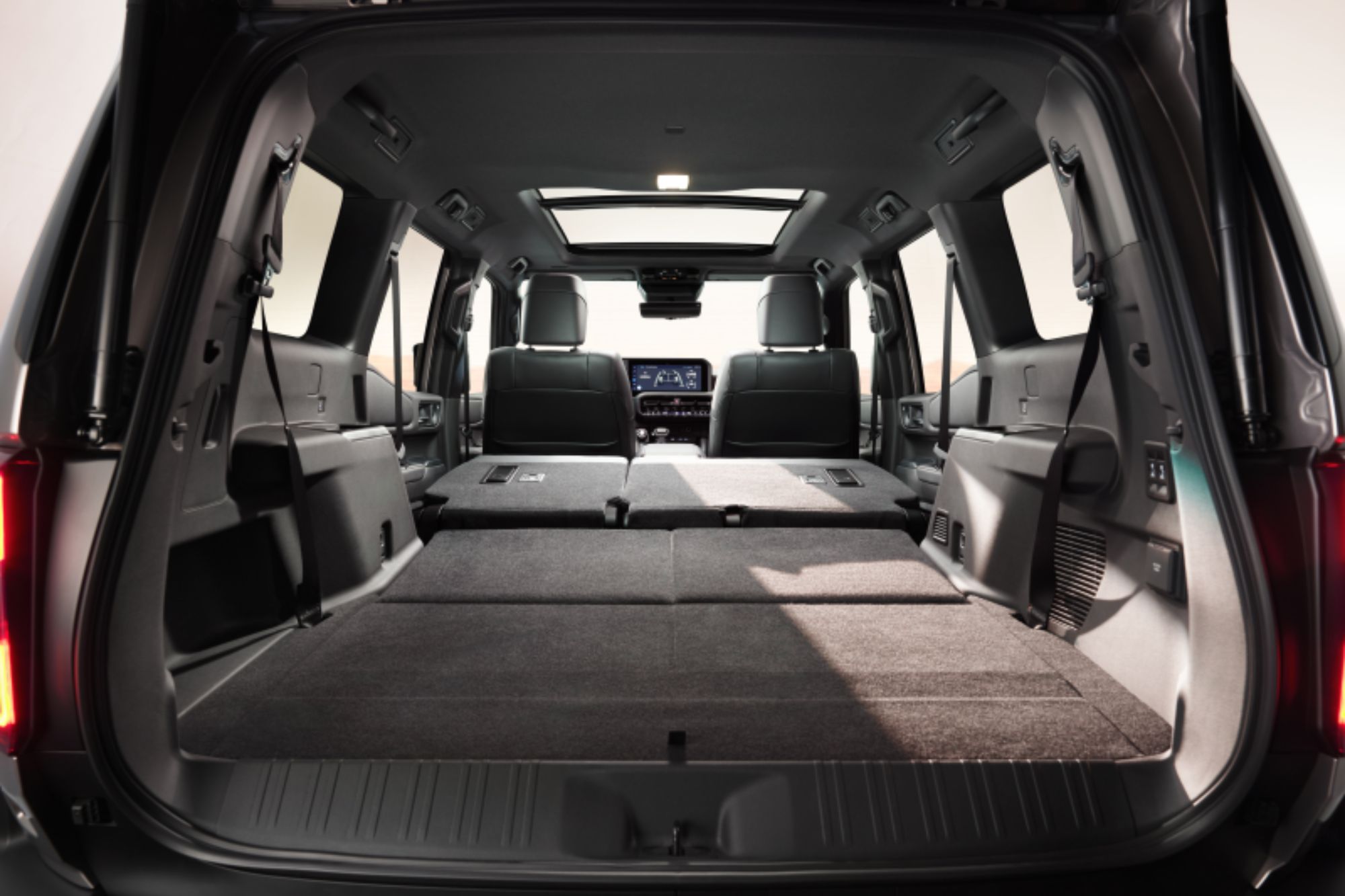
Boot Space: Modest with all seven seats in use on older generations; the J250’s third row now folds flat into the floor with a volume of approx. 130 – 2000 litres, a genuine improvement over the J150’s raised load step
Towing: The J250 is rated up to 3,500 kg braked in markets where Toyota publishes the figure, up from 3,000 kg on the post-2018 J150 and 2,500 kg on earlier J150 units – a genuine practical advantage over most crossover rivals
Storage: Door pockets, centre console bins and cabin cubbies typical of the class, more generous on later generations
Family Use: Comfortable for a family of five on any generation; seven-seat use works best on the J250 thanks to the flat-folding third row
Technology & Infotainment
What Technology Does It Come With?
Technology content varies enormously by generation. J90 and J120 units offer little beyond a basic radio and manual air conditioning. The J150 gradually added touchscreen infotainment, reverse cameras and, from 2017, a more modern instrument cluster on higher grades. The J250 is a significant step up again: higher grades get dual 12.3-inch displays, a digital rear-view mirror, and a head-up display on top trims.
What About Apple CarPlay and Android Auto?
Factory-fitted wireless smartphone mirroring is standard on most J250 units sold new. Older J120 and J150 imports typically lack it from factory, and many Kenyan-registered examples have had an aftermarket head unit fitted locally to add CarPlay and Android Auto – check exactly what is installed and whether it was professionally wired before buying a used unit.
Engine & Performance
What Engine Options Are Available?
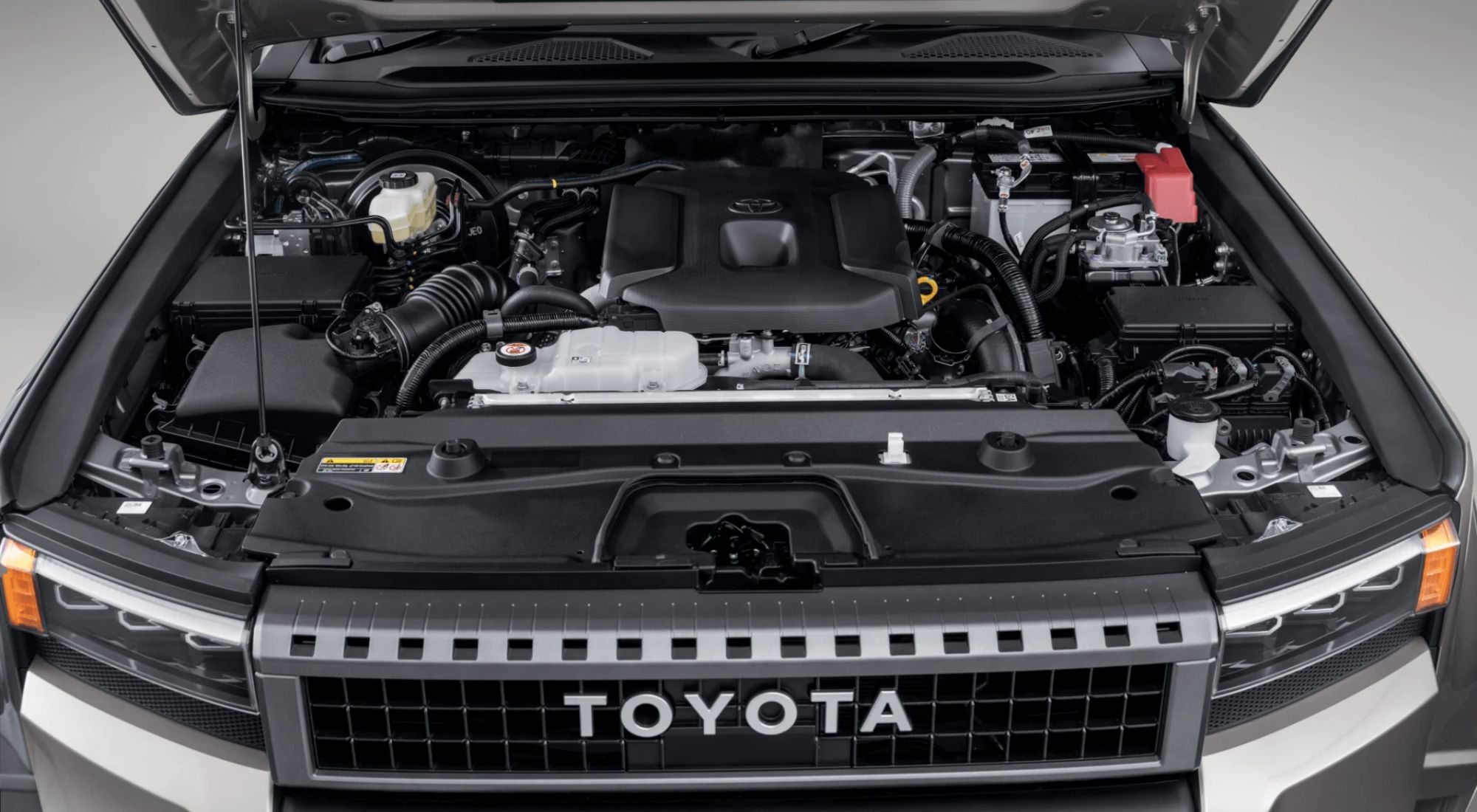
Engine choice is the single biggest factor separating Prado generations. Earlier J120 and J150 units offered a mix of petrol and diesel four- and six-cylinder engines; the current J250 has settled on two options for the Kenyan market.
| Generation / Engine | Power & Torque | Fuel Economy* | Notes |
|---|---|---|---|
| J120: 3.0L 1KZ-TE / 1KD-FTV Diesel | ~120-163 hp / 300-410 Nm | ~8-10 km/L | Diesel is the sought-after choice; petrol 2.7L and 3.4L V6 also offered |
| J150: 2.7L 2TR-FE Petrol | ~163 hp / 246 Nm | ~7-9 km/L | Simple, widely available, less torque for load or tow duty |
| J150: 2.8L 1GD-FTV Diesel (2015+) | ~174-201 hp / 420-500 Nm | ~10-12 km/L | The most popular used-import choice; strong parts support |
| J250: 2.8L 1GD-FTV Turbodiesel | ~201-204 hp / 500 Nm | ~11-13 km/L | 8-speed automatic; most popular new-generation choice in Kenya |
| J250: 2.7L 2TR-FE Petrol | ~163 hp | ~7-9 km/L | Lower upfront cost; noticeably less torque than the diesel |
*Figures are manufacturer or market-published ratings under test-cycle conditions rather than a single controlled Kenyan test, and vary by market and model year. Treat these as a ceiling rather than an expectation; see the Fuel Economy section for real-world figures.
How Powerful Is the Toyota Land Cruiser Prado?
None of the Prado’s engines is quick by class standards, and the older 2.7-litre petrol units in particular feel breathless when fully loaded or climbing. The 2.8-litre diesel, in both its J150 and J250 forms, is the better-rounded choice for Kenyan use, with enough low-down torque to pull comfortably at altitude and with a full load of passengers and luggage.
Is the Toyota Land Cruiser Prado Fast Enough?
For both city and highway driving, the Prado performs well, particularly in its diesel version. Toyota doesn’t prioritise high-speed performance with the Prado, so those seeking genuine speed should look elsewhere. However, the diesel engine offers confident and relaxed cruising, along with strong mid-range torque for easy overtaking.
Can the Toyota Land Cruiser Prado Tow or Carry Heavy Loads?
Yes, and this is one of the Prado’s clearest practical advantages over crossover rivals. The current J250 diesel is rated to tow up to 3,500 kg braked, versus 3,000 kg on the post-2018 J150 and 2,500 kg on earlier J150 units. Toyota Kenya has not published an official Kenyan-market towing figure for the J250 at the time of writing, so these numbers should be treated as an international reference pending local confirmation.
Driving Experience
How Does the Toyota Land Cruiser Prado Drive?
The switch to electric power steering (EPS) on the J250 is the biggest change behind the wheel across the model’s history. It removes the old hydraulic pump, cutting a maintenance item while giving lighter, more precise steering at parking speeds than any earlier generation, and it enables driver-assist features like Lane Trace Assist.
How Does It Perform in City Traffic?
Manageable rather than effortless. The Prado’s size and turning circle mean it is never as easy to place in traffic as a smaller car, but the tall seating position and, on the J250, lighter steering make town driving less intimidating than the vehicle’s dimensions suggest.
Is It Comfortable on the Highway?
Yes, and this is where the Prado has always been strong. The diesel engines cruise with a relaxed, unstressed feel, and later generations in particular ride with good composure at speed.
Can It Handle Rough Roads or Off-Road Driving?
This is the Prado’s reason for existing. With genuine ground clearance, a low-range transfer case, the J250 model features advanced technology such as the Stabiliser Disconnect Mechanism (SDM) for extra wheel articulation, Multi-Terrain Select (MTS) and Crawl Control; it handles rutted murram, river crossings and steep upcountry tracks with real confidence that unibody rivals cannot match.
How Does It Ride and Handle?
- Steering: hydraulic and heavier on J90-J150; light, precise electric steering on the J250
- Suspension: body-on-frame ride, firmer and busier than a unibody crossover, smoother on later generations
- Braking: ABS-equipped across the range, with predictable pedal feel
- Off-road Hardware: low-range transfer case and locking differential on higher grades; SDM and Crawl Control added on the J250
Fuel Economy
How Fuel-Efficient Is the Toyota Land Cruiser Prado?
Fuel economy is the Prado’s clearest weakness relative to smaller crossovers, though the diesel engines are respectable for a vehicle of this size and capability. Published figures range from around 7-9 km/L on the 2.7L petrol to around 11-13 km/L on the current 2.8L diesel, though these should be treated as a guide rather than a guarantee, since none are based on a single controlled Kenyan test.
What’s the Real-World Fuel Economy?
- J250 2.8L Diesel: approx. 9-11 km/L in mixed real-world driving, per owner and dealer reports
- J150 2.8L Diesel (2015+): approx. 8-11.5 km/L in mixed conditions
- 2.7L Petrol (J120/J150/J250): approx. 6-8 km/L, noticeably thirstier in city traffic and when loaded
- Older J90/J120 3.0L Diesel and V6 Petrol units: approx. 6-8 km/L, and worth budgeting for accordingly
These are figures consistently reported by Toyota Prado owners and dealers rather than a single controlled test, so expect some variation depending on driving style, traffic, and vehicle condition.
How Much Will It Cost to Fuel?
At the current EPRA-regulated Nairobi pump price of KSh 217.86 per litre for diesel (August-September 2026 cycle), a Prado J250 owner covering 1,000 km on an upcountry round trip at 11 km/L would use roughly KSh 19,800 in fuel. Multiply your own distance and economy at the current diesel price to estimate weekly, monthly and annual costs, since prices are reviewed periodically by the Energy and Petroleum Regulatory Authority (EPRA).
Fuel cost = Distance travelled ÷ Fuel economy × Price per litre
Safety
Is the Toyota Land Cruiser Prado Safe?
Safety provisions vary enormously by generation and model year, more so than on most cars in this segment, which makes checking a specific unit’s exact specification particularly important. The clearest dividing line on the J150 is the January 2017 update, when Toyota Safety Sense C became standard equipment; the J250 builds on this with a fuller Toyota Safety Sense suite from launch.
What Safety Technology Does It Have?
- Airbags: Driver and passenger standard from the J120 onward, with side curtain and knee airbags added on higher trims of later generations
- ABS: Anti-lock Braking System with Electronic Brakeforce Distribution (EBD), standard from the J120 onward
- Stability Control: Vehicle Stability Control (VSC) and traction control standard on the J150 and J250
- Electric Power Steering (EPS) System: Reduces the negative road feedback that is experienced with off-road driving
- Downhill Assist Control: Available on all J250 trims
- Seatbelts: 2 x 3 points | ISOFIX fixing available in the rear (J250)
- Driver-assist Tech: Toyota Safety Sense C (pre-collision system, lane departure alert) standard on J150 units from January 2017; a fuller Toyota Safety Sense suite, including Lane Trace Assist, on the J250
- Panoramic View Monitor 360 camera view
An independent crash test conducted by the Australasian New Car Assessment Programme (ANCAP), whose testing protocols closely mirror Euro NCAP’s, awarded J250-generation Prado variants a five-star safety rating in markets where it was tested. Kenyan-spec build quality and equipment should still be verified against the specific unit’s grade, since crash-test ratings are not always transferable one-for-one across every market variant.
CN Buyer’s Note
Exact ADAS and safety-feature availability by trim depends on the market a specific unit was originally built for – Japanese-domestic, Middle East, or grey import – which affects what Kenyan buyers actually receive. Confirm the safety equipment list against the specific unit’s grade sheet before publishing a definitive per-trim breakdown.
Trim Levels
Which Trim Should You Buy?
Entry-level (TX / GX): Fabric seats, manual climate control, steel wheels on the oldest units, and a robust base suspension. Off-road hardware is retained in full even at this level, making it a strong choice for safari operators, farms and fleet buyers who want Prado toughness without paying for luxury extras.
Mid-spec (TX-L / VX): Adds alloy wheels, leather seats, a larger infotainment screen and better cabin insulation for quieter town driving. This tier offers the best balance of features and price for most Kenyan private buyers, and on the J250 it is one of the two grades sold new through CFAO Mobility.
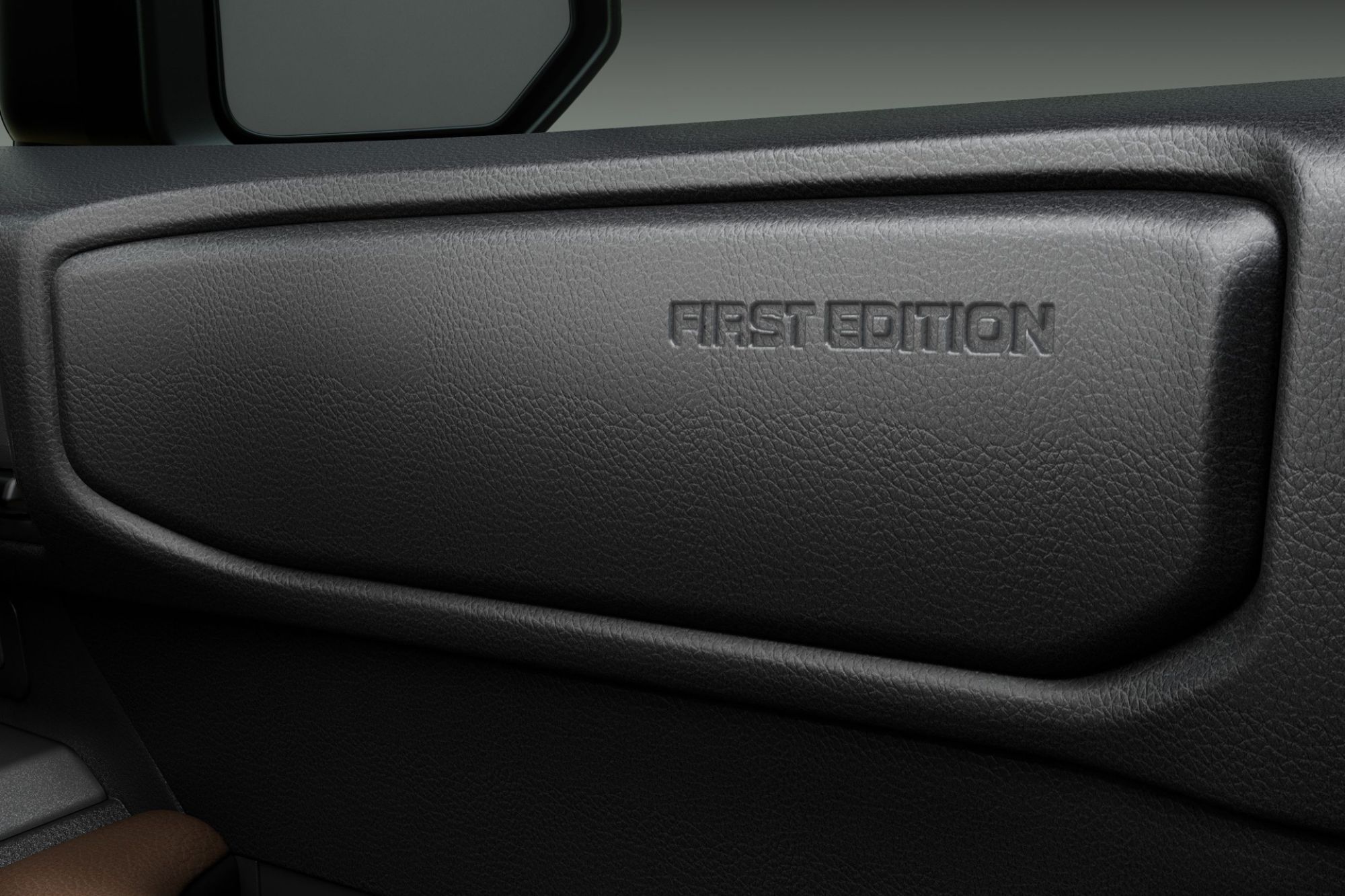
Top-spec (TZ-G / VX-L / First Edition, import): The range-topping grades bring dual screens, a digital rearview mirror, heated and ventilated seats, and – on the J250 First Edition – retro round headlights and a limited-production interior. These grades reach Kenya mainly through direct or grey imports from Japan and the UK rather than the official dealer network, so buyers should budget extra time and cost for import logistics.
Technical Specifications
Figures below reflect the current J250 generation; verify against the logbook and Toyota specification sheet of the specific unit you are considering, since older generations differ substantially.
| Specification | Detail |
|---|---|
| Platform | GA-F (TNGA-F) body-on-frame, shared with Land Cruiser 300 / Lexus GX |
| Engine Options | 2.8L 1GD-FTV turbodiesel / 2.7L 2TR-FE petrol |
| Power (Diesel) | ~201-204 hp / 500 Nm |
| Power (Petrol) | ~163 hp |
| Transmission | 8-speed automatic |
| Drive Type | Full-time 4WD, locking centre differential, Stabiliser Disconnect Mechanism |
| Top Speed | ~4,920 mm / ~2,850 mm |
| Fuel Tank Capacity | ~80-110 litres, varies by market and grade – confirm against the specific unit |
| Tyre Size | 265/65R18, 265/70R18, 265/60R20 |
| Front Suspension | Double wishbone |
| Rear Suspension | Multi-link |
| Front Brakes | Ventilated discs |
| Rear Brakes | Ventilated discs |
| Towing Capacity (braked) | Up to 3,500 kg – confirm model-spec rating with dealer |
| Ground Clearance | ~ 215-221 mm |
| Approach Angle | Up to 31 degrees |
| Departure Angle | ~17 to 22 degrees |
| Ramp Breakover Angle | ~22 to 25 degrees |
| Wading Depth | ~700 mm |
Ownership Costs
How Much Does the Toyota Axio Cost in Kenya?
- Used J120 (2002-2009): KSh 1.6-2.6 million, diesel commanding a premium over petrol
- Used J150 (2009-2015): KSh 2.6-4.5 million
- Used J150 (2019-2021, foreign used): KSh 6-12.7 million, diesel TX grade in highest demand
- New J250 (2024-, CFAO Mobility GX Diesel): From approx. KSh 16.1 million
- New/near-new J250 (VX and higher grades, dealer or import): Approx. KSh 16-20 million
Toyota Kenya’s official new-vehicle stock through CFAO Mobility currently centres on the J250 NG Prado KH ALL ROUNDER and NG Prado ADVENTURE PLUS – KP; all older generations are bought and sold exclusively on the used-car and import markets. Prices above will vary with mileage, import history, engine choice and condition.
How Much Does It Cost to Own?
Routine servicing on the diesel engines is broadly affordable by Kenyan standards, particularly the 1GD-FTV unit shared with the Hilux. However, exact intervals and costs should be confirmed with an authorised service centre for the specific model year. Basic services typically run every 5,000-10,000 km, with more comprehensive inspections at longer intervals.
Is the Toyota Land Cruiser Prado Reliable?
Yes, in line with Toyota’s strong reputation, and this is a large part of why the Prado holds its value so well. The diesel engines, in particular, are known for their durability when serviced regularly. As with any used SUV, buyers should budget for wear items such as suspension bushes and CV joints, especially on higher-mileage models. Additionally, for the J250 specifically, it’s important to consider that its electronic components and body panels have recently been introduced to the Kenyan market.
Is It Expensive to Maintain?
Engine and drivetrain parts are widely stocked and reasonably priced across Kenya’s independent garages, not just Toyota’s own centres, since the 1GD-FTV diesel is shared with the Hilux. Body panels, lighting units and some electronic components for the new J250 shape are a different story: because they are newly introduced to the market, they currently cost more and can take longer to source than equivalent J150 parts, particularly after an accident. Resale value remains a strong offsetting factor – Prados have historically held their value better than most 4×4 SUVs on Kenya’s used market.
Competitors
Who Are the Challengers?
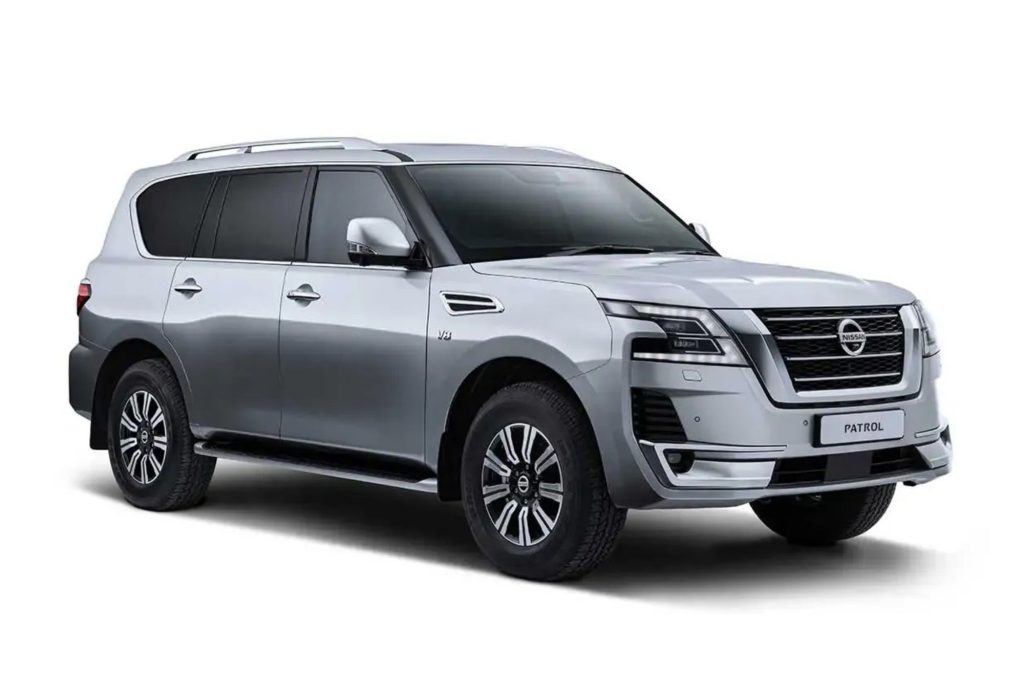
Nissan Patrol: More power and a strong off-road pedigree, at the cost of higher fuel consumption and a thinner local parts network than Toyota’s.
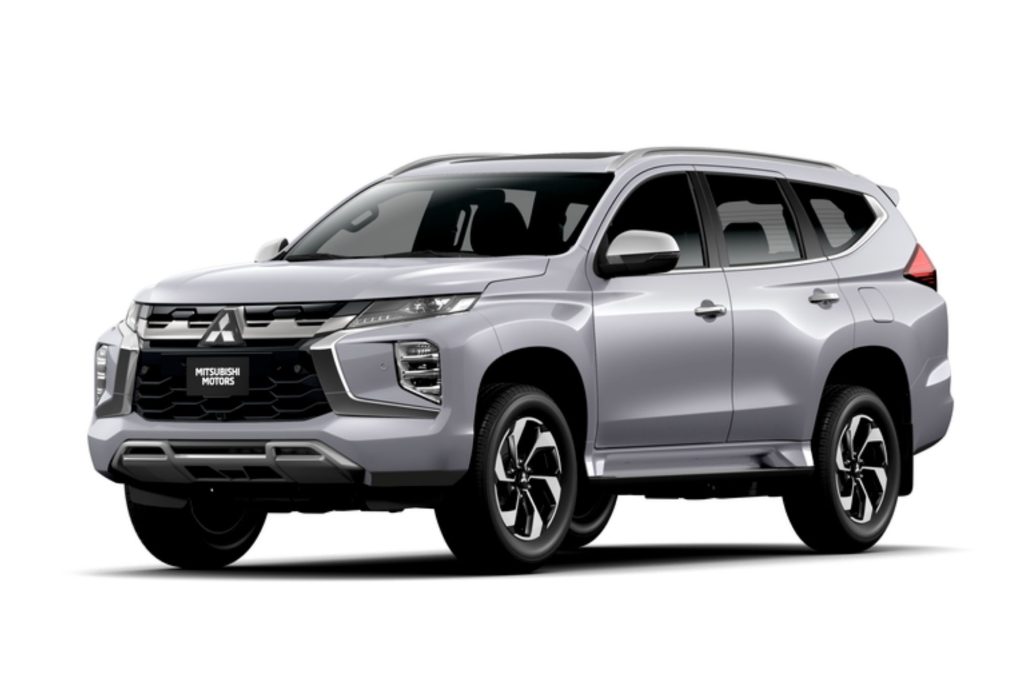
Mitsubishi Pajero / Pajero Sport: A lower purchase price with decent off-road ability, though less prestige and a smaller resale premium in Kenya.
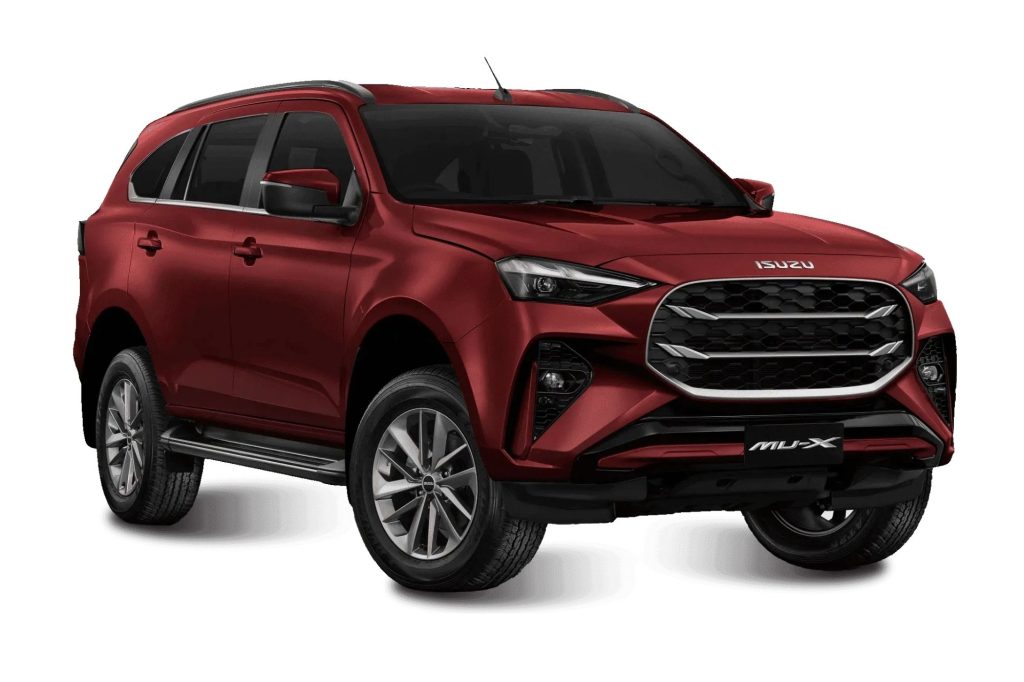
Isuzu MU-X: Locally assembled, with a tough, work-ready build and strong fuel economy that make it a genuine rival on running costs, and it handles rough off-road tracks with ease.
Land Rover Defender: A stronger off-road image and a more luxurious feel, offset by significantly higher running and parts costs.

Which Is Better?
For buyers who prioritise resale value, parts availability and proven off-road capability, the Prado remains the safest choice on Kenya’s market across almost every price point. Buyers wanting more outright power should cross-shop the Nissan Patrol; buyers on a tighter budget, or who want the lowest running costs, should look at the Isuzu MU-X. Let us know in the comments or on the CarTalk KE Forum which one you would choose.
Who Should Buy It?
Is the Toyota Land Cruiser Prado Right for You?
- Buyers who need one vehicle for both Nairobi commuting and upcountry or safari-style trips
- Families wanting genuine 7-seat capability, ideally on the J250 for its flat-folding third row
- Farmers, NGOs and safari operators who prioritise durability and off-road hardware over luxury trim
- Anyone who rates long-term resale value and countrywide parts availability above outright novelty
- Buyers with a wide budget range, from an affordable used J120 to a brand-new J250
Who should look elsewhere: buyers who mainly drive sealed urban roads and never need real off-road ability may find a smaller crossover or a Fortuner more cost-effective to run, and those wanting the very latest tech at the lowest possible price should note that the J250’s higher grades are still hard to source new in Kenya.
Pros & Cons
| ✅ Pros | ❌ Cons |
|---|---|
| Outstanding off-road capability across every generation | Fuel economy trails smaller crossovers |
| Low maintenance costs on engine/drivetrain, shared with Hilux parts | Body-on-frame ride firmer than unibody rivals |
| Proven Toyota mechanical reliability | New J250 pricing has climbed sharply |
| Excellent resale value in Kenya’s used market | Safety tech varies significantly by model year |
| Genuine towing and load-carrying ability | Third row tight on pre-J250 generations |
| Wide choice of generations and price points | Higher J250 grades mostly reach Kenya via import |
CN Verdict
Is the Toyota Land Cruiser Prado Worth Buying?
Yes, for the buyer it’s built for. Across five generations, the Prado’s strengths have stayed consistent: genuine off-road capability, strong towing and load-carrying ability, and Toyota’s dependable engineering, backed by the best resale value in Kenya’s used-SUV market. Its weaknesses are just as consistent: firmer ride than a unibody rival, higher fuel consumption than a crossover, and safety technology that depends heavily on which model year you buy.
The new J250 sharpens the formula further, fixing the J150’s flat-folding third-row flaw and adding real off-road hardware alongside a significant tech upgrade, but at a new-unit price that has climbed sharply and with its best grades still hard to source new in Kenya. Overall, the Prado remains one of the smartest choices in Kenya’s SUV segment for buyers whose driving genuinely spans tarmac and rough terrain. The 2.8L diesel is the best all-round pick across every generation, and a well-inspected used J150 remains the sweet spot of price and capability for most buyers, while the J250 rewards anyone who can stretch to it.
CN Rating
| Category | Score |
|---|---|
| Exterior Design | 9/10 |
| Interior & Comfort | 9/10 |
| Practicality | 8/10 |
| Technology | 8/10 |
| Performance | 8/10 |
| Fuel Economy | 7/10 |
| Safety | 9/10 |
| Ownership Costs | 6/10 |
| Value for Money | 8/10 |
| Overall Rating | 8/10 |
Editorial Award
⭐ Highly Recommended – One of the most capable all-rounders in Kenya’s SUV segment, provided its running costs and new-unit pricing fit your budget.






No Comment! Be the first one.