









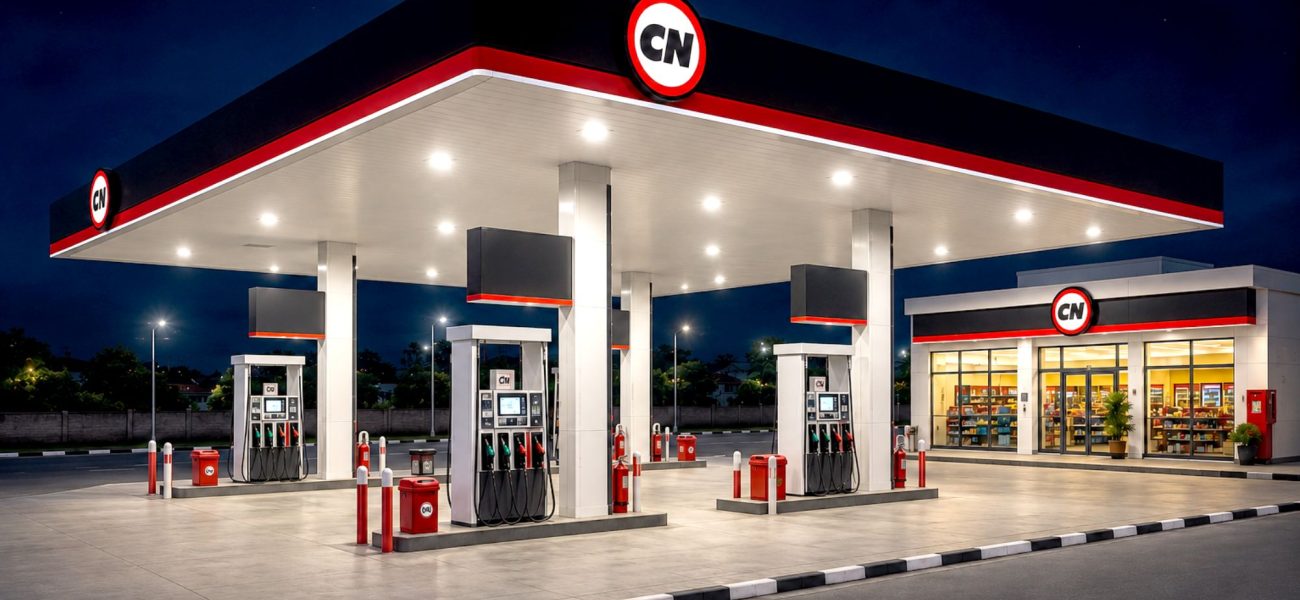
EPRA August 2026 Fuel Price Update
EPRA has reduced Kenya's maximum retail price of Diesel by KSh 5 per litre for the August-September 2026 pricing cycle, while Super Petrol and Kerosene remain unchanged.

CN Quick Facts
Fuel Price Overview in Nairobi
| Fuel | New Price | Change |
|---|---|---|
| Super Petrol | KSh 214.03/L | ■ No change |
| Diesel | KSh 217.86/L | ▼ KSh 5.00 |
| Kerosene | KSh 191.38/L | ■ No change |
The new prices take effect from 15 August 2026 and remain in force until 14 September 2026.
What's in this Article
- Diesel Falls by KSh 5 as Petrol and Kerosene Hold Steady
- Why Has Diesel Become Cheaper in August 2026?
- What Happened to Petrol and Kerosene Prices?
- What Role Is Government Fuel Stabilisation Playing?
- What Taxes Are Included in the August Fuel Prices?
- What’s Behind the August 2026 Fuel Prices?
- What are the Fuel Prices Across Kenya?
- What Does the August Diesel Price Cut Mean for Motorists and the Economy?
- How Do August 2026 Fuel Prices Compare With Previous Months?
- Fuel Tips for Car Owners – Maximise Every Drop
- What Should Motorists Watch in the Next EPRA Review?
Previous prices – 15 July to 14 August 2026:
- Super Petrol: KSh 214.03 per litre
- Diesel: KSh 222.86 per litre
- Kerosene: KSh 191.38 per litre
The August review therefore delivers a KSh 5 reduction in Diesel, while Super Petrol and Kerosene remain unchanged.
Diesel Falls by KSh 5 as Petrol and Kerosene Hold Steady
Kenyan motorists will pay less for Diesel during the latest EPRA pricing cycle after the Energy and Petroleum Regulatory Authority reduced the maximum retail price by KSh 5 per litre.
In Nairobi, Diesel now retails at a maximum of KSh 217.86 per litre, down from KSh 222.86 in the previous pricing cycle.
Super Petrol remains unchanged at KSh 214.03 per litre, while Kerosene remains at KSh 191.38 per litre.
The new prices apply from 15 August to 14 September 2026.
The Diesel reduction provides some relief to motorists, public transport operators, commercial fleets and businesses that depend heavily on Diesel. However, the reduction remains relatively modest compared with the significant increases recorded earlier in 2026.
Why Has Diesel Become Cheaper in August 2026?
The August reduction is largely associated with a significant decline in the cost of imported Diesel.
EPRA’s latest review shows that the average landed cost of imported Diesel fell from US$984.37 per cubic metre in June to approximately US$855.00 per cubic metre in July. That represents a decline of approximately 13.14%.
Kerosene also recorded a substantial decline, falling from US$1,028.17 to US$915.01 per cubic metre, a decrease of approximately 11.01%.
Super Petrol moved in the opposite direction. Its average landed cost increased from US$886.92 to US$948.92 per cubic metre, representing an increase of approximately 6.99%.
The movements demonstrate why the three petroleum products did not receive identical price adjustments during the August review.
CN Explained
The landed cost represents the cost associated with procuring and bringing imported petroleum products into Kenya before local taxes, levies, distribution costs, margins and other components of the pricing formula are included.
Kenya imports its petroleum requirements in refined form. This means local pump prices remain exposed to international petroleum markets and the cost of importing those products.
A decline in landed cost can create room for lower pump prices, but the final retail price is also affected by other elements of Kenya’s regulated petroleum-pricing formula.
What Happened to Petrol and Kerosene Prices?
Although the landed cost of Super Petrol increased by approximately 6.99%, its Nairobi maximum retail price remained unchanged at KSh 214.03 per litre.
Kerosene also remained unchanged at KSh 191.38 per litre, despite its landed cost declining by approximately 11.01%.
This outcome reflects the role of Government Stabilisation Support Measures in the August review.
EPRA said an additional KSh 938 million in government stabilisation support was used to keep Super Petrol and Kerosene prices unchanged while allowing the Diesel price to fall by KSh 5 per litre.
The August review therefore highlights an important feature of Kenya’s fuel-pricing system: movements in landed costs do not necessarily translate directly into equivalent movements at the pump.
What Role Is Government Fuel Stabilisation Playing?
The government continues to use the Petroleum Development Levy Fund as one of the mechanisms for cushioning consumers against volatility in international petroleum markets.
For the August-September pricing cycle, approximately KSh 938 million in additional government stabilisation support was deployed. EPRA said the support enabled Super Petrol and Kerosene prices to remain unchanged while Diesel received a KSh 5 reduction.
This follows the KSh 945 million stabilisation support deployed during the July-August pricing cycle.
The interventions are said to be part of the government’s wider effort to reduce the impact of global petroleum-price volatility on Kenyan households and businesses.
The government has also maintained the 8% VAT rate on petroleum products, with the reduced rate scheduled to remain in effect until October 2026.
What Taxes Are Included in the August Fuel Prices?
EPRA’s maximum retail prices are inclusive of applicable taxes and levies.
The regulated fuel-pricing formula incorporates taxes, levies and other costs alongside the landed cost of imported petroleum products.
The continued 8% VAT rate on petroleum products remains an important part of the government’s effort to limit the impact of international petroleum-price movements on consumers.
For motorists, this means the pump price cannot be understood simply by looking at international oil prices or the landed cost of imported fuel.
What’s Behind the August 2026 Fuel Prices?
Several factors influenced the latest EPRA review:
- Diesel Landed Cost – The average landed cost fell by approximately 13.14%, from US$984.37 to US$855.00 per cubic metre.
- Kerosene Landed Cost – The average landed cost declined by approximately 11.01%, from US$1,028.17 to US$915.01 per cubic metre.
- Super Petrol Landed Cost – The average landed cost increased by approximately 6.99%, from US$886.92 to US$948.92 per cubic metre.
- Government Stabilisation – Approximately KSh 938 million was deployed to support fuel-price stability.
- International Oil Markets – Global petroleum prices continued to experience volatility during the review period.
- Exchange Rate – Movements in the Kenya Shilling against the US dollar remain relevant because imported petroleum products are traded internationally in US dollars.
The August outcome is therefore a mixed one: Diesel became cheaper, Petrol faced higher import costs but remained unchanged, and Kerosene remained unchanged despite a substantial decline in its landed cost.
What are the Fuel Prices Across Kenya?
Fuel prices vary across Kenya because of transportation and distribution costs. Under the 15 August–14 September 2026 pricing cycle, selected major towns have the following maximum retail prices:
| Town | Super Petrol | Diesel | Kerosene |
|---|---|---|---|
| Mombasa | KSh 210.87 | KSh 214.58 | KSh 188.09 |
| Nairobi | KSh 214.03 | KSh 217.86 | KSh 191.38 |
| Nakuru | KSh 212.92 | KSh 217.27 | KSh 190.81 |
| Eldoret | KSh 213.69 | KSh 218.09 | KSh 191.63 |
| Kisumu | KSh 213.69 | KSh 218.08 | KSh 191.63 |
The figures show that Mombasa continues to record lower maximum retail prices than Nairobi, reflecting its proximity to the country’s main petroleum import point. Inland prices incorporate additional transportation and distribution costs.
What Does the August Diesel Price Cut Mean for Motorists and the Economy?
August’s KSh 5 diesel price cut offers tangible relief for high-volume motorists and commercial fleets. A driver using 50 litres saves KSh 250 (dropping to KSh 10,893), while a 100-litre purchase saves KSh 500.
For commercial logistics and PSV operators, the savings scale up; a 1,000-litre monthly fleet expense drops by KSh 5,000. While this eases overall operating margins for public transport providers, passenger fares may not fall automatically, as they remain heavily tied to secondary costs like maintenance, insurance, and wages.
How Do August 2026 Fuel Prices Compare With Previous Months?
The August review follows the price increases experienced earlier in 2026 and the subsequent stabilisation measures.
| Pricing Period | Super Petrol | Diesel | Kerosene |
|---|---|---|---|
| December 2025 | KSh 184.52 | KSh 171.47 | KSh 154.78 |
| January 2026 | KSh 182.52 | KSh 170.47 | KSh 153.78 |
| February 2026 | KSh 178.28 | KSh 166.54 | KSh 152.78 |
| March 2026 | KSh 178.28 | KSh 166.54 | KSh 152.78 |
| April 2026 | KSh 197.60 | KSh 196.63 | KSh 152.78 |
| May 2026 – revised | KSh 214.25 | KSh 232.86 | KSh 191.38 |
| June 2026 | KSh 214.03 | KSh 222.86 | KSh 191.38 |
| July 2026 | KSh 214.03 | KSh 222.86 | KSh 191.38 |
| August 2026 | KSh 214.03 | KSh 217.86 | KSh 191.38 |
The August review therefore leaves Super Petrol and Kerosene unchanged while reducing Diesel by KSh 5.
Compared with February 2026, however:
- Super Petrol is KSh 35.75 more expensive per litre.
- Diesel is KSh 51.32 more expensive per litre.
- Kerosene is KSh 38.60 more expensive per litre.
The latest Diesel reduction therefore represents partial relief rather than a return to the lower fuel prices recorded during the first quarter of 2026.
Fuel Tips for Car Owners – Maximise Every Drop
Although Diesel prices have fallen, fuel remains significantly more expensive than it was earlier in 2026.
Motorists can continue taking practical steps to improve fuel efficiency:
- Maintain Proper Tyre Pressure: Correct tyre pressure helps reduce rolling resistance and unnecessary fuel consumption.
- Drive Smoothly: Avoid unnecessary hard acceleration and braking.
- Service Your Vehicle Regularly: Keep up with scheduled servicing and address warning lights or unusual vehicle behaviour promptly.
- Avoid Unnecessary Idling: Reduce unnecessary fuel consumption when stationary for extended periods where it is safe and appropriate.
- Plan Your Journeys: Combining trips can help reduce unnecessary kilometres and fuel consumption.
- Track Fuel Consumption: Monitor litres used against kilometres travelled. Changes in fuel economy can help identify maintenance issues.
💡 Check out our Why Regular Car Servicing Saves You Money article for more practical vehicle ownership tips.
CN Key Takeaways
- Super Petrol remains at KSh 214.03 per litre in Nairobi.
- Diesel falls by KSh 5.00 to KSh 217.86 per litre.
- Kerosene remains at KSh 191.38 per litre.
- The new prices apply from 15 August to 14 September 2026.
- Diesel’s landed cost fell by approximately 13.14% month-on-month.
- Kerosene’s landed cost fell by approximately 11.01%.
- Super Petrol’s landed cost increased by approximately 6.99%.
- Approximately KSh 938 million in government stabilisation support was deployed during the latest review.
- Despite the Diesel reduction, fuel prices remain substantially higher than February and March 2026 levels.
- Motorists should continue monitoring landed costs, international petroleum markets, exchange rates, taxes and government stabilisation measures.
What Should Motorists Watch in the Next EPRA Review?
The August review provides some relief for Diesel users, but it also raises an important question about the direction of fuel prices during the remainder of 2026.
Diesel’s landed cost fell by approximately 13.14%, helping create room for the KSh 5 reduction at the pump.
However, Super Petrol’s landed cost increased by approximately 6.99%, yet its retail price remained unchanged because of government stabilisation measures.
Kerosene also recorded an 11.01% decline in landed cost, but its maximum retail price remained unchanged.
The next EPRA review will therefore be important in determining whether the current price-stabilisation measures can shield motorists from international market movements.
Motorists should monitor:
- International crude and refined petroleum prices
- The cost of imported petroleum products
- The USD/KSh exchange rate
- Petroleum taxes and levies
- Government stabilisation support
- The Petroleum Development Levy Fund
- The 8% VAT rate and its position after October 2026
- Future movements in Diesel, Petrol and Kerosene landed costs
The August review demonstrates that lower import costs do not automatically result in equivalent pump-price reductions. The final price is determined by the wider petroleum-pricing formula and government interventions.
For motorists, the KSh 5 Diesel reduction is welcome, particularly for high-mileage drivers and commercial operators. However, fuel remains considerably more expensive than it was during the first quarter of 2026.
CarNews KE will continue monitoring EPRA’s monthly fuel-price reviews and explaining what they mean for Kenyan motorists, businesses and the wider economy.
Join the Conversation
💬 What are your thoughts on the August 2026 fuel prices? Does the KSh 5 reduction in Diesel provide meaningful relief, or should motorists be seeing a larger reduction given the fall in Diesel’s landed cost?
Share your views in the comments and join the discussion on the CarTalk KE Forum.








No Comment! Be the first one.