








NTSA Introduces New ‘KE’ Number Plates: Explainer of the Different Plates in Kenya
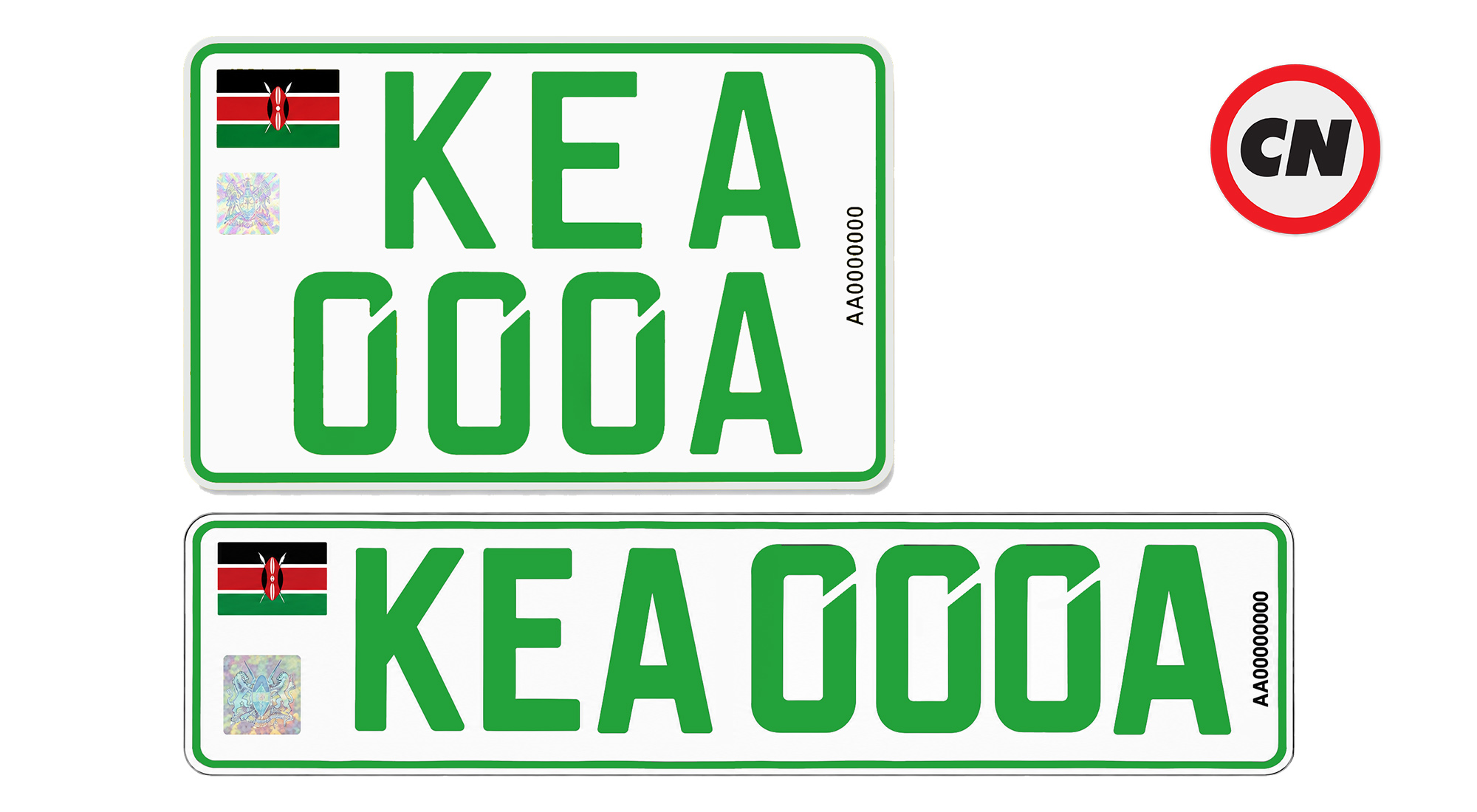
NTSA introduces the new 'KEA' vehicle number plate series in Kenya. We discuss what the 'KE' transition means for motorists, registration rules, and full number plate colour codes.

CN Quick Facts
- NTSA transitions to the new ‘KE’ registration series (starting with ‘KEA’).
- The available combinations under the previous ‘KD’ series (KDZ 999Z) have been progressively exhausted.
- It impacts buyers of newly imported or locally assembled vehicles and ownership transfers.
- Price: Standard digital reflective plates fee remains KSh 3,050 via eCitizen.
- Plate Specifications: Advanced digital reflective plates featuring FE-Schrift font, microchip technology, anti-counterfeit holograms, and the Kenyan flag.
What's in this Article
NTSA Moves to the New KE Number Plate Series
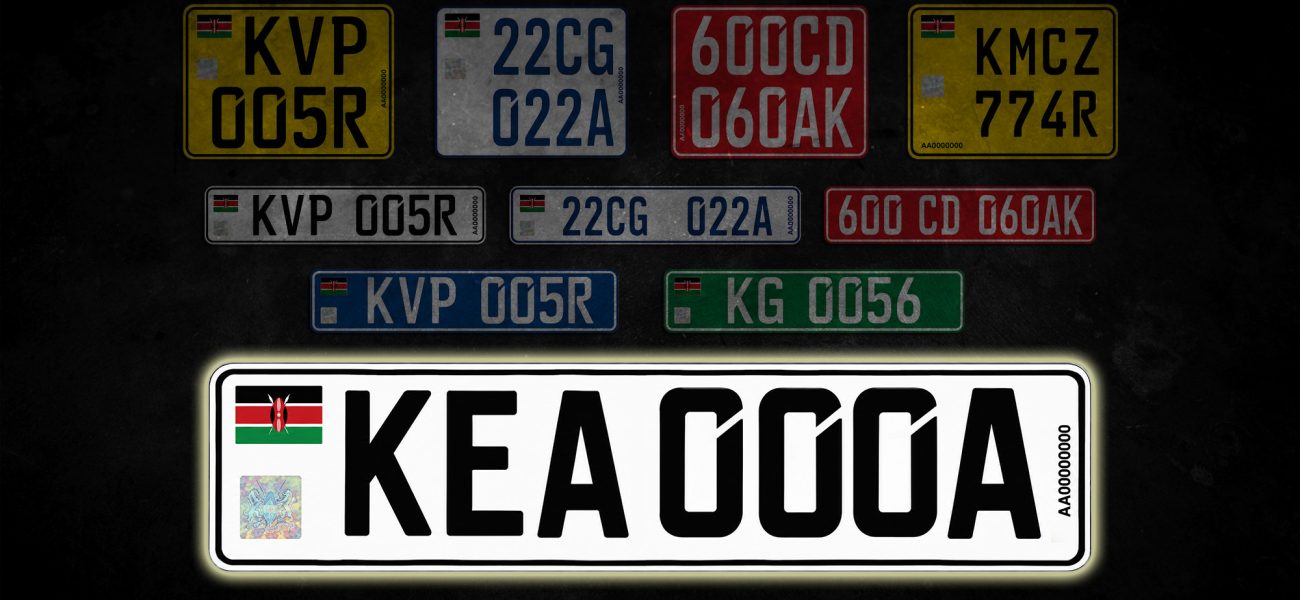
Motorists across the country have started noticing something different on newly registered vehicles: number plates beginning with “KE” instead of the familiar “KD.” The National Transport and Safety Authority (NTSA) has officially begun issuing the new ‘KE’ vehicle registration series, debuting with the KEA 001A combination.
The shift has generated a lot of buzz online, with motorists speculating about when combinations such as KEA, KEG, and KES will become available. NTSA has responded to these posts, informing the public that these combinations will be available in due time.
This transition comes after the complete exhaustion of the ‘KD’ series, which concluded with the KDZ 999Z sequence. The ‘KE’ prefix is being issued through the routine vehicle registration pipeline on the NTSA service portal via eCitizen. Motorists registering newly acquired vehicles or completing ownership transfers will now automatically receive the new ‘KE’ sequence plates.
NTSA has clarified that the introduction of ‘KE’ is simply a numerical progression within Kenya’s sequential national database and does not alter registration requirements or signal a new enforcement regime.
What Impact Does the New ‘KE’ Series Have?
For Kenyan motorists, vehicle buyers, and industry dealers, the new series represents several key developments:
- Impact on Buyers & Resellers: Vehicles bearing the new ‘KEA’ registration instantly signify a newly registered vehicle in the country, providing clear timing context for the second-hand car market.
- Impact on Dealerships: Showrooms and importers will clear out existing ‘KD’ inventories as freshly cleared imports transition directly into the ‘KE’ system.
- Digital & Security Standards: All new ‘KE’ plates are fitted with NTSA’s modern digital features – including integrated microchips, laser-engraved national flags, watermarks, anti-counterfeit holograms, and FE-Schrift typography designed to integrate seamlessly with Automatic Number Plate Recognition (ANPR) speed cameras.
Key Details: Kenyan Registration & Plate Standards
| Category | Specification / Standard |
|---|---|
| New Series Prefix | KEA 001A onwards |
| Format | LLL NNNL (3 Letters, 3 Digits, 1 Letter) |
| Standard Cost | KSh 3,050 for new generation reflective plates |
| Omitted Letters | ‘I’ and ‘O’ (to prevent confusion with numbers 1 and 0) |
| Reserved Civilian Prefixes | KDF (Reserved for Kenya Defence Forces to avoid military overlap) |
What Do the Different Number Plates in Kenya Mean?
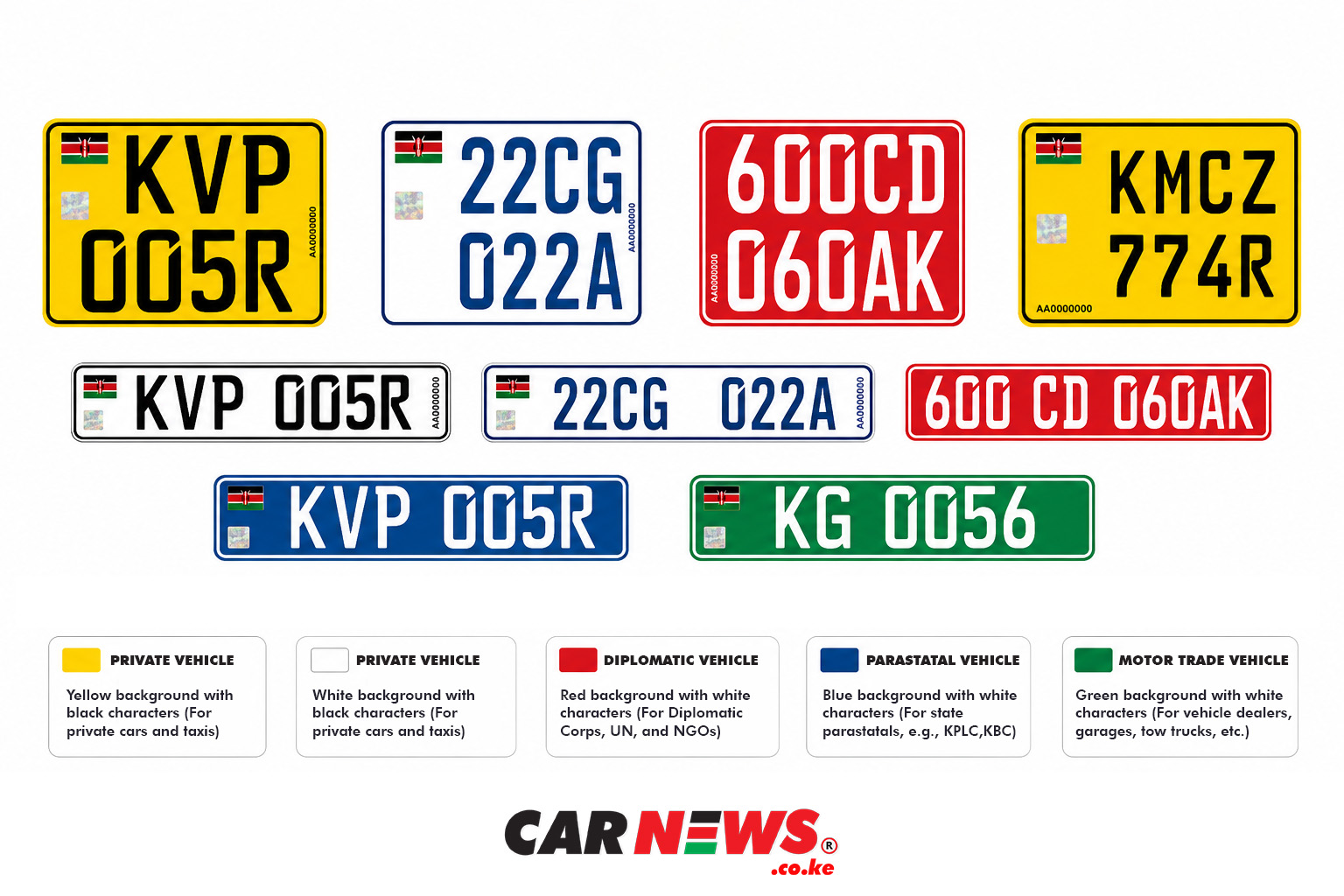
Number plates on Kenyan roads are far more than administrative tags; their background colours, lettering fonts, and prefixes denote the vehicle’s ownership category, usage, and legal status.
1. Civilian Private & Commercial Vehicles
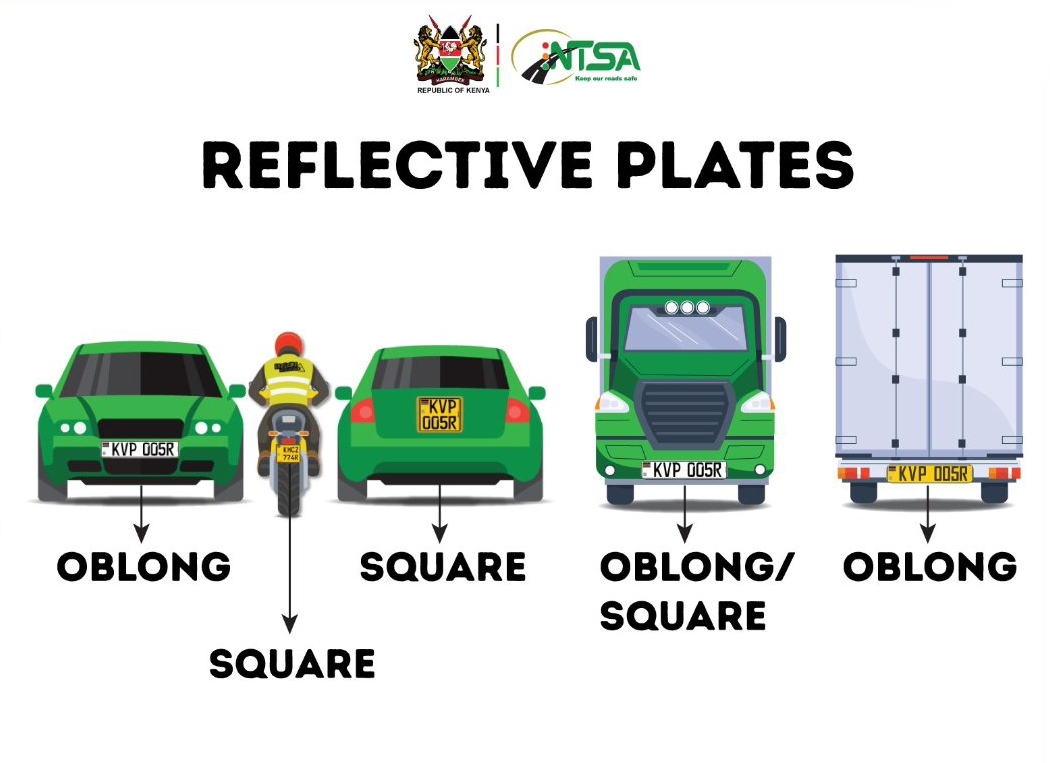
- Appearance: Reflective white background at the front; reflective yellow background at the rear, both with embossed black lettering.
- Format: Follows the standard national sequence (e.g., KDA 123A, KDG 456M, and now KEA 100A).
2. Electric Vehicles (EVs) & E-Motorcycles
- Appearance: Reflective white backgrounds with bright green lettering and numbers.
- Format: Series begins with EVA for four-wheeled electric vehicles and EMAA for electric motorcycles.
- Meaning: Introduced by the Ministry of Roads and Transport to promote the green economy and grant EVs specific traffic incentives such as priority urban parking.
3. National & County Government Vehicles
- National Government (GK): Features the GK prefix with standard white (front) and yellow (rear) plates.
- State Parastatals: Utilise blue number plates with bold white lettering.
- County Governments: Formatted with the specific county code followed by CG (e.g., 47 CG for Nairobi County).
- Constitutional Offices: Custom designations such as CJ 1 (Chief Justice), SNA 1 (Speaker of the National Assembly), and SSN 001 (Speaker of the Senate).
4. Diplomatic & International Organisations
- Appearance: Reflective red background with white lettering.
- Prefixes:
- CD: Foreign Diplomatic Corps and Embassies.
- UN: United Nations agencies operating in Kenya.
- KX: International Non-Governmental Organisations (NGOs).
5. Kenya Defence Forces (KDF)
- Appearance: Distinct military registration formats.
- Prefixes: KA (Kenya Army), KAF (Kenya Air Force), and KN (Kenya Navy).
6. Motorised Two/Three-Wheelers & Special Equipment
- KM: Motorcycles (e.g., KMCA series).
- KTW: Motorised Three-Wheelers (Tuk-tuks).
- KTC: Agricultural Tractors.
- KHM: Heavy Construction Machinery (excavators, bulldozers, cranes).
- Z: Heavy Trailers.
7. Motor Trade & Garage Plates
- Appearance: Green background with white lettering.
- Prefixes: KD (Vehicle Importers/Dealers), KG (Motor Garages/Body Builders), KT (Tow Trucks), and KC (Container Freight Stations).
CN Explained:
Electric vehicles: Kenya introduced distinctive green number plates for all electric vehicles under the National Electric Mobility Policy, officially launched on 3 February 2026. These are separate from the green dealer and towing plates and are meant to visibly flag zero-emission vehicles.
Background: From Regional Codes to National Sequences
Kenya’s numbering system was originally decentralised. Under the post-1950 framework, the second letter of a registration plate denoted the registration district. All plates began with K, followed by the regional code and a serial letter A-Z, not using letters I or O.
Examples:
- Nairobi – KB (1950), KF (1955), KG (1959), KH (1961), KK (1965), KM (1968), KN (1970), KP (1972), KQ (1974), KR (1976) and KV (1978)
- Mombasa – KA (1950), KJ (1966), KT (1977)
- Nakuru – KC (1950), KL (1967), KS (1977)
- Kisumu – KD (1950), KU (1977)
- Nanyuki – KE
*Source: Wikipedia
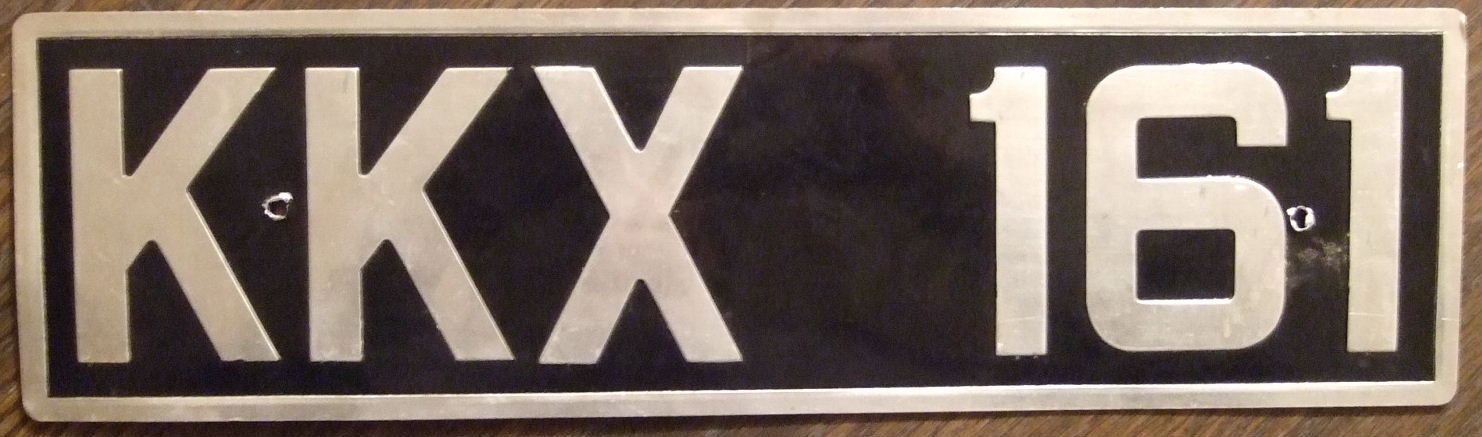
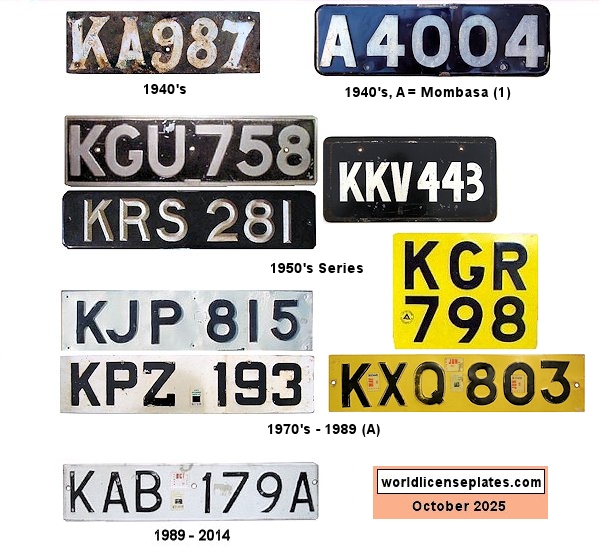
In 1980, the Kenyan government centralised vehicle registration into a single national sequence to accommodate the surging vehicle population. Since then, progression moved from KAA 001A (1989), KBA 001A (2007), KCA 001A (2014), KDA 001A (2020), to today’s KEA 001A.
CN Expert Analysis
The transition to ‘KE’ is more than an aesthetic milestone; it reflects the steady expansion of Kenya’s motor vehicle fleet.
By deploying these new plates on NTSA’s modern digital platform, traffic authorities gain superior automated enforcement capabilities. With smart cameras on major highways linked directly to NTSA databases, the anti-counterfeit FE-Schrift font and microchips on the new ‘KE’ series ensure near-zero plate forgery, streamlining instant speed fines and automated road monitoring.
What’s Next?
Vehicle owners with valid digital reflective plates in the ‘KD’ series or earlier are not required to change their registration to ‘KE’. Motorists still using pre-2022 non-reflective number plates must continue upgrading to the digital reflective plates through eCitizen for KSh 3,050.
Once the KEA sequence is exhausted, going through KEA 999Z, the NTSA will systematically roll out the subsequent series, which will include KEB, KEC, and KED.
Join the Conversation
💬 What are your thoughts on the new ‘KE’ number plates? Have you spotted a ‘KEA’ vehicle on the road yet? Share your views in the Comments Section below or join the debate on the CarTalk KE Forum! Follow CarNews KE for the latest regulatory updates and automotive news.








No Comment! Be the first one.