






NTSA Launches Day and Night Road Safety Checks
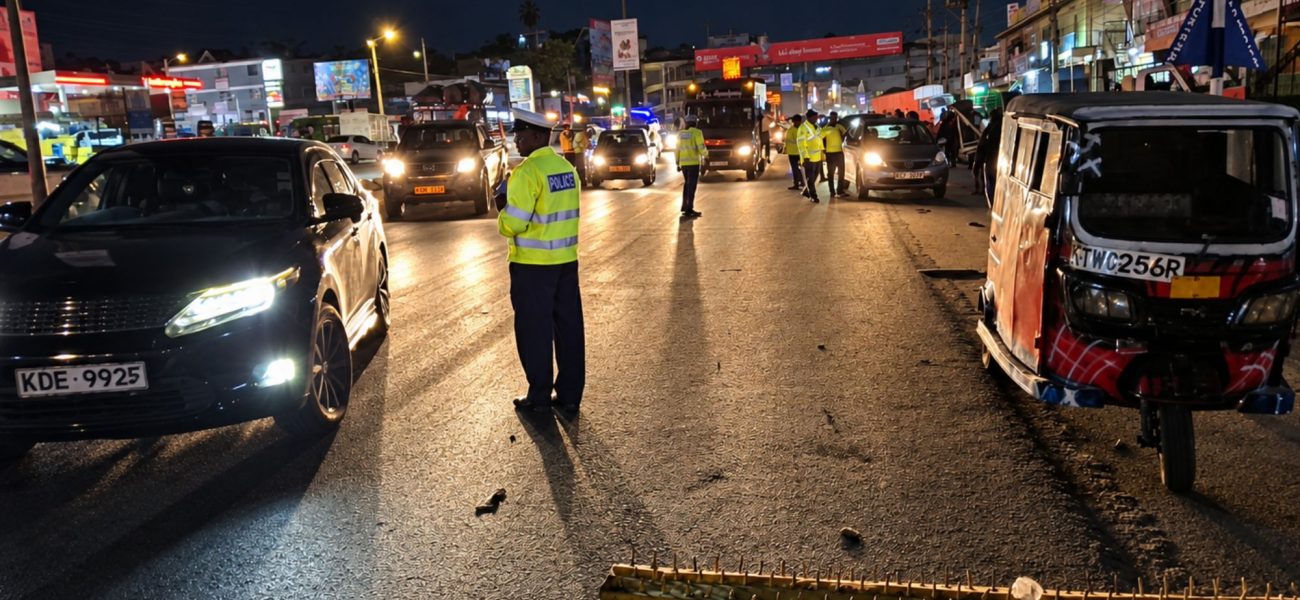
NTSA has launched the Msimu Bila Ajali, Usalama Barabarani campaign. It combines driver and passenger sensitisation with day and night safety checks along major transport corridors.

CN Quick Facts
- Campaign: Msimu Bila Ajali, Usalama Barabarani
- Issued by: NTSA Communication Office, Monday, 26th October 2026
- Run with: Law enforcement agencies
- What it covers: Sensitisation of drivers and passengers, plus day and night safety checks along major transport corridors
- Why night checks: NTSA says evening and late-night hours are statistically the deadliest periods on Kenyan roads
- Checks include: Speed detection, speed limiter functionality, operator documents, vehicle capacity, driver documents, seatbelt use and breathalyser screening
- Speed fine alerts: Sent only through the SMS ID “NTSA”
- Speed limiter portal: irsmowners.ntsa.go.ke
- Latest enforcement update: Thirteen vehicles detained during an inter-agency check on the Southern Bypass, according to NTSA on X
What's in this Article
- CN Quick Facts
- What Is the Msimu Bila Ajali, Usalama Barabarani Campaign?
- Why Is NTSA Focusing on Night Safety Checks?
- What Will Officers Check at the Roadside?
- How Will Speed Violation Notices Be Sent?
- What Should Vehicle Owners Do About Speed Limiters?
- What Happened on the Southern Bypass?
- How Should Motorists Behave at Checkpoints?
- Where Can Motorists Get More Information?
What Is the Msimu Bila Ajali, Usalama Barabarani Campaign?
The National Transport and Safety Authority (NTSA) describes the campaign as part of ongoing proactive measures to disrupt risky behaviours and prevent loss of life on the roads. It has two parts. The first is sensitisation of drivers and passengers. The second is safety checks carried out during the day and at night along major transport corridors.
The Authority says both day and night checks follow strict operational protocols. These are meant to protect motorists, manage traffic flow and keep officers safe.
Why Is NTSA Focusing on Night Safety Checks?
According to NTSA, evening and late-night hours are statistically the deadliest periods on Kenyan roads. The Authority says it is allocating additional resources to these high-risk hours so it can disrupt the critical risk factors behind preventable crashes.
What Will Officers Check at the Roadside?
NTSA’s safety compliance checklist lists seven areas:
- Speed violation detection: Real-time monitoring of vehicle speeds.
- Speed limiter functionality: Checks that the speed limiter works and transmits continuously to the Intelligent Road Safety Management System (IRSMS).
- Long-distance public transport operator documentation: This includes the passenger manifest, the driver log (used to monitor driving hours), licensed route compliance, the Road Service Licence (RSL) and the validity of inspection stickers, among others.
- Vehicle capacity control: Compliance with authorised passenger capacity or permitted load weight limits.
- Driver documentation: Validity of the Driving Licence (DL) and the PSV badge.
- Passenger compliance: NTSA notes that many passengers ignore seatbelts. It says seatbelts keep occupants secure, prevent ejection and reduce fatal and serious injuries in a crash, and asks that all passengers buckle up throughout the journey.
- Breathalyser screening: To detect drink-driving cases.
How Will Speed Violation Notices Be Sent?
NTSA says speed violation notifications are issued solely through the SMS ID NTSA. Motorists are advised not to respond to suspicious messages from numbers claiming to belong to NTSA, and to report them promptly.
What Should Vehicle Owners Do About Speed Limiters?
NTSA is asking owners to log in to the upgraded IRSMS portal at https://irsmowners.ntsa.go.ke and link their vehicle(s) to a licensed speed limiter vendor. The IRSMS user guide is at https://ntsa.go.ke/irsms , and support is available at irsmsqueries@ntsa.go.ke.
What Happened on the Southern Bypass?
In an update on its official X page, NTSA said an inter-agency team conducted a safety compliance check along the Southern Bypass on the night of 28 October 2026 and detained thirteen (13) motor vehicles.
NTSA listed these as the major safety concerns:
- Drivers: Driving under the influence of alcohol, and operating with expired driving licences.
- Vehicles: Expired inspection stickers, operating without insurance, contravening insurance terms, broken headlights and cracked windscreens.
The safety check was part of the Msimu Bila Ajali, Usalama Barabarani campaign.
How Should Motorists Behave at Checkpoints?
NTSA’s appeal is to observe checkpoint safety protocols by slowing down when approaching designated areas and cooperating fully with law enforcement officers.
For night travel, the Authority notes that darkness severely reduces visibility. It urges drivers to reduce speed, increase following distances and stay fully focused on the road.
Where Can Motorists Get More Information?
NTSA says more details on other festive season safety interventions are available at www.ntsa.go.ke or by emailing info@ntsa.go.ke.
Join the Conversation
💬 How are the night checks going on your regular route? Share your experience and tips with fellow motorists in the comments below, join the conversation on the CarTalk KE Forum and follow CarNews KE for the latest NTSA updates.








No Comment! Be the first one.