








Why Kenya’s Locally Assembled Toyota Hiace Matters
CFAO Mobility Kenya has officially commissioned a KES 2.3 billion Toyota Hiace assembly line at the KVM plant in Thika.

CN Quick Facts
- CFAO Mobility Kenya has commissioned a KSh 2.3 billion Toyota Hiace assembly line at Kenya Vehicle Manufacturers (KVM) in Thika.
- The investment follows CFAO’s KSh 2.4 billion acquisition of a 99.4% controlling stake in KVM and aligns with Kenya’s push to grow local vehicle manufacturing.
- Fleet operators, government agencies, tour companies, schools, hospitals, and local suppliers.
- Unlikely in the short term. Used imported Hiace vans will remain attractive due to their lower purchase prices.
- Local assembly supports jobs and industrial growth and could improve access to new commercial vehicles backed by manufacturer warranties.
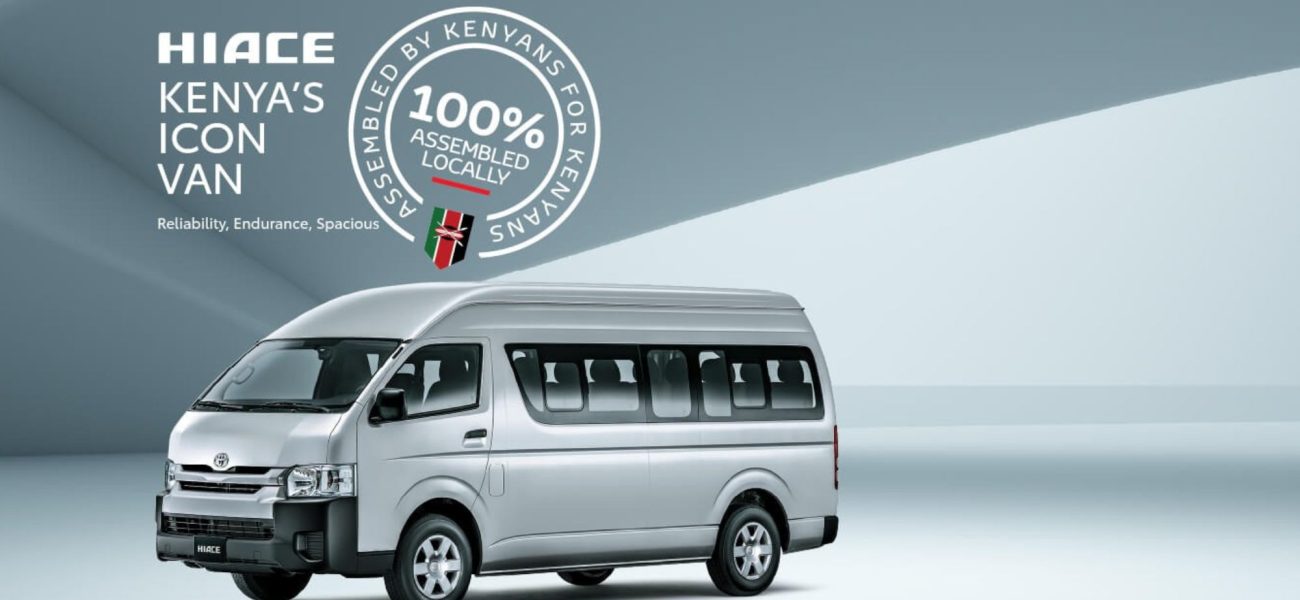
The Toyota Hiace is one of the most recognisable commercial vehicles in Kenya. It ferries passengers as a matatu, transports tourists through national parks, serves as a school bus, delivers goods for businesses, and operates as an ambulance in hospitals across the country.
What's in this Article
- Why the Toyota Hiace Is So Important in Kenya
- What Has Changed?
- Why Doesn’t Kenya Simply Build the Entire Vehicle?
- Why Does the Government Support CKD Assembly?
- Will Locally Assembled Hiaces Be Cheaper?
- What Does This Mean for Matatu Operators?
- What About Jobs?
- Could Kenya Become an Export Hub?
- What Does This Mean for Kenya’s Automotive Industry?
- Conclusion
For decades, nearly all of these vehicles have arrived as used imports, mainly from Japan. That shift has been gradual; early moves like Associated Vehicle Assemblers (AVA )’s Mombasa vehicle assembly laid the groundwork years ago, but it’s now gathering real momentum.
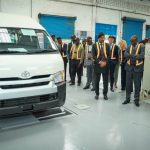
CFAO Mobility Kenya has officially commissioned a KSh 2.3 billion Toyota Hiace assembly line at the Kenya Vehicle Manufacturers (KVM) plant in Thika, marking one of the country’s biggest recent investments in automotive manufacturing.
The announcement is more than another factory opening. It reflects a broader strategy to expand local vehicle production, strengthen Kenya’s industrial base, and position the country as a regional manufacturing hub.
So, what does this investment actually mean?
Why the Toyota Hiace Is So Important in Kenya
Few vehicles have shaped Kenya’s transport sector like the Toyota Hiace. Its reputation for reliability, readily available spare parts, and strong resale value has made it the preferred choice for a wide range of commercial users, including:
- Public Service Vehicle (PSV) operators
- Tour and safari companies
- Schools and universities
- Hospitals and emergency services
- NGOs
- Corporate fleets
- Government agencies
Because demand has remained consistently high, the Hiace has become one of Kenya’s most influential commercial vehicles. Local assembly therefore affects a segment that supports thousands of businesses and livelihoods across the country.
What Has Changed?
Previously, most Hiaces sold in Kenya were imported as fully built, used vehicles. Under the new programme, Toyota Hiace vans destined for local assembly arrive as Completely Knocked Down (CKD) kits. Individual components are imported before being assembled at KVM’s Thika facility.
The investment follows CFAO Mobility Kenya’s acquisition of a 99.4% controlling stake in KVM after a broader recapitalisation and restructuring of the company. The remaining shares continue to be held by the National Treasury and CMC Holdings.
This gives CFAO operational control of one of Kenya’s most established vehicle assembly plants and allows it to centralise production for parts of its commercial vehicle portfolio.
Why Doesn’t Kenya Simply Build the Entire Vehicle?
A common misconception is that local assembly means every component is manufactured in Kenya. That is not yet the case. Modern vehicles contain thousands of specialised components, many of which require advanced manufacturing processes and global supply chains.
Instead, Kenya currently assembles imported kits while gradually increasing the proportion of locally sourced components where commercially viable. Items that can increasingly be sourced locally include:
- Seats
- Interior trim
- Floor panels
- Wiring components
- Glass
- Metal fabrication
- Paint and finishing materials
- Selected plastic components
Developing these supplier networks is one of the long-term objectives of local assembly programmes.
Why Does the Government Support CKD Assembly?
Kenya’s automotive policy offers incentives for vehicles assembled from CKD kits. The objective is not simply to reduce vehicle prices. It is to encourage manufacturers to invest in local production, develop technical skills, create jobs, and increase local value addition.
A vehicle assembled in Kenya also generates economic activity beyond the factory floor through:
- Component suppliers
- Transport and logistics
- Equipment maintenance
- Technical training
- Engineering services
- Dealer and service networks
These wider economic benefits are one reason successive governments have continued to support local assembly initiatives.
Will Locally Assembled Hiaces Be Cheaper?
Not necessarily. This is perhaps the biggest question for buyers.
While CKD incentives reduce certain import costs, locally assembled vehicles still compete against used imports that have already depreciated in their original markets. An eight-year-old imported Hiace is likely to remain significantly cheaper than a brand-new, locally assembled model.
That means the purchase price alone may not persuade many individual buyers or matatu operators to switch. Instead, the value proposition is different. A new locally assembled Hiace offers:
- Manufacturer warranty
- Known service history
- Lower risk of hidden mechanical issues
- Better fleet maintenance planning
- Improved uptime during the early years of ownership
For organisations managing dozens or hundreds of vehicles, those factors can reduce overall operating costs despite the higher initial investment.
What Does This Mean for Matatu Operators?
The matatu industry is unlikely to change overnight. Many operators remain highly price-sensitive and often rely on used imports because they require less upfront capital. Unless financing options become more accessible, locally assembled Hiaces may remain out of reach for smaller operators.
However, larger SACCOs and institutional operators that calculate costs over several years may increasingly consider new locally assembled vehicles because of their warranty support and predictable maintenance schedules.
What About Jobs?
One of the biggest long-term benefits of local assembly is employment. Vehicle assembly creates over 200 direct jobs at the factory and more than 600 indirect jobs supporting additional employment across supplier industries, logistics, technical training, servicing, and parts distribution.
As production volumes increase, opportunities for Kenyan manufacturers to supply components may also expand, strengthening the country’s broader automotive ecosystem.
Could Kenya Become an Export Hub?
That is one of the long-term ambitions. With access to regional markets through the East African Community (EAC) and the African Continental Free Trade Area (AfCFTA), Kenya is positioning itself as a potential manufacturing base for selected vehicle models.
Whether locally assembled Hiaces are eventually exported will depend on production capacity, regional demand, pricing competitiveness, and trade conditions.
While exports are not guaranteed, investments such as the Thika assembly line are part of the infrastructure needed to make that possibility more realistic.
What Does This Mean for Kenya’s Automotive Industry?
The Hiace assembly line is significant not because it will immediately transform the market but because it represents another step in Kenya’s long-term industrial strategy. Local assembly alone will not replace used imports, nor will it instantly make new vehicles affordable for every buyer.
However, it can gradually strengthen domestic manufacturing, encourage supplier development, create skilled jobs, and provide fleet buyers with another purchasing option.
For Kenya’s automotive sector, success will ultimately be measured not only by the number of vehicles assembled but also by the value created locally and by whether the country can build a competitive manufacturing ecosystem over time.
CN Key Takeaways
- Location: KVM plant, Thika
- Investment: KSh 2.3 billion (KVM/CFAO statement); a related capital injection securing CFAO’s 99.4% stake is reported elsewhere at KSh 2.4 billion — CarNews KE is seeking clarification
- Ownership: CFAO Mobility Kenya holds 99.4% of KVM; National Treasury and CMC Holdings hold 0.3% each
- Jobs: Over 200 direct, more than 600 indirect across the value chain
- Process: Completely Knocked Down (CKD) kit assembly, with growing local component sourcing over time
- Likely early buyers: Fleet operators, government agencies, tour companies, schools, hospitals, NGOs, corporate fleets
- Footprint: KVM Thika is CFAO’s second assembly plant in Kenya, alongside its existing Associated Vehicle Assemblers (AVA) facility in Mombasa County
Conclusion
The launch of the Toyota Hiace assembly line at KVM is about more than producing another commercial vehicle. It is part of a broader effort to grow Kenya’s industrial capacity and reduce reliance on imported vehicles.
For most individual buyers, the used import market will remain the most affordable option in the near term. But for fleet operators, institutions, and businesses seeking long-term reliability, locally assembled Hiaces offer a compelling alternative.
The real impact of the investment will not be measured by the first vehicle to leave the production line; it will be seen over the coming years in jobs created, suppliers developed, and whether Kenya can establish itself as a competitive automotive manufacturing hub for the region.






No Comment! Be the first one.