








Dangote, Ruto Break Ground on 700,000-Bpd Lamu Refinery
Aliko Dangote and President Ruto lead groundbreaking on the $16 billion Lamu refinery on 30th September 2026. Here's what it means, and doesn't yet mean, for Kenyan motorists.

CN Quick Facts
- Project: East Africa Refinery, Lamu
- Groundbreaking: Wednesday, September 30, 2026
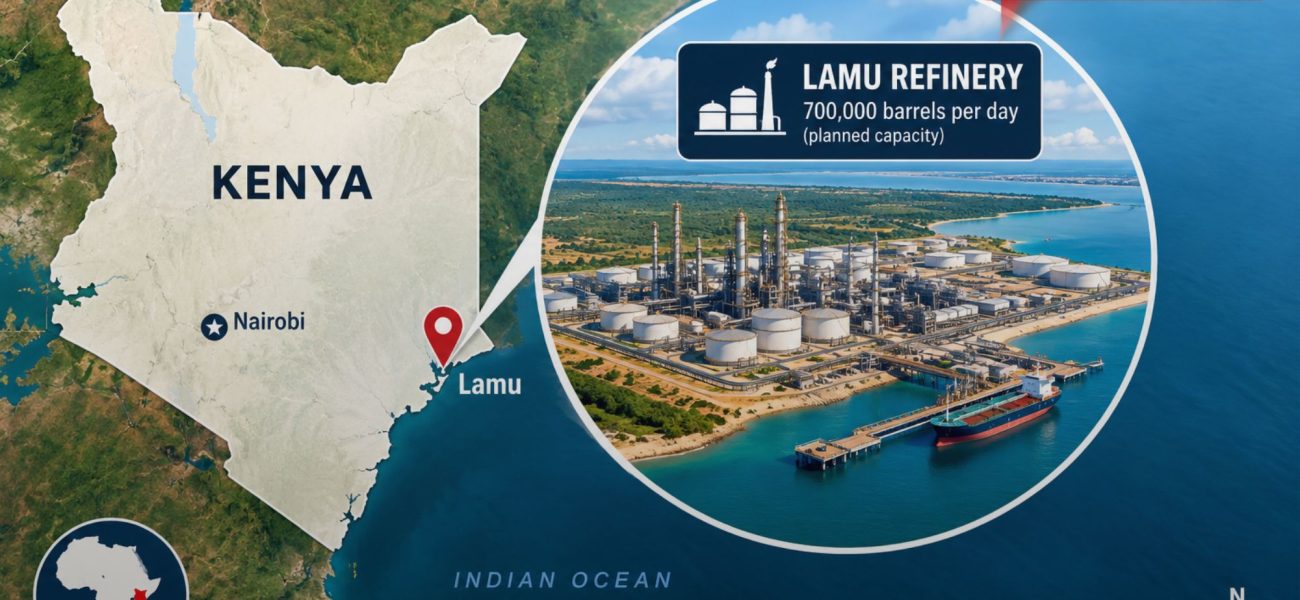
- Capacity: 700,000 barrels per day, larger than Dangote’s 650,000 bpd Lagos refinery
- Cost: About Ksh2 trillion (roughly $16 billion), financed roughly 70% debt / 30% equity
- Site: Magogoni, within the Lamu Port-South Sudan-Ethiopia-Transport (LAPSSET) corridor
- Construction timeline: About 40 months
- Commissioning target: Around 2030
- Immediate effect on pump prices: None
What's in this Article
What Happened
Construction of Kenya’s biggest fuel project in decades formally began on Wednesday. Aliko Dangote and President William Ruto led the groundbreaking ceremony for the East Africa Refinery in Lamu, which is designed to process 700,000 barrels of crude a day. That is more than Dangote’s existing Lagos refinery.
Deputy President Kithure Kindiki arrived in Lamu on Wednesday morning ahead of the ceremony, with Manda Airport serving as the arrival point for dignitaries. Lamu County Commissioner Stephen Sangolo had earlier said the county was preparing for one of its largest diplomatic gatherings ever, with as many as 14 heads of state and roughly 2,000 vetted guests expected.
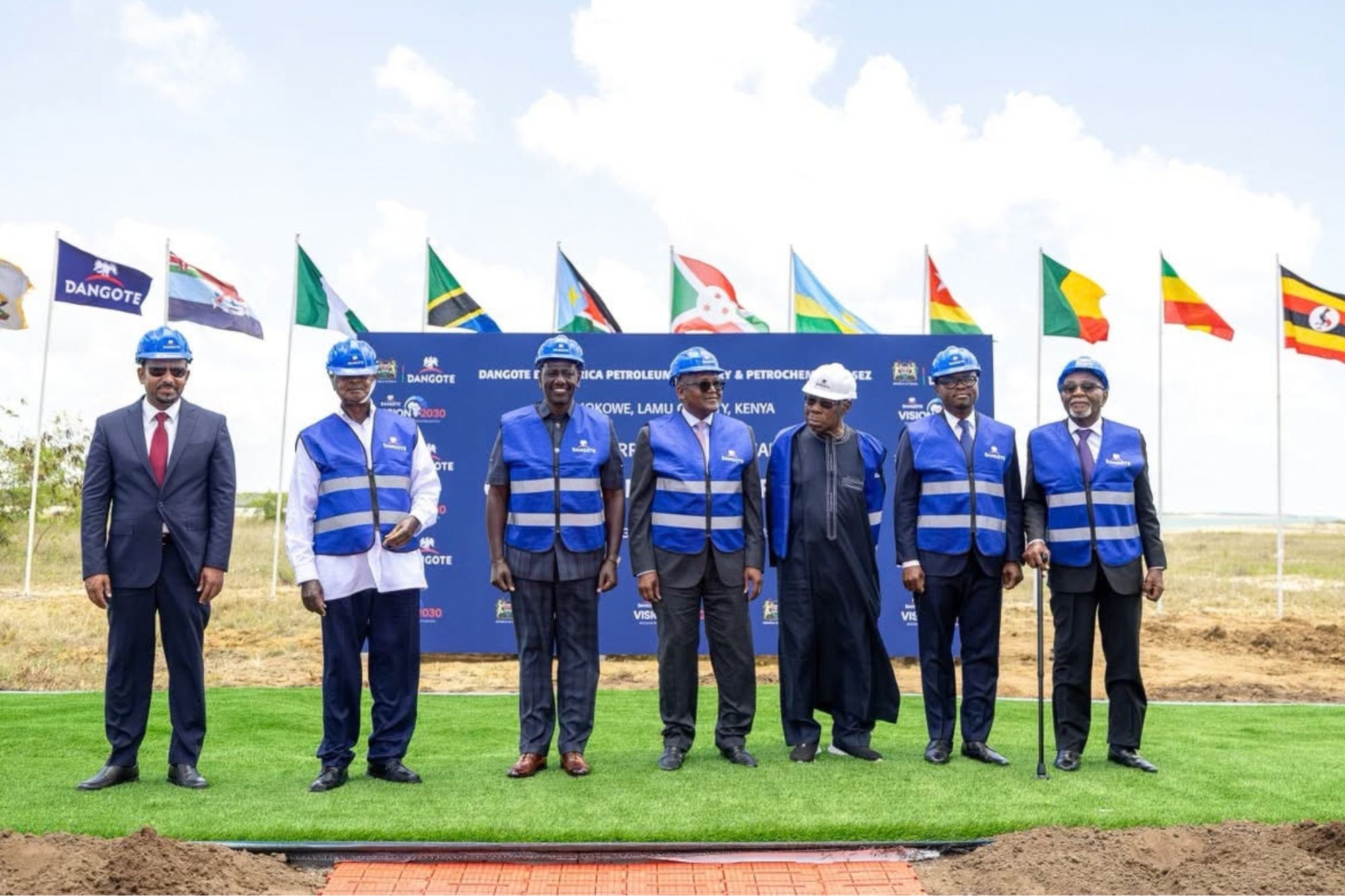
The ceremony took place against a backdrop of unresolved land compensation claims by Lamu residents, detailed below.
Groundwork was already under way. A vessel carrying 2,930 tonnes of heavy construction machinery docked at Lamu Port on September 26, and excavators were lined up at the site the day before the ceremony.
Why It Matters
For motorists, the ceremony changes nothing at the pump. Wednesday marks the start of construction, not production. The East African Refinery says the facility could be commissioned around 2030 if the current schedule holds.
Whatever effect the refinery eventually has on fuel prices will depend on crude costs, taxes, transport, exchange rates and regional demand at that point. None of those is decided by a ceremony.
Key Details
Who’s Paying, and Who Owns It
- Cost: Dangote has said the project cost is $16 billion, roughly KSh 2 trillion.
- Financing: Roughly 70% debt and 30% equity from Dangote and other shareholders.
- Equity: Dangote has offered East African governments a combined 30% stake in the refinery and associated project. Kenya has reportedly been offered a 10% share worth around $500 million, and Ethiopia and Rwanda are reportedly in talks. These arrangements have not been finalised.
- Listing: Ruto’s chief economic adviser, David Ndii, has said that when the refinery is ready for public ownership, it should be listed in Kenya rather than automatically taken to the Nigerian market.
- Contractor: Engineers India Limited has secured a contract worth more than $450 million from Dangote Group for project management, engineering and construction-management services.
Where the Crude Comes From
Kenya does not yet produce crude at commercial scale. Turkana output is expected to begin late in 2026, at volumes far below what a 700,000-bpd refinery needs.
Ndii has estimated the region could eventually supply more than 600,000 barrels a day, drawn from South Sudan, Uganda and Kenya, with the balance likely covered by seaborne imports through Lamu Port. He has also put annual regional demand for petroleum products at 20 million to 30 million metric tons. Analysts have flagged crude supply, alongside financing and infrastructure, as the project’s biggest open question.
Land Compensation Wrangles
The groundbreaking went ahead amid unresolved disputes over land and compensation at the project site.
- The court case: More than 130 residents of Chandavai have gone to the Malindi Environment and Land Court. They claim ancestral interests in land at Magogoni that is linked to the refinery, and say their families have farmed, lived on and built on it for generations. Residents also cite homes, mosques and graves on the land.
- Their complaints: They allege that preparatory work, including soil testing, began in July without notice, valuation or compensation, and that crops and trees were destroyed. They want compensation and a resettlement plan. They say they are not opposed to the refinery itself.
- The court order: On September 28 the court ordered the status quo maintained on the disputed parcel until October 14, when the government agencies and other respondents are due to respond. It declined to stop the September 30 ceremony. Dangote has stated that although the order may affect certain site activities, operations will continue.
- Protests: Residents protested on Tuesday over compensation and what they say was insufficient public participation. ODM leader Oburu Oginga has urged that host communities receive fair compensation and share in the project’s benefits.
- The government’s position: Treasury Cabinet Secretary John Mbadi says residents took part in public participation before the project was approved. He has said genuine landowners will be compensated but has criticised what he calls inflated claims, citing one example of a demand of Ksh30 million for a plot valued at Ksh60,000. He has also linked some claimants to land cartels. That allegation has not been established by any court, and the residents dispute that characterisation.
Other Concerns
Environmental campaigners and conservationists have raised concerns about possible effects on Lamu Old Town, a World Heritage site, and on fragile marine ecosystems nearby. Dangote has attributed opposition to traders and businesses whose profit models the refinery would threaten.
Jobs and the Wider Development
The government estimates the wider project could create more than 60,000 jobs, and Kindiki has put direct job creation at more than 50,000. These are projections, not confirmed figures.
The refinery is planned alongside a 1,000-megawatt power plant and a special economic zone.
Background
Lamu vs Hoima: A Regional Race
Uganda’s Kabaale refinery at Hoima has been delayed, with its final investment decision now pushed to the first quarter of 2027 pending engineering and environmental studies. That project is smaller, at 60,000 bpd.
Dangote is targeting roughly 40 months for construction at Lamu, which would give it a head start on the Ugandan facility if the timeline holds.
The Market It Is Entering
The refinery is being built into a global fuel market that is shifting. EVs displaced an estimated 36 million tonnes of oil demand in China alone in the first half of 2026.
What’s Next
September 30 was a ceremony, not a supply chain. For Kenyan motorists and transport operators, the story will play out over several years through four things to watch:
CarNews KE will track each of these as the project moves from groundbreaking toward actual fuel production.
- Financing: whether it closes as structured.
- Crude supply: whether regional supply materialises at the volumes Ndii has projected.
- Land compensation: the next Malindi Environment and Land Court hearing on October 14, and whether affected families receive compensation or resettlement.
- Construction: whether work holds to the roughly 40-month timeline toward a 2030 commissioning.
Join the Conversation
💬 What do you expect the Lamu refinery to mean for Kenya’s fuel market? Share your views in the comments below, or join the debate on the CarTalk KE Forum! Read more on Kenyan Petroleum Laws and Fuel Price Trends in Kenya.








No Comment! Be the first one.