






Tesla’s Roadster Leaps Into the Future: Rocket Thrusters, Mid-Air Flips and a New Era of Mobility
After nearly a decade, Tesla's Roadster has arrived with SpaceX thrusters, a mid-air flip and a bold claim: flying cars are real. Here’s why it matters for mobility’s future, including in Kenya.

CN Quick Facts
- Car: Tesla Roadster, a next-generation, two-seat electric sports car.
- Unveiling: 15 October 2026, at the SpaceX test site in McGregor, Texas.
- Technology: Features 10 cold-gas thruster nozzles supplied by high-pressure air tanks.
- Acceleration: 0–60 mph in under one second, according to Tesla.
- Top speed: Over 230 mph (approximately 370 km/h), according to Tesla.
- Range: Over 300 miles (approximately 483 km), according to Tesla.
- Trims: Performance, Thrust and Rocket. The Rocket version is invite-only and is not approved for road use.
- Reservations: $50,000 for the Performance version and $250,000 for the Thrust version.
- Final price: Not yet announced.
- Production: Targeted for 2028, following an original production target of 2020.
- Flight capability: Demonstrations have shown controlled launches, flips and landings, but sustained flight has not yet been demonstrated.
What's in this Article
Picture a sports car with nobody at the wheel, facing a giant curved ramp. It charges up, clings to the surface by suction even as it turns upside down, spins off the top, flips through the air and touches down on its wheels, steadied by bursts of compressed air.
That was the scene on 15 October at a SpaceX test site in McGregor, Texas, where Elon Musk finally unveiled the next-generation Tesla Roadster. The car had been promised for nearly a decade, and the crowd, which included reservation holders who put down deposits almost nine years ago, got a show worth the wait. Musk summed it up with a line made for the history books: “Turns out the future does have flying cars.”
So what did we just witness, and why should every car and tech fan be excited?
A Rocket-Powered Sports Car, at Last
The Roadster is a two-seat electric sports car. Its party trick is a set of thrusters developed with Musk’s rocket company, SpaceX. According to Tesla, the car uses ten nozzles fed by ultra-high-pressure air tanks. These are cold-gas thrusters, meaning compressed air released through nozzles, not jet engines and not propellers.
During the demonstration, the car leapt over a row of parked Teslas and used its rear thrusters to accelerate from zero to 60 mph in under a second. Tesla’s own explanation is simple: every car on the road is limited by how much grip its tyres can generate, and the Roadster’s thrusters add four to five times that force. More force on the same weight means faster acceleration.
The headline claims, all of them Tesla’s and none independently verified, are a top speed above 230 mph (about 370 km/h) and a range above 300 miles (about 483 km).
It is worth noting the car had no driver for the stunts. Musk said that was to make sure nobody got hurt, and he admitted beforehand that success was not guaranteed.
Flying or Hopping? Either Way, it’s a First
Let’s be clear about what the demo showed: a controlled launch from a ramp, manoeuvres in the air and a precise landing, all without a driver. It was not sustained, long-range flight. Experts have been quick to point that out, and the engineering challenges are real. Roger Connor, curator for vertical flight at the Smithsonian’s National Air and Space Museum, described the current capability as hopping, and noted how hard it is to make something that is both a good car and a good aircraft.
That challenge was flagged by Jim Dukhovny, CEO of Alef, a California start-up building its own flying car. Alef’s vehicle has lifted off using eight propellers, but it weighs just 254 pounds, a small fraction of a sports car like the Roadster. Dukhovny thought it was entirely feasible for Tesla to get off the ground at the event, but that is a different matter from truly flying.
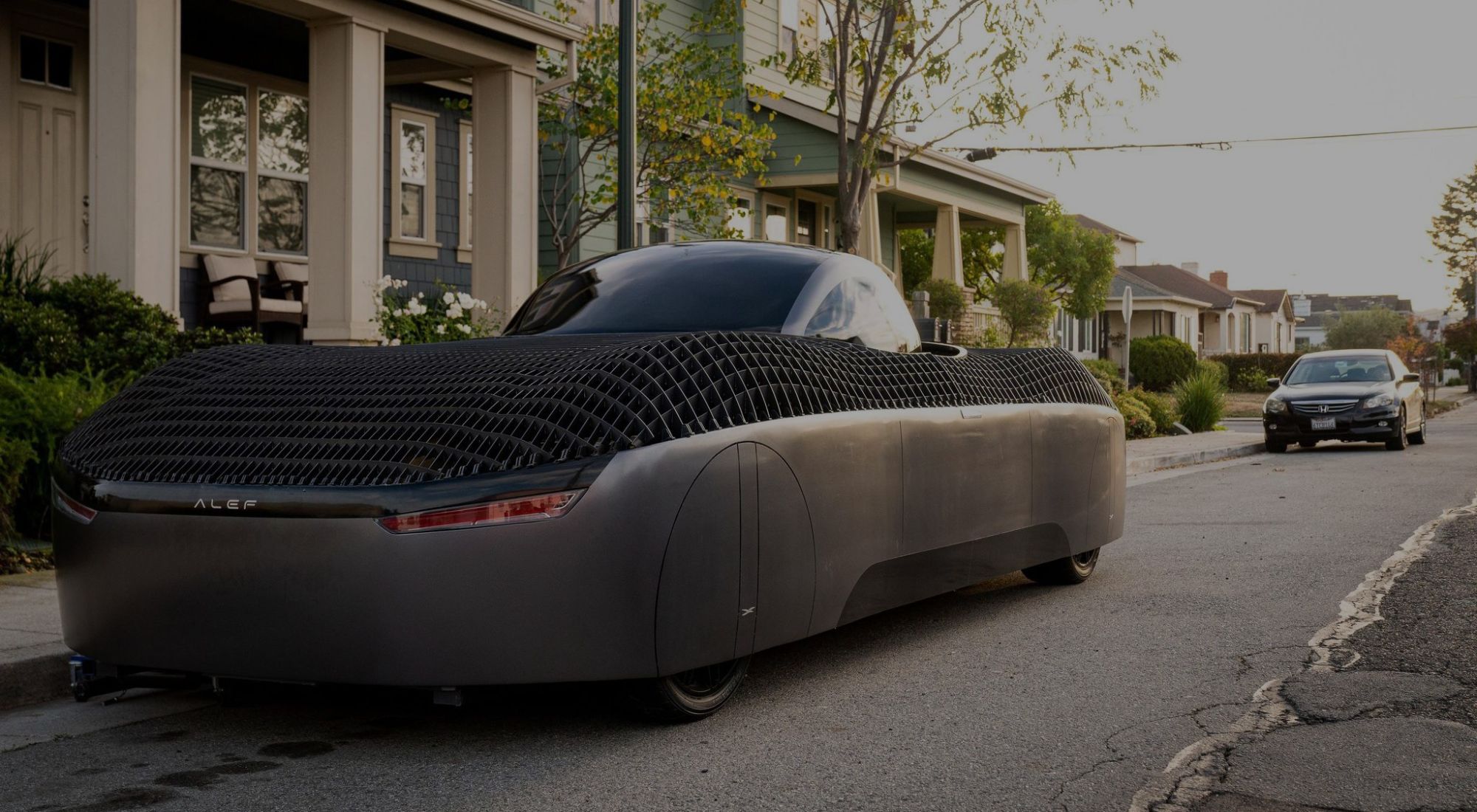
History is on the side of the dreamers. The first flying car prototype appeared in 1917, and for a century the idea stayed in science fiction and cartoons. Now electric motors, better batteries and rocket-grade engineering are bringing it closer than ever. Every great leap in aviation began with a short, shaky hop, and Tesla’s Roadster just made a very stylish one.
Musk was refreshingly upfront that the car is not necessarily built with safety first, and that it may not be legal in every jurisdiction. Still, he says it will be a real car that people can own and drive on real roads, with a rocket’s capabilities when conditions allow.
From the 2017 Promise to a 2028 Reality
When Tesla first showed the Roadster in 2017, it promised a four-seater with a $200,000 base price, a 620-mile range, a 0-60 time of about 1.9 seconds and deliveries from 2020. The new version raises the thrill factor, even if it has taken longer than planned.
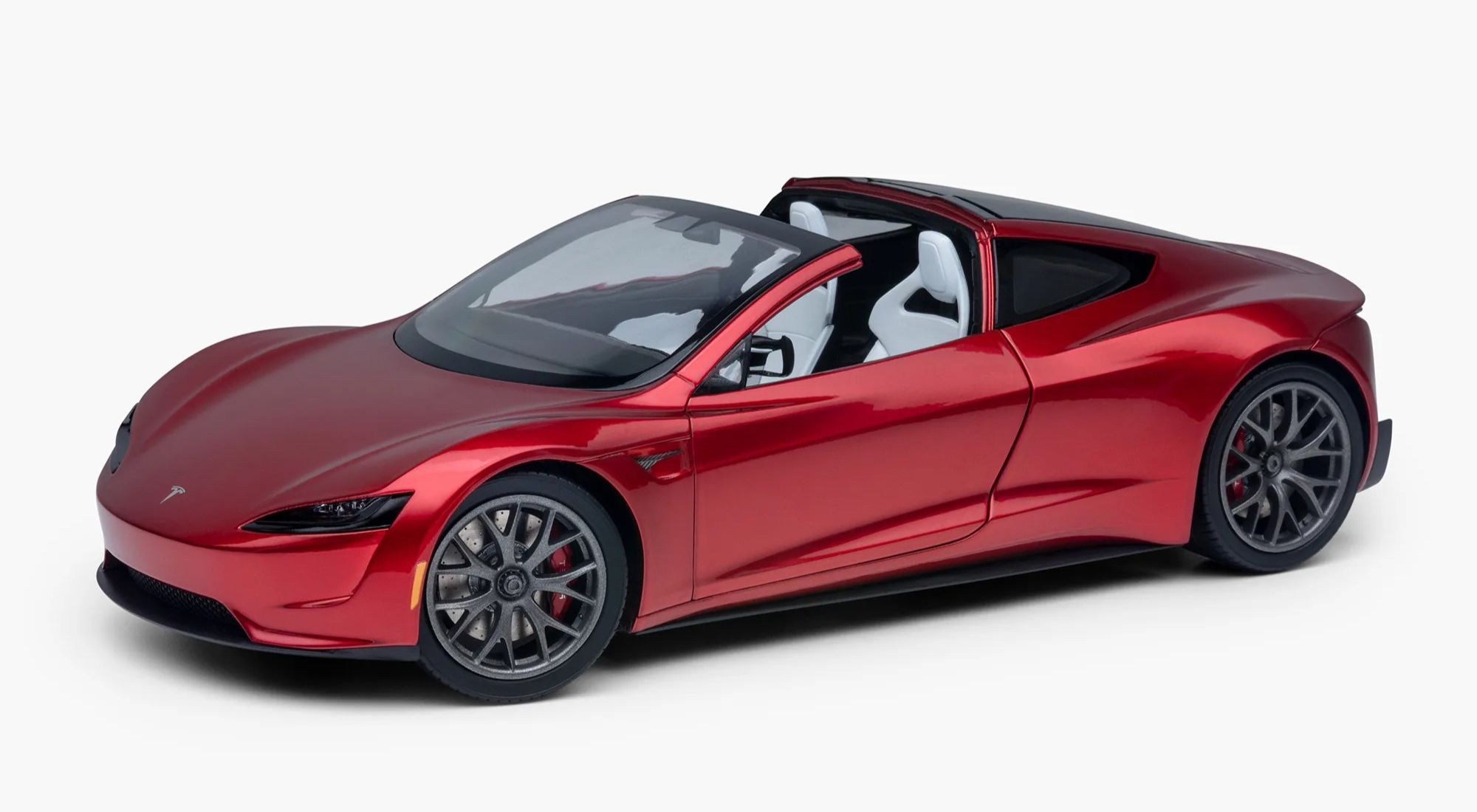
The new Roadster is a two-seater, with production now targeted to begin in 2028. Tesla’s website is taking reservations of $50,000 for the Performance version and $250,000 for the Thrust version, which adds the acceleration thrusters. A third trim, Rocket, is invite-only and is not approved for public roads. Tesla has not announced final prices, since those are set when buyers configure their cars, and 2028 is the date production begins, not a guarantee of when every reservation holder will get a car. Specs may also evolve before production.
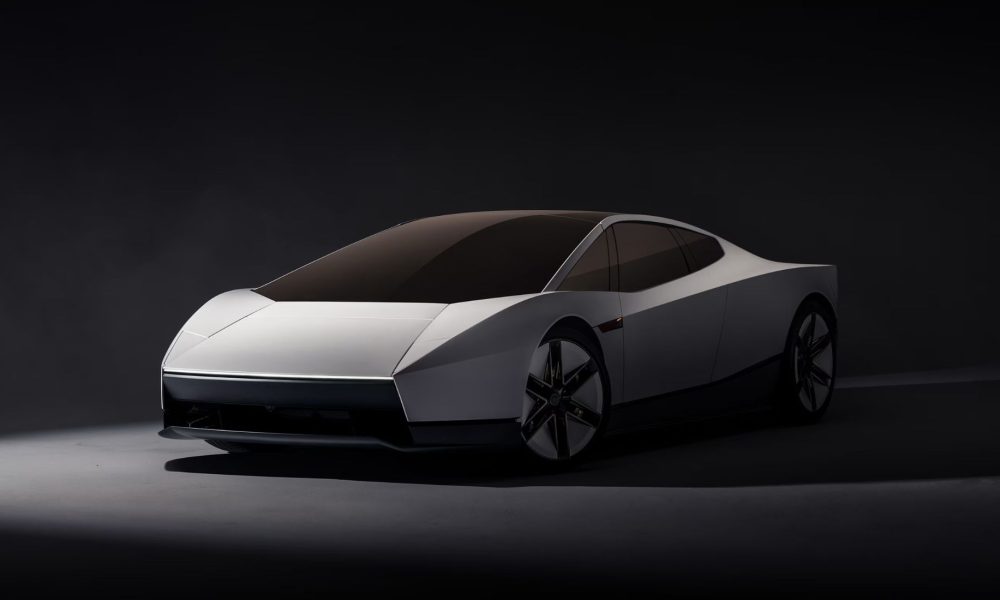 Tesla Roadster
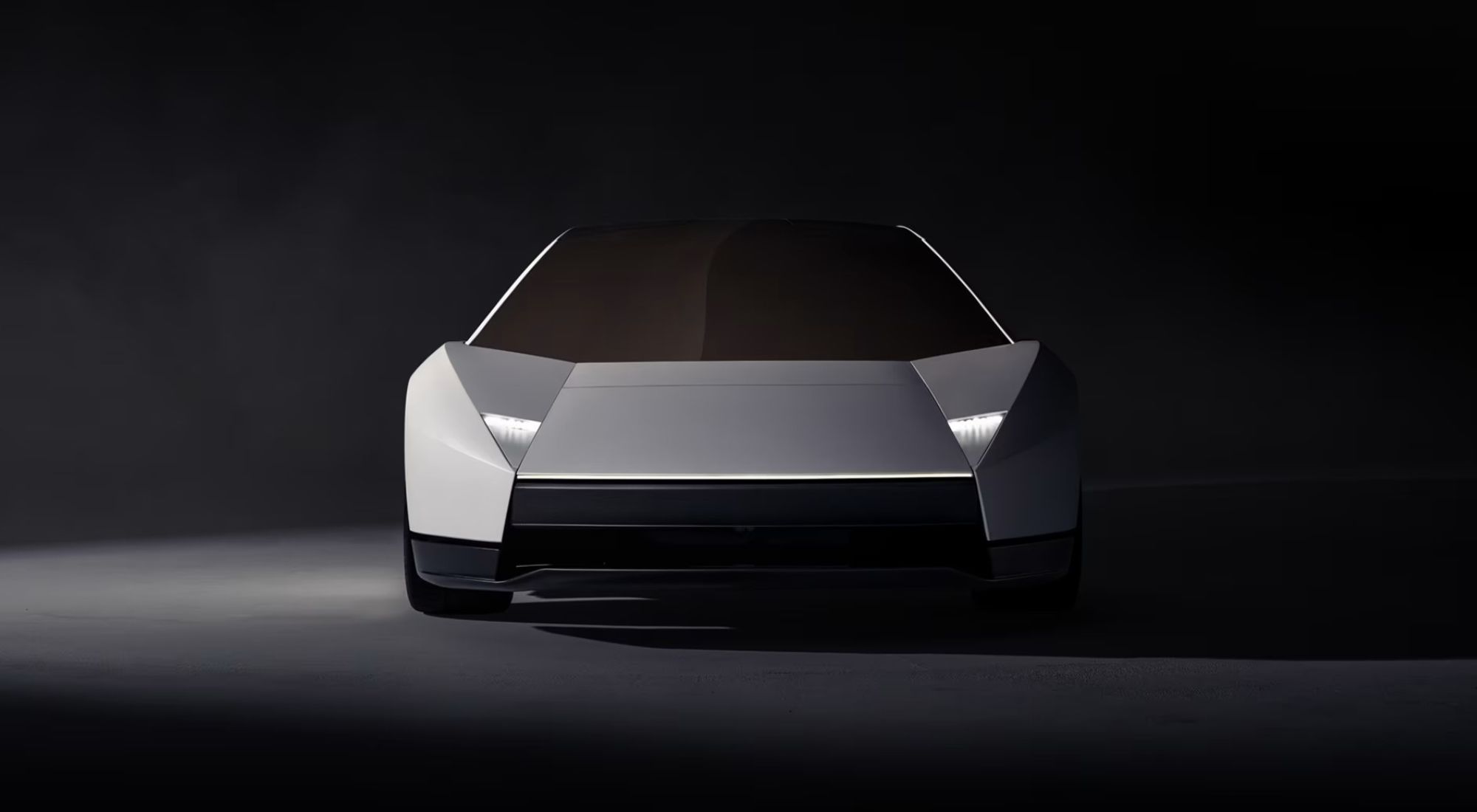
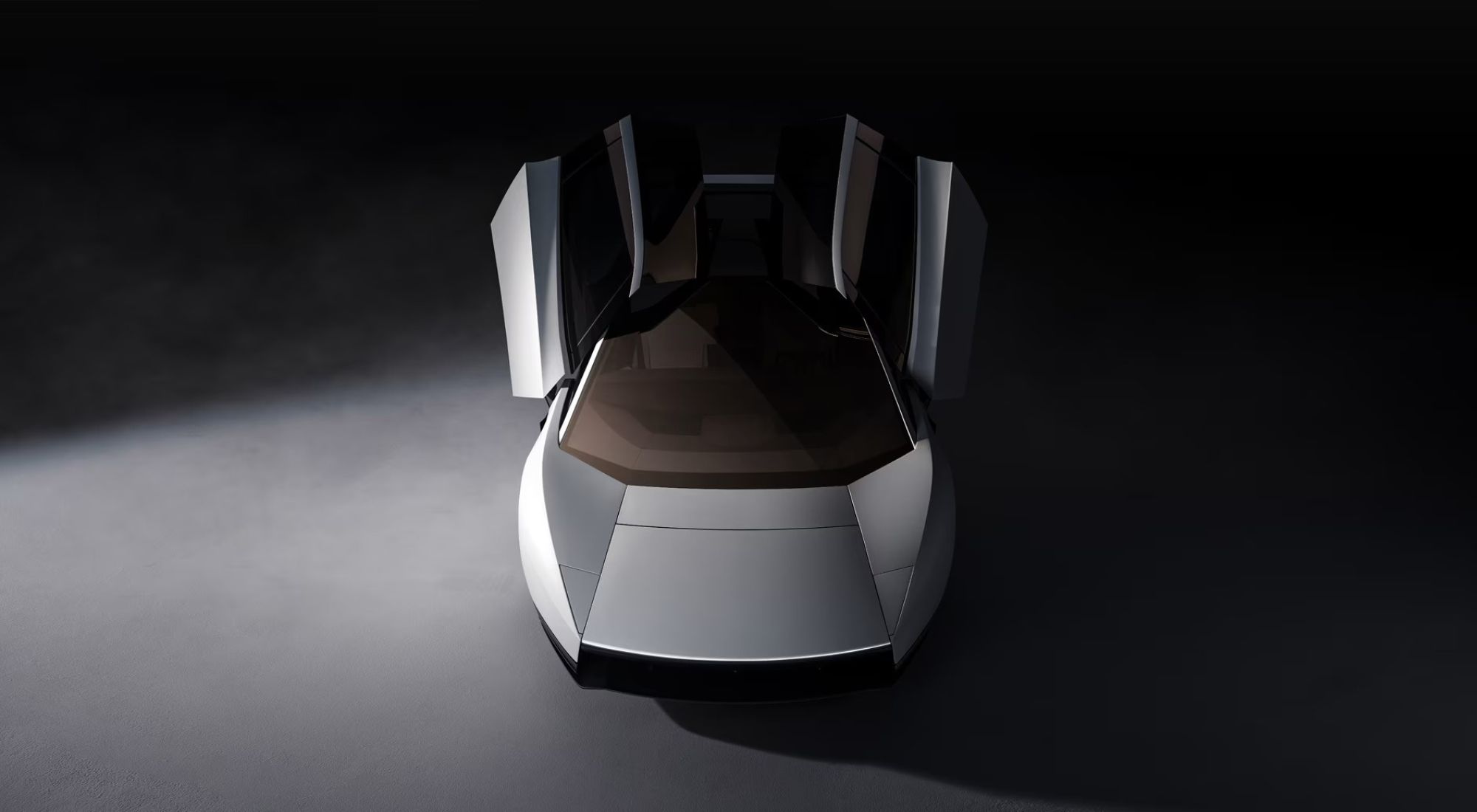
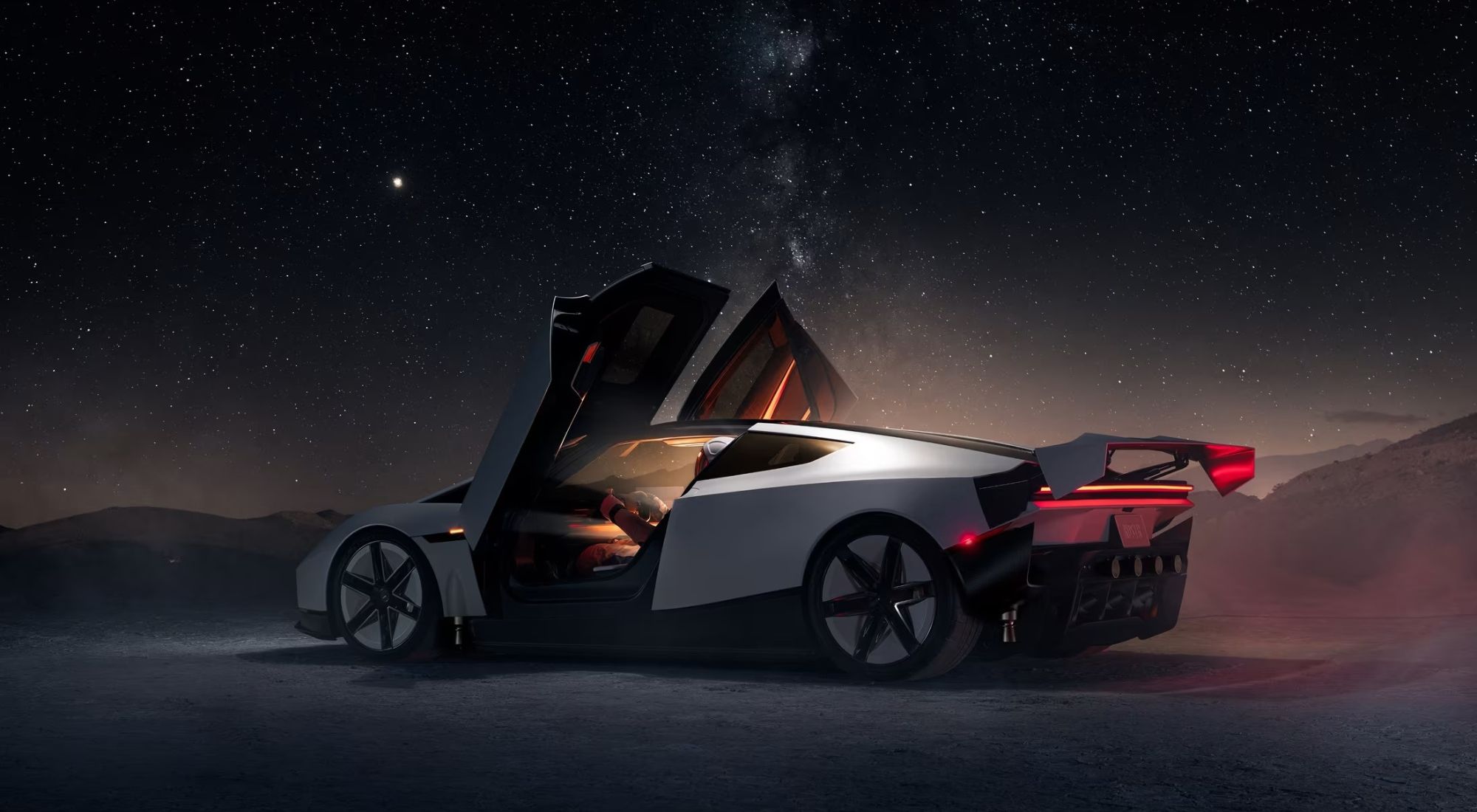
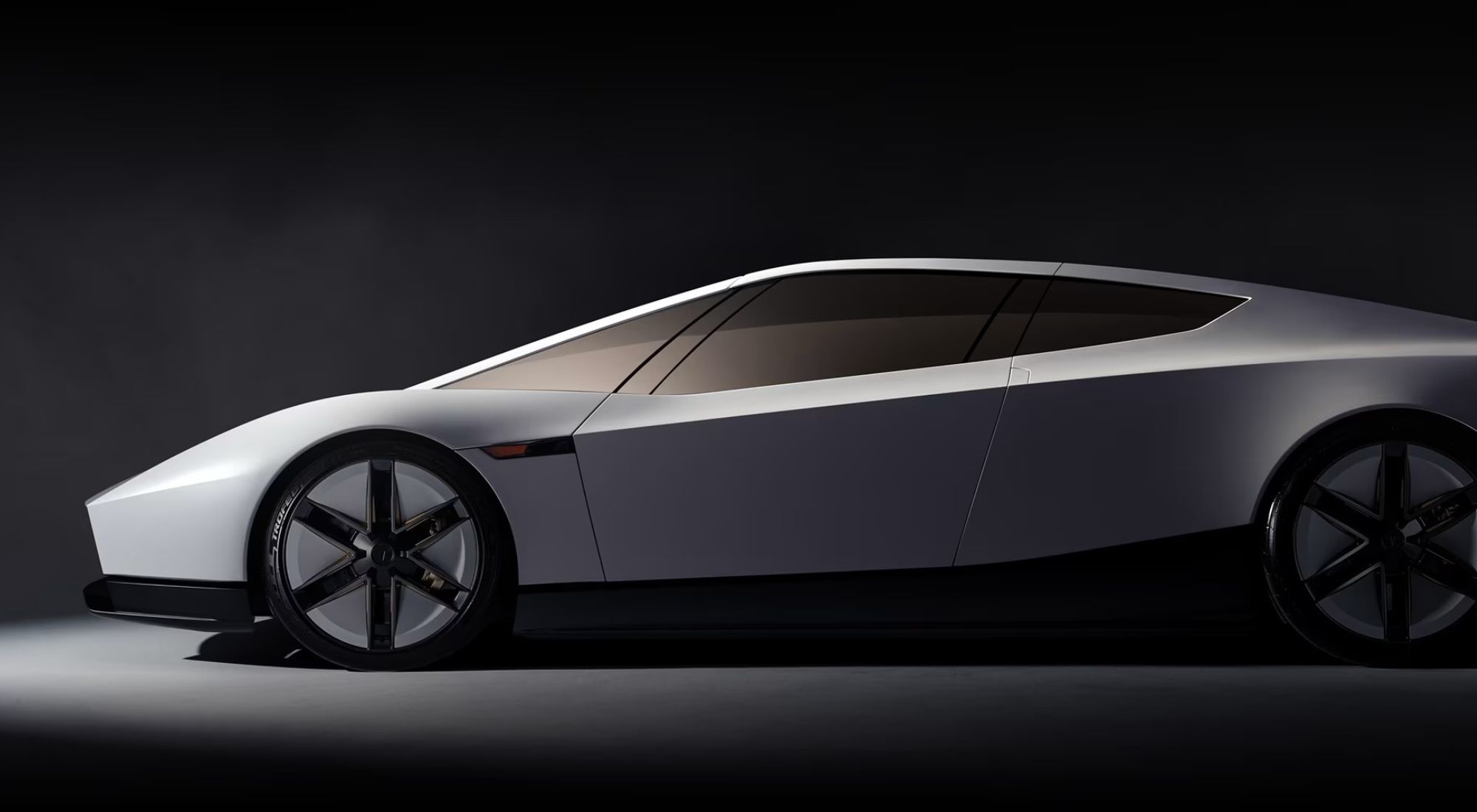
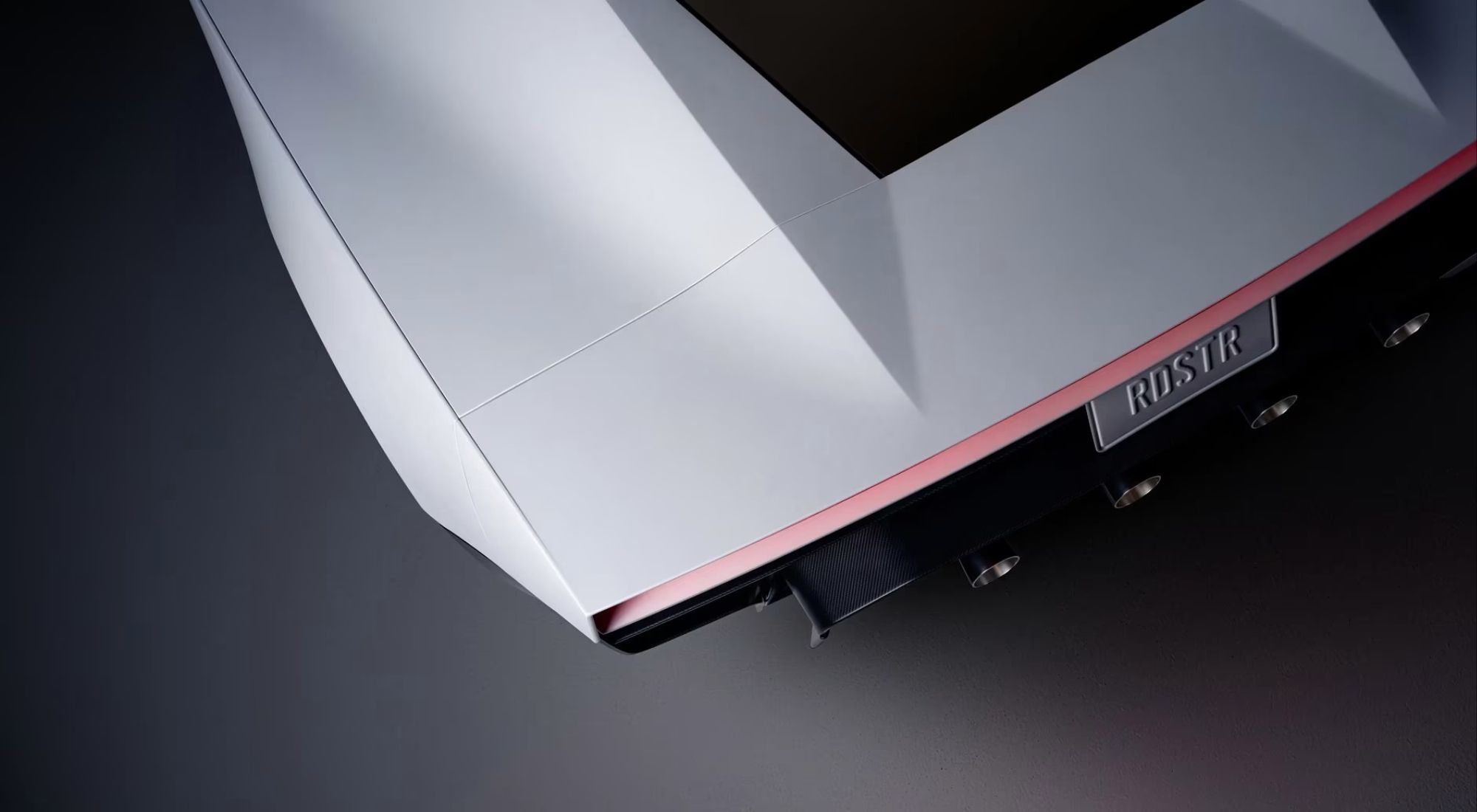
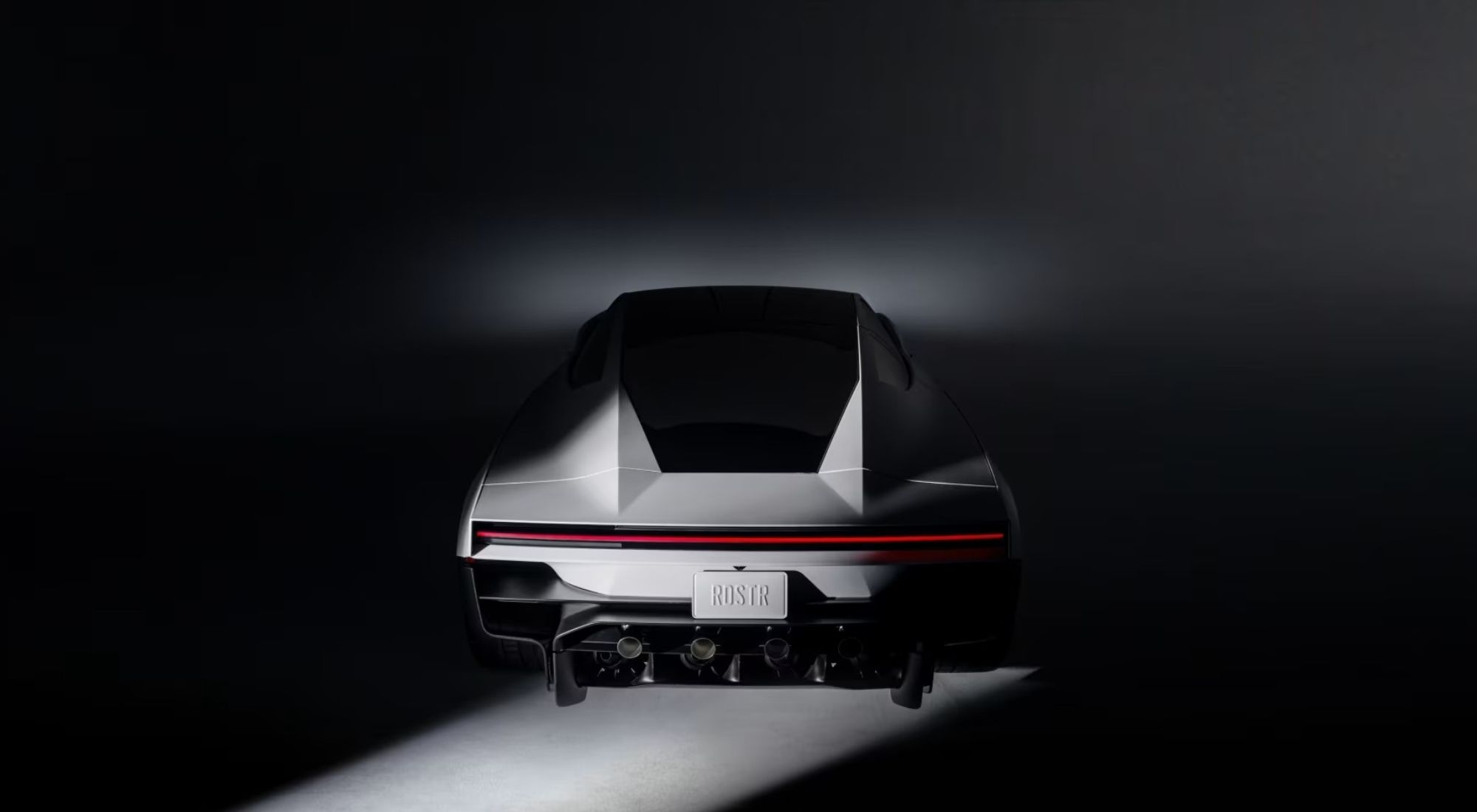
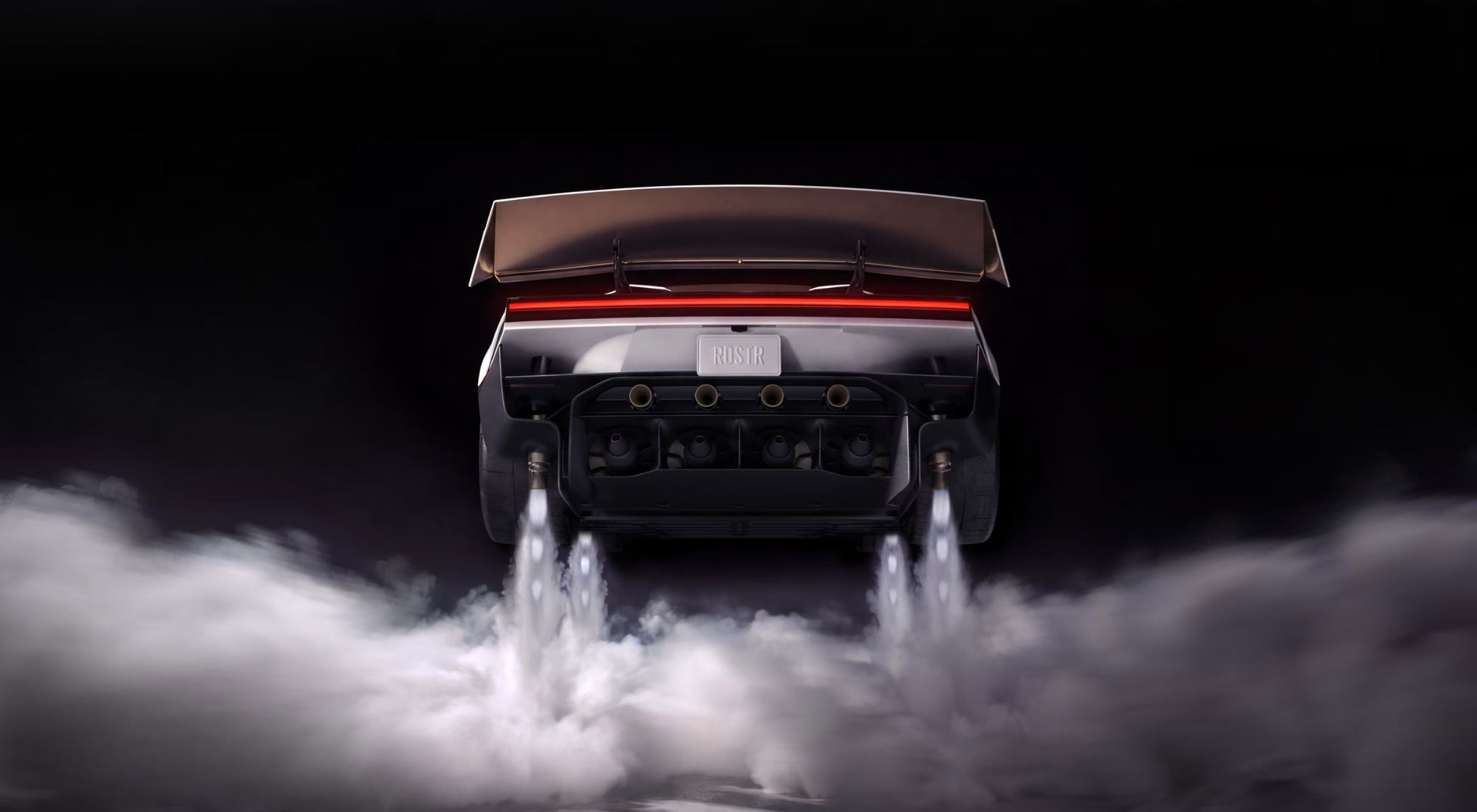
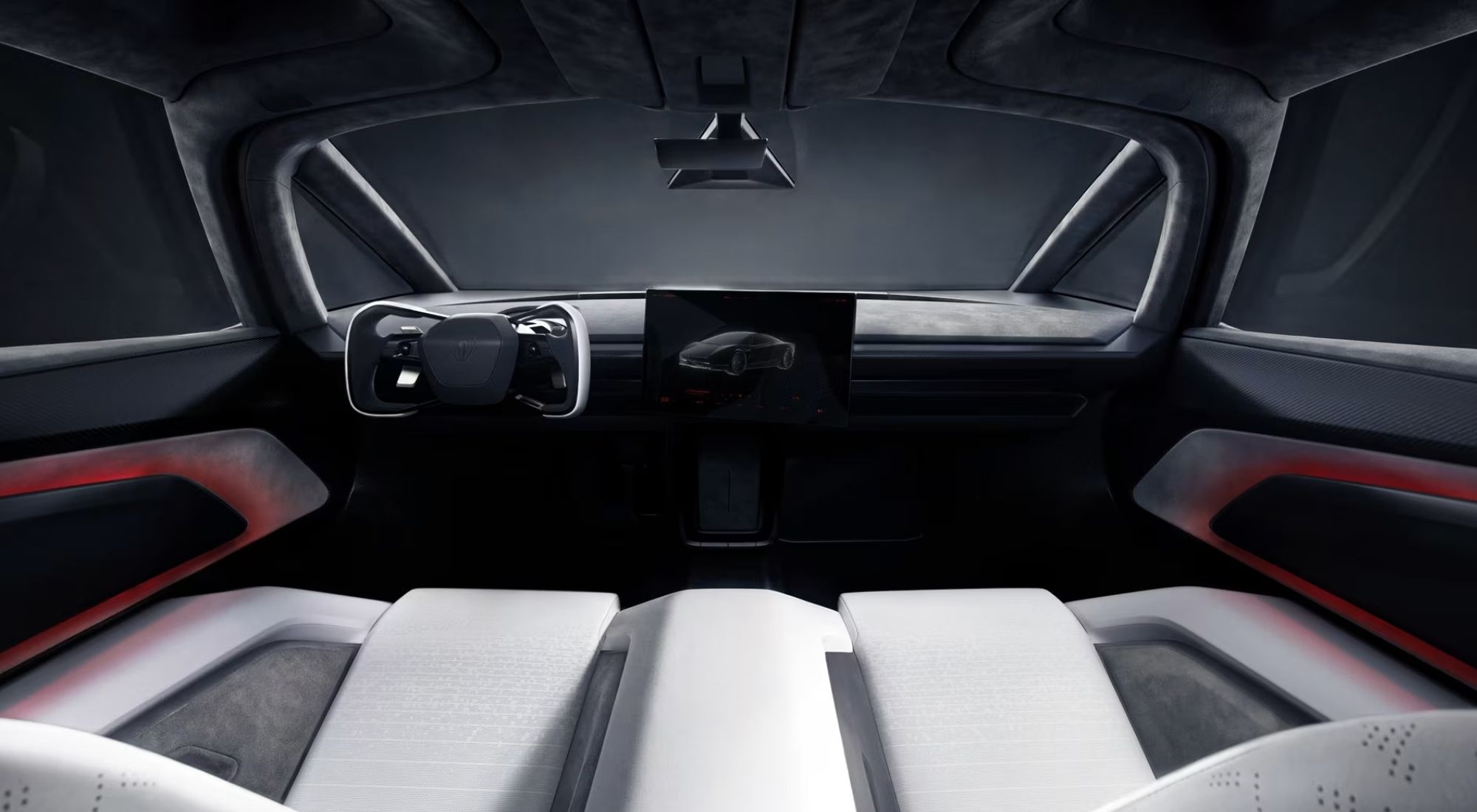
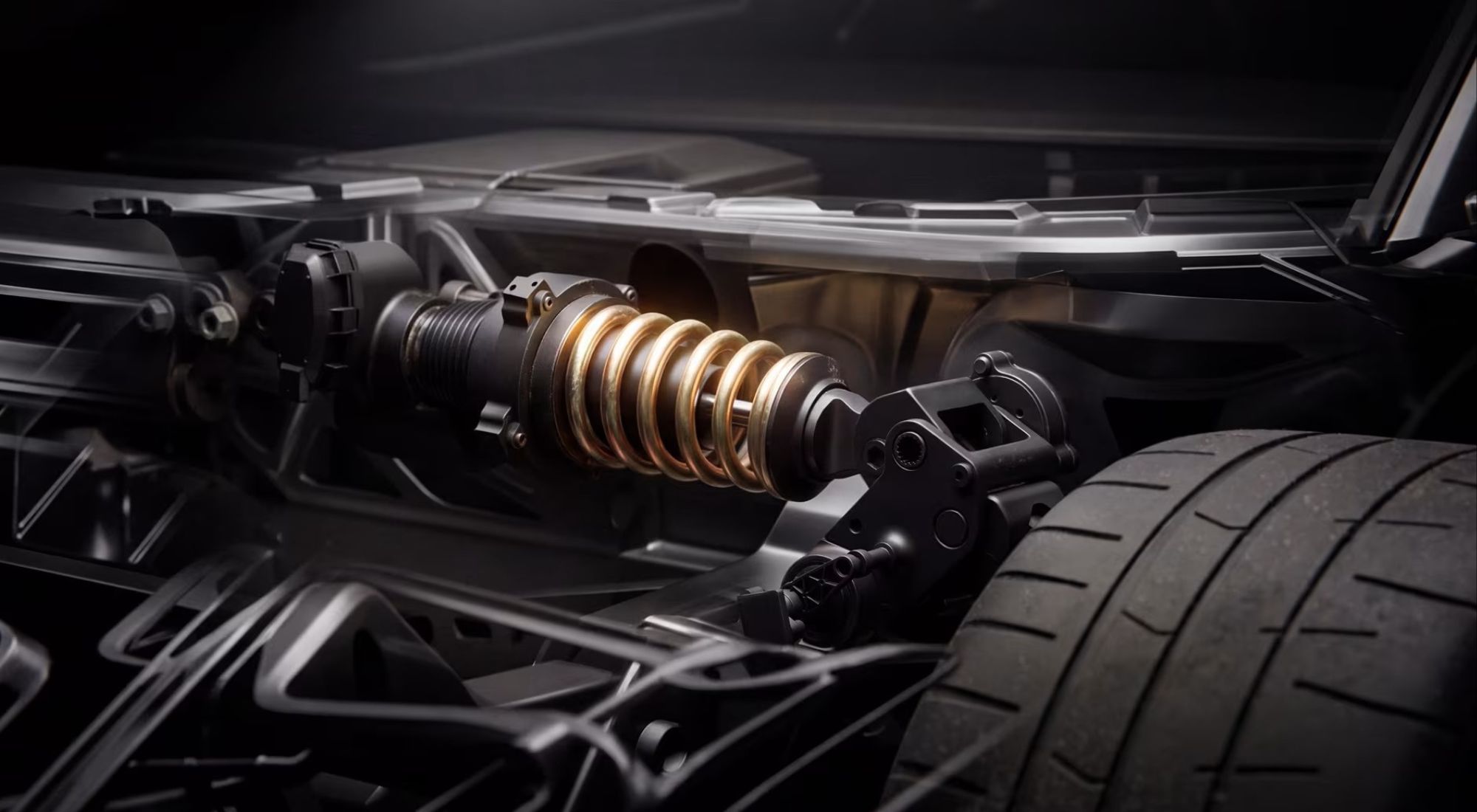
For a car that has waited this long, a firm date and a working demo are a major step forward.
Why it Matters Beyond the Spectacle
It would be easy to call the Roadster a billionaire’s showpiece. It is also a glimpse of what comes next.
It rewrites the performance rulebook. For as long as cars have existed, tyre grip has set the limit. Adding thrust, the way a rocket does, is a completely different way to solve the problem. Today it appears in a halo car, but halo cars have a long record of showing the way for the cars that follow.
It shows what happens when industries collaborate. Tesla’s battery and manufacturing expertise has met SpaceX’s propulsion know-how. Musk called the result what happens when the world’s best car company and best rocket company work together. Expect other manufacturers to take notice.
It energises the flying-car race. A growing field of eVTOL (electric vertical take-off and landing) aircraft is already testing air taxis around the world. A high-profile unveiling like this brings fresh attention, talent and investment to the whole sector, and that benefits everyone who dreams of cleaner, faster, more flexible travel.
What it Could Mean for Kenya
A $250,000 reservation for a car with no confirmed price is far beyond what most Kenyan buyers will consider, and the Rocket trim is not road-approved anywhere. So the Roadster is unlikely to be on Nairobi’s streets any time soon.
But its arrival raises questions our readers should be asking:
- Regulation: How would Kenyan authorities treat a vehicle with thrusters, even a road-legal version with them disabled? Regulators worldwide have yet to answer this.
- Infrastructure: The Roadster is a long-range electric car claiming more than 300 miles. Whether Kenya’s charging network can support such vehicles is a question for the whole EV market, not just Tesla.
- Availability: Whether and how Tesla would serve buyers in East Africa is an open question.
- Air mobility: If eVTOLs and drone-style transport mature, what role could they play in congested cities and hard-to-reach regions?
The future of mobility is being written right now, and Kenya has every reason to follow it closely and take part.
CN Verdict
Proven: A thruster-equipped Tesla can launch, flip and land under control, at least on a purpose-built ramp and without a driver.
Promised: 0-60 mph in under a second, 230+ mph, 300+ miles of range and production in 2028.
Unknown: The price, real-world road legality, how the thrusters would work for ordinary owners, whether the production car will match the prototype, and whether anything here amounts to practical flight.
Tesla says flying cars are real, and after October’s demo, it is hard not to feel that the future just got a lot closer. Whether the Roadster ends up in your garage, or simply inspires the machines that do, it has already done something rare: it made the world look up.
Specifications, pricing and timelines are Tesla’s claims as of 26 October 2026 and may change before production.
Join the Conversation
💬 Do you think flying cars will become a reality in the near future? If so, what daring stunts would you perform with yours? Share your ideas in the comments below, join the conversation on the CarTalk KE Forum, and follow CarNews KE for the latest updates from the EV & Future Mobility scene.




No Comment! Be the first one.