









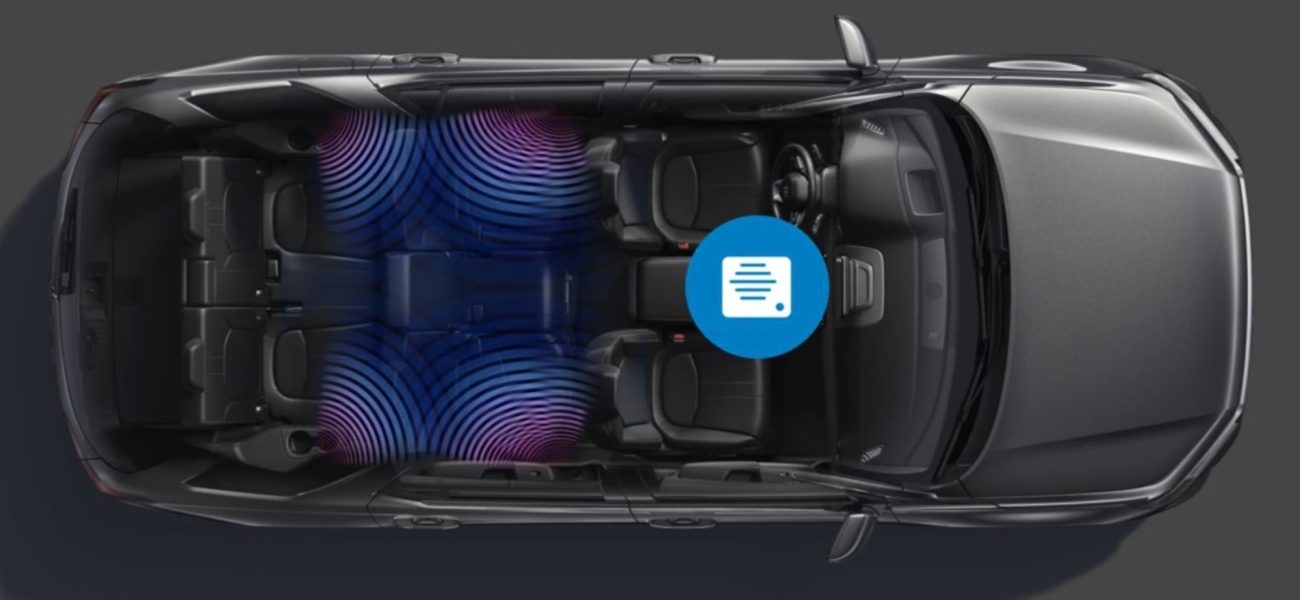
Car Intercom Systems: How Some Cars Let Drivers Talk to Rear Passengers Through the Speakers
Car intercom systems make it easier for drivers to communicate with passengers in the rear, especially children and families travelling in larger vehicles.

CN Quick Facts
- An in-car communication system that uses a microphone and the vehicle’s speakers to carry a front occupant’s voice to people seated further back.
- A microphone captures the voice, the audio system processes the signal, and selected speakers play it in the rear of the cabin.
- It is needed by parents with babies and young children, families in three-row vehicles, and anyone whose rear passengers wear headphones or watch a screen. Camera-equipped versions add a live view of the rear seats.
- One can be created from a simple baby mirror or camera monitor to a properly integrated audio setup. The right option depends on your vehicle and head unit.
- Imported vehicles often arrive with different infotainment equipment depending on their original market, so the feature could already be in the car you’re considering.
Large vehicle cabins have a simple problem: the farther away your passengers sit, the harder it is to talk to them. Now add a baby in a rear-facing seat, a toddler who has just dropped their snack, or a child in the third row with headphones on. The problem stops being an inconvenience and becomes something a driver has to manage while keeping their eyes on the road.
What's in this Article
- What is a Car Intercom System?
- When Does a Car Intercom Actually Matter?
- How Does the Technology Work?
- Which Car Manufacturers Offer This Feature?
- Does the System Work Both Ways?
- Can You Install One If Your Car Doesn’t Have It?
- Which Option Should You Choose?
- What Does This Mean for Kenyan Motorists?
- Is it Useful on Kenyan Roads?
- Where is Car Audio Heading?
- Frequently Asked Questions
- Conclusion
Some manufacturers have tackled this in an unexpectedly simple way: they use the car’s own audio system to carry the driver’s voice to the rear. Some add a camera so the front occupants can see the rear seats too.
Honda, Toyota, Hyundai, and Kia have all offered versions of the idea, some for many years. It’s also a good example of automotive technology that isn’t designed to make a car faster or more luxurious. It simply makes it easier and calmer to live with.
What is a Car Intercom System?
A car intercom is essentially a public-address system built into the vehicle. A microphone picks up the voice of someone in the front. The audio system processes that signal and sends it through speakers positioned to make the voice clear in the rear.
Despite the name, it isn’t necessarily two-way. In most manufacturer implementations, the goal is to help the driver be heard. Rear passengers simply answer in their normal voices.
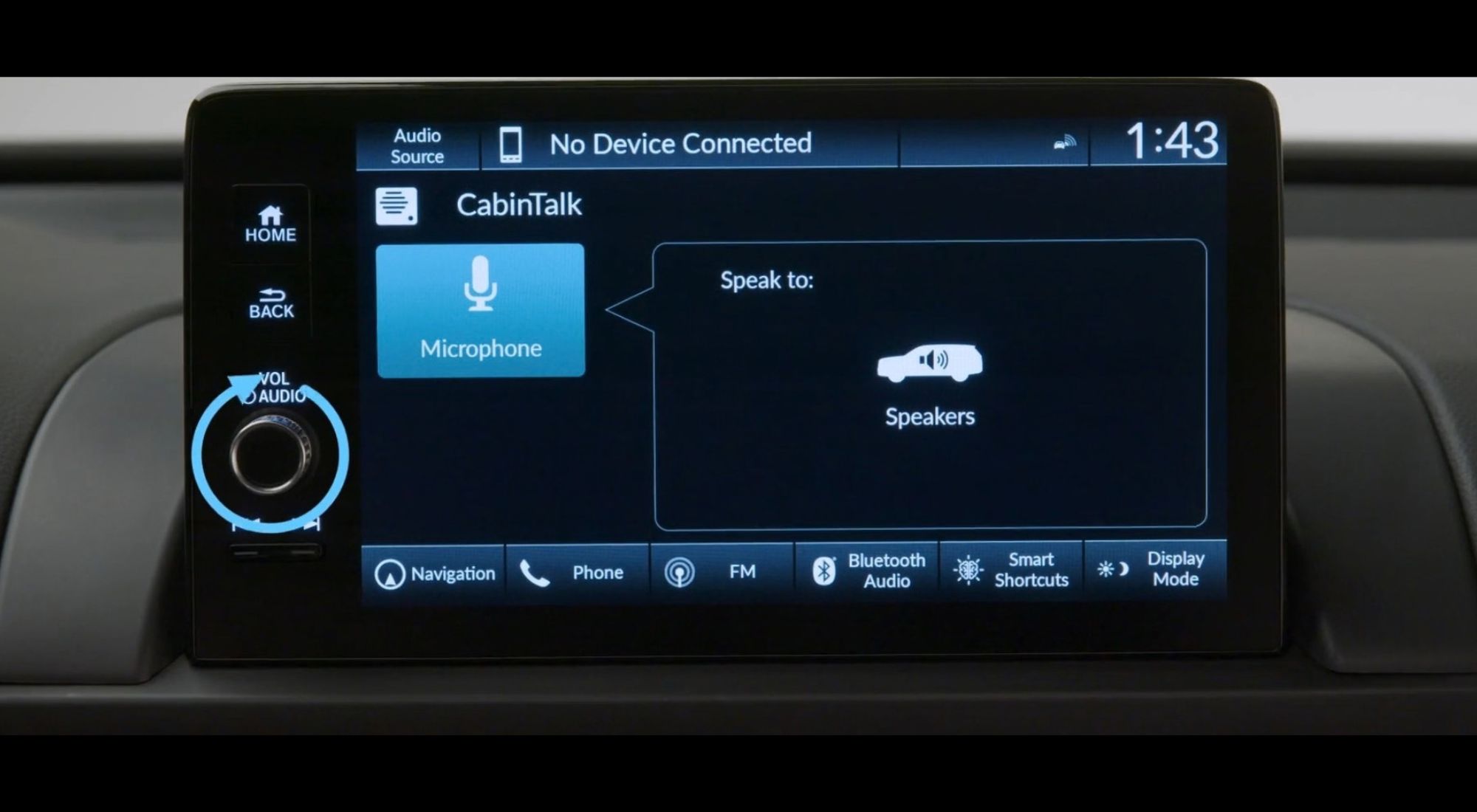
Toyota’s Driver Easy Speak carries the driver’s voice through the rear speakers of the Sienna, and Toyota describes it as a built-in PA system. Kia calls its version Passenger Talk and describes it as a cabin-intercom function on equipped Carnival models. Honda’s version, on the Odyssey, is CabinTalk.
The names differ, but the idea is the same: use the audio hardware already in the car to solve a communication problem.
When Does a Car Intercom Actually Matter?
For many drivers it’s a nice-to-have. In some situations it’s much more than that.
Parents With Babies and Infants
This is where the feature earns its place. A baby in a rear-facing seat is behind you and out of sight, and you can’t turn around to check on them at speed.
An intercom helps in two ways:
- Your voice reaches them. A calm, familiar voice from the front can soothe a fussy baby without you reaching back or pulling over immediately.
- You can respond sooner. Hearing and being heard makes it easier to judge whether a cry means “I’m bored” or “I need you to stop the car.”
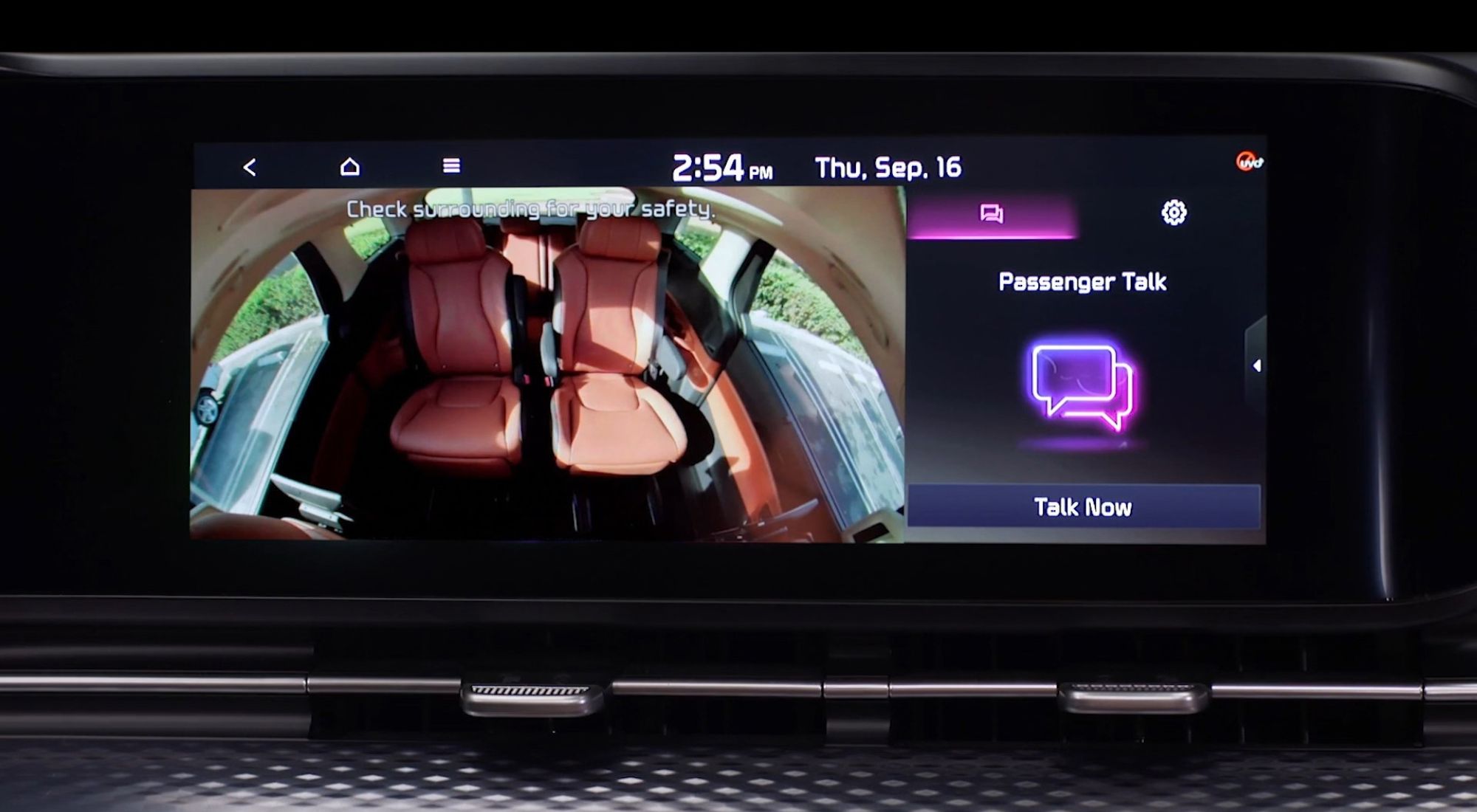
Camera-equipped systems go further. Kia pairs Passenger Talk with Passenger View, an in-cabin camera that lets front occupants see the rear seats on the infotainment screen. Honda’s Odyssey offers a similar camera view, which Honda calls CabinWatch. For a parent, a quick glance at the screen can answer “Are they asleep? Is the blanket off? Are they okay?” without twisting around.
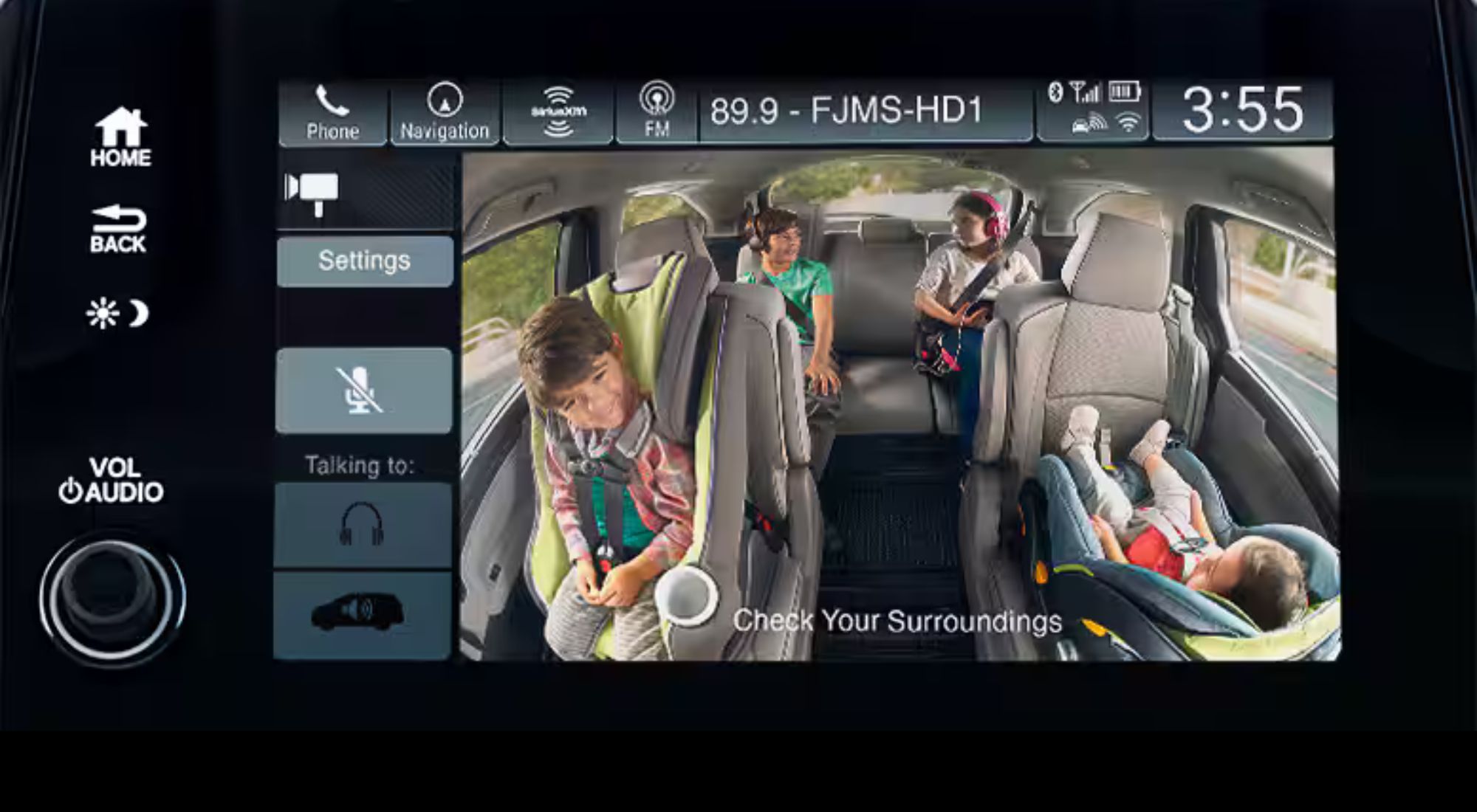
One caution: a camera makes checking on your baby safer than turning around, but it doesn’t replace stopping when something is wrong, and it never replaces supervision. Never leave a child alone in a parked car, camera or no camera.
Families In Three-row Vehicles
With two rows of seats between the driver and the last row, ordinary conversation gets lost in road noise, air conditioning and music. An intercom means you don’t have to raise your voice, and children in the back are less likely to miss instructions such as “seat belts on” or “we’re stopping in five minutes”.
Children With Headphones or Rear Entertainment
A child watching a screen with headphones on may not hear you at all. Honda says CabinTalk can also reach passengers through the rear entertainment headphones on equipped Odyssey versions, which solves exactly that problem.
Long Trips and School Runs
On a long journey, small annoyances stack up: repeated shouting, half-heard replies, and arguments over what someone said. Being able to speak normally and be heard lowers the stress for everyone in the car.
Elderly or Less Mobile Passengers
Passengers who are hard of hearing, or who sit far back to make getting in easier, can be difficult to talk to over cabin noise. A voice projected through nearby speakers can help.
How Does the Technology Work?
Manufacturers don’t need a separate communication system, because most modern cars already have the parts:
- A microphone for hands-free calling
- Multiple cabin speakers
- An amplifier
- An infotainment computer
- Digital signal processing
- Software that can control individual audio channels
Honda’s CabinTalk is a good example. On equipped Odyssey models, the HandsFreeLink microphone captures the speaker’s voice, and the audio-system speakers play it to rear passengers. Honda says other audio is muted while CabinTalk is active and resumes afterwards.
Kia’s Carnival takes a similar approach. Its documentation identifies Passenger Talk as a cabin-intercom function, and the feature guide places the control on the overhead console.
Hyundai’s Palisade has offered Rear Passenger Talk. According to Hyundai’s Indonesian operation, a microphone near the driver captures the voice and routes it to the third-row speakers. Music and radio are paused while it’s in use, which reduces interference and feedback.
The feature may look like a clever piece of infotainment software, but it relies on microphone hardware, amplification, speaker placement and software control working together.
Which Car Manufacturers Offer This Feature?
Honda: CabinTalk
The Odyssey is one of the best-documented examples. Honda describes CabinTalk as an in-car PA system that lets front-row occupants speak to rear passengers through the audio speakers. On versions with the rear entertainment system, it can also reach passengers through the rear headphones.
The feature has appeared across many model years. Honda’s 2018, 2020, 2022, 2024, 2025 and 2026 Odyssey documentation all describe a version of it, so this isn’t a new idea, even if many motorists have never come across it.
Toyota: Driver Easy Speak
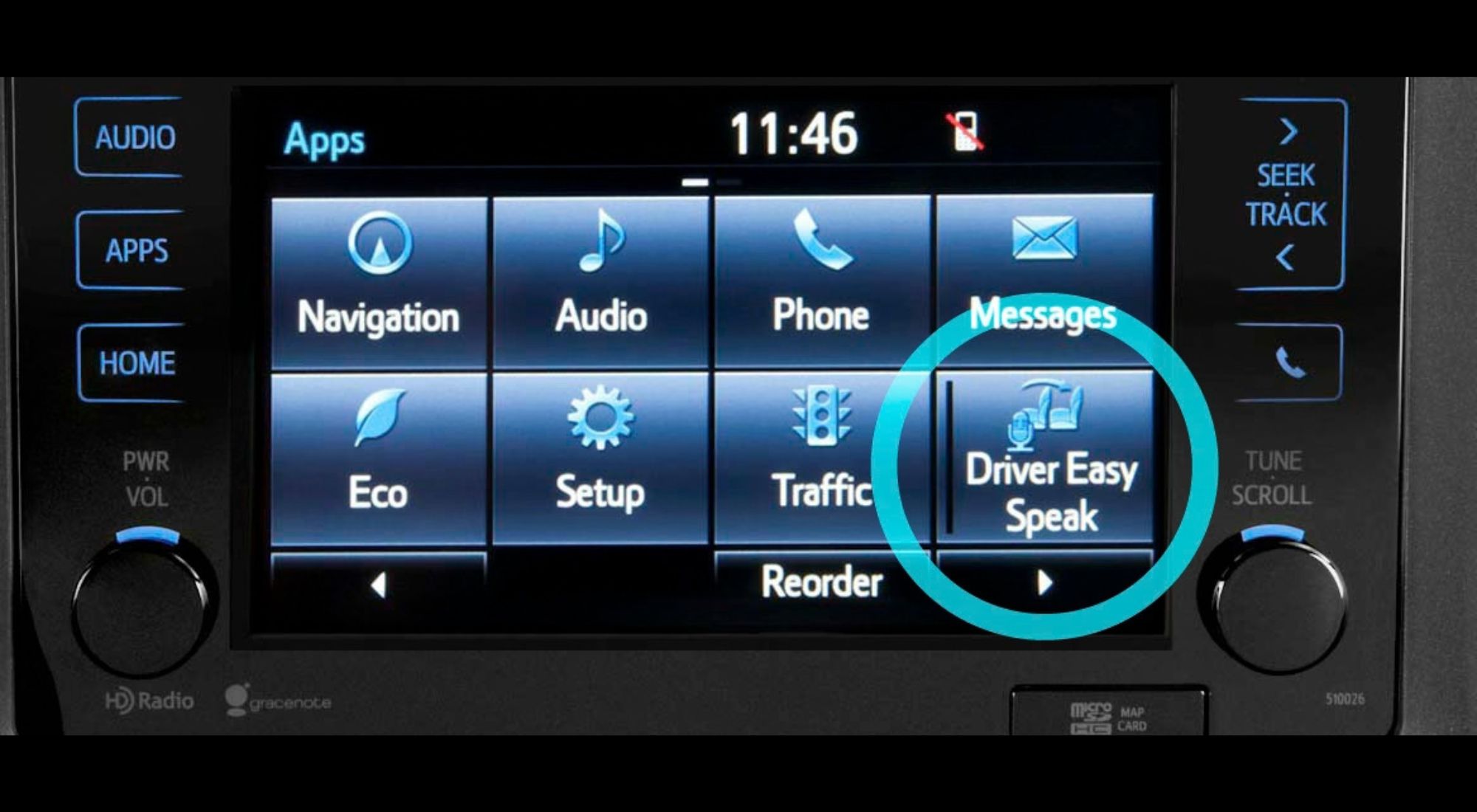
Toyota describes Driver Easy Speak as a built-in PA system that carries the driver’s voice through the Sienna’s rear speakers. It debuted on the fourth-generation Sienna and has continued on later models. The name says it all: the driver can talk to passengers without raising their voice.
Hyundai: Rear Passenger Talk
The Palisade’s system uses a microphone near the driver and sends the voice to the speakers serving the rear. Hyundai positions it as an answer to the communication challenges of a large cabin.
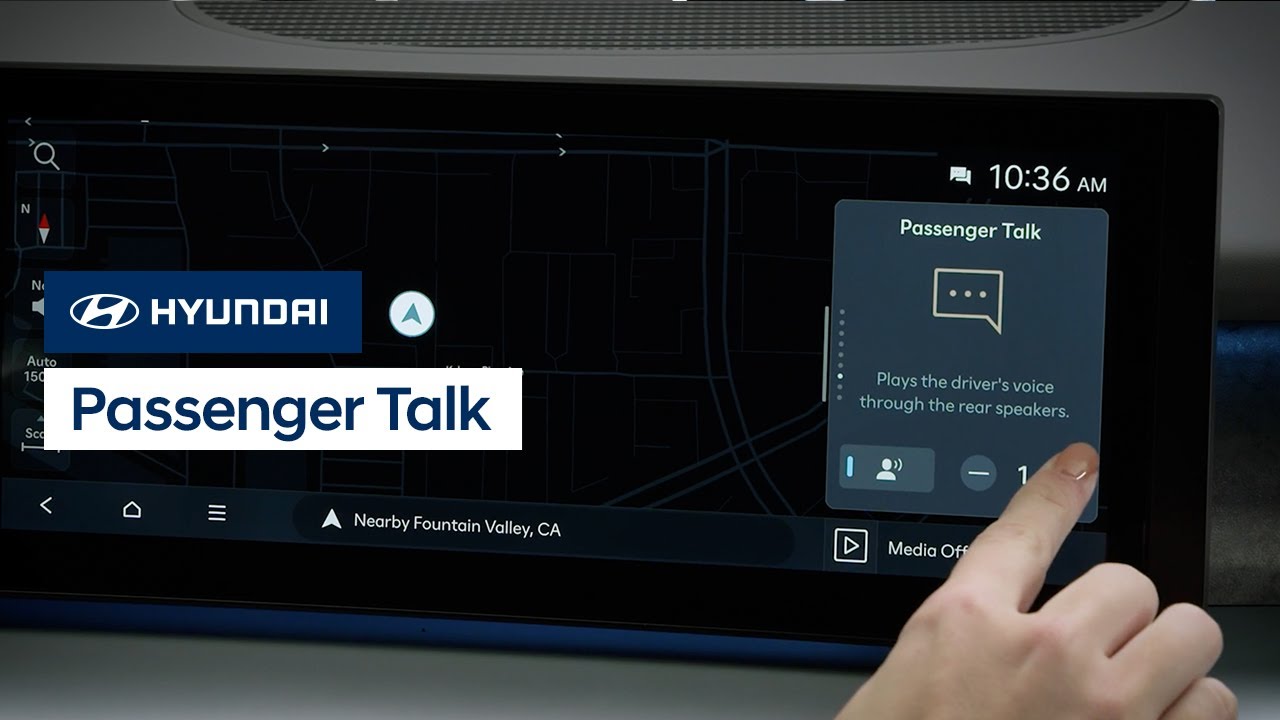
Kia: Passenger Talk
Kia’s Carnival brings the concept to the MPV segment. Together with Passenger View, it answers both halves of the question a parent is asking: Can I see the people in the back? Can they hear me?
Does the System Work Both Ways?
Often it doesn’t. A conventional intercom implies microphones and speakers at both ends, but many automotive systems are one-way, front to rear. Kia’s Passenger Talk, for example, lets front occupants reach the rear through the audio system, while rear passengers aren’t necessarily picked up and played back.
That makes these features closer to a small in-car PA system than a true two-way intercom, which is worth remembering when comparing equipment lists. For a parent, it also means the camera is what lets you see how your child is, while the intercom lets you speak to them.
Can You Install One If Your Car Doesn’t Have It?
Yes, in most cases you can get some or all of the benefit, though a factory-quality result depends on the car. Here are the realistic options, from simplest to most involved.
1. A baby car mirror (the simplest fix)
A shatter-resistant mirror attached to the rear headrest lets you see a rear-facing baby in your rearview mirror. It has no wiring or electronics and is inexpensive. It won’t carry your voice, but it solves the “can I see them?” question at almost no cost.
2. A dedicated baby car camera or monitor
Several products pair a small camera on the rear seat or headrest with a screen or monitor near the driver, often with night vision. Some are designed specifically as baby car monitors. This gives you the visual check that factory Passenger View-type systems provide.
Practical points:
- Mount the screen where it can be glanced at, not where it blocks your view of the road
- Keep cables clear of airbags, seat belts and child-seat anchors
- Check the rules on screens visible to the driver before you install, as they can vary by jurisdiction
3. A standalone two-way intercom or monitor
Portable two-way audio devices, including baby-monitor-style units with a parent unit near the driver, can carry your voice to the rear and let you hear the child. They’re independent of the car’s electronics, so they work in almost any vehicle and are easy to move between cars.
4. Integrating with the car’s audio system
This is the closest match to a factory intercom, but also the most involved. A proper installation typically requires:
- A microphone in a sensible position near the driver
- A head unit, amplifier, or Digital Signal Processor (DSP) that can route the microphone signal to the rear speakers
- Muting or ducking of music while someone is speaking
- Careful gain settings to prevent feedback and squealing
- Wiring that doesn’t interfere with factory electronics
Not every head unit supports this, so check what your existing unit and amplifier can do before you buy anything. On newer vehicles, replacing the factory infotainment unit can also affect steering-wheel controls, cameras and vehicle settings.
Which Option Should You Choose?
- Tight budget, baby in a rear-facing seat: a baby mirror, plus a simple camera if you want more.
- Want to talk and see without touching the car’s wiring: a standalone monitor or two-way unit.
- Want a clean, built-in result: a qualified car-audio installer who can assess your head unit, speakers and wiring first.
Whichever route you take, use a reputable installer for anything involving the car’s wiring, and remember that no gadget replaces attentive driving. If your baby needs you, find a safe place to stop.
What Does This Mean for Kenyan Motorists?
Kenya’s used-import market means two cars with the same model name can have very different infotainment equipment, depending on where and how they were originally sold. The spec sheet may not tell the whole story.
Test the features. Before buying, sit in the driver’s seat and explore the menus. Check for:
- Rear-seat communication
- Multiple audio zones
- Rear entertainment
- Passenger-view or rear-seat cameras
- Voice recognition
- DSP or sound-field settings
- Bluetooth hands-free calling
- Factory microphones
- Rear speakers
A large touchscreen doesn’t guarantee sophisticated audio, and a dated screen doesn’t mean a car has nothing interesting. The best features can be buried in the menus.
Is it Useful on Kenyan Roads?
It can be, especially if you regularly carry several passengers or young children, where road, tyre and cabin noise can make conversation difficult. The system doesn’t reduce that noise. It just makes the driver’s voice easier to hear over it.
It’s best seen as a convenience and communication feature. It may spare the driver from turning around or shouting, but it doesn’t replace attentive driving, and infotainment controls should be left alone while the vehicle is moving.
Where is Car Audio Heading?
Cabin voice projection is one part of a wider shift. Digital signal processing already lets premium systems shape where and how sound is heard, and researchers are studying headrest-mounted speakers that create more controlled sound around each occupant.
The direction is clear: speakers are becoming individually controllable parts of the cabin rather than just the left and right channels of a stereo. The question is moving from “How many speakers does the car have?” to “What can the car do with them?”
Frequently Asked Questions
A car intercom system uses a vehicle’s microphone and speakers to make a front occupant’s voice easier for rear passengers to hear. Brand names include Honda CabinTalk, Toyota Driver Easy Speak, Hyundai Rear Passenger Talk and Kia Passenger Talk.
Passenger Talk is Kia’s name for its cabin-intercom function, available on equipped Carnival models. It uses the vehicle’s microphone and audio system to carry the front occupants’ voices to the rear
Documented examples include the Honda Odyssey (CabinTalk), Toyota Sienna (Driver Easy Speak), Hyundai Palisade (Rear Passenger Talk) and Kia Carnival (Passenger Talk). Availability depends on model year, market and trim.
Yes. It lets you speak to a baby or young child without turning around, and camera-equipped systems such as Kia’s Passenger View let you see how they are. Neither replaces stopping safely if your child needs attention.
Yes. It lets you speak to a baby or young child without turning around, and camera-equipped systems such as Kia’s Passenger View let you see how they are. Neither replaces stopping safely if your child needs attention.
Some cars have a built-in rear-seat camera view. If yours doesn’t, a baby car mirror or an aftermarket baby car camera and monitor can do the job. Position any screen so it doesn’t obstruct your view of the road.
Yes, in several forms, from standalone two-way monitors to properly integrated audio setups. A fully integrated system depends on the vehicle’s audio architecture, because the microphone signal must be processed and routed to the right speakers without feedback.
It’s primarily a convenience and communication feature. It may reduce the need to turn around or shout at rear passengers, but it isn’t a substitute for attentive driving or for supervising children.
CN Key Takeaways
✔ Car intercom systems use existing audio hardware to carry the driver’s voice to rear passengers.
✔ Honda, Toyota, Hyundai and Kia have documented versions, sold as CabinTalk, Driver Easy Speak, Rear Passenger Talk and Passenger Talk, respectively.
✔ They matter most for parents of babies and young children, and camera systems like Passenger View add a visual check on the rear seat.
✔ Most are one-way, closer to a small PA system than a true intercom.
✔ They also help in large cabins: MPVs, minivans and three-row SUVs, and with children wearing headphones.
✔ You can add one if your car doesn’t have it, from a baby mirror or camera monitor to a professionally integrated audio setup.
✔ Kenyan buyers of imports should test the infotainment menus, because equipment varies by original market and trim.
✔ No gadget replaces attentive driving. If your baby needs you, stop somewhere safe.
Conclusion
A microphone in a car might look like a small piece of equipment, but for a parent with a baby in the back, it can be the difference between guessing and knowing. Speakers are no longer just for music. They’re being used to communicate, to reassure and to keep everyone in the car connected.
For motorists, the next useful car feature may not be a bigger subwoofer or a higher speaker count. It may be something much simpler: Press a button, speak normally, and let the car do the shouting.
For Kenyan buyers of imported and locally available vehicles, it’s a reminder that some of the most useful technology is hidden in the menus, and that if your car doesn’t have it, there’s often a way to add it.








No Comment! Be the first one.