









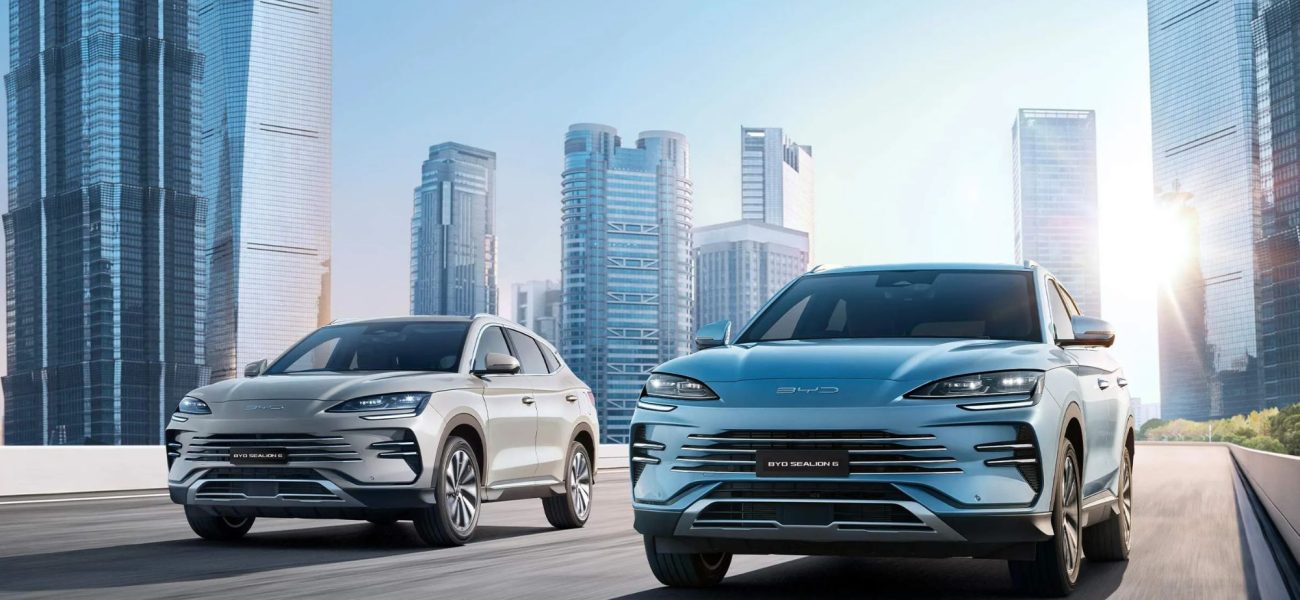
China Overtakes Japan as World’s Top Vehicle Exporter
China exported over 5 million vehicles in the first half of 2026, solidifying its status as the largest vehicle exporter and increasing the presence of Chinese brands in markets like Kenya.

CN Quick Facts
- China exported 5.096 million vehicles in H1 2026, up 65.3% year-on-year
- June 2026 marked the first month Chinese vehicle exports surpassed 1 million units, up 75% year-on-year
- New energy vehicles (NEVs) led the surge, with H1 exports of 2.355 million units, more than double the prior year
- Chery, BYD, and Geely have all broken into the global top 10 automaker groups by market share
- African markets, including Kenya, are among the fastest-growing destinations for Chinese vehicle exports
China Overtakes Japan as World’s Top Vehicle Exporter: What It Means for Kenyan Buyers
Chinese carmakers have rapidly transitioned from having a minor presence to becoming a major force in global vehicle exports in just a few years. Kenya is experiencing this shift firsthand, from Jetour’s expanding lineup of SUVs to BYD’s growing network of local dealers.
What's in this Article
How big is China’s export boom?
China shipped 5.096 million vehicles overseas in the first half of 2026, a 65.3% increase year-on-year. June alone accounted for more than 1 million of those units, the first time Chinese vehicle exports have crossed that monthly threshold, and a 75% jump from June 2025.
New energy vehicles, meaning EVs and hybrids, have driven much of the growth. NEV exports reached 2.355 million units in H1 2026, more than double the same period last year, and now account for a growing share of total shipments. As recently as 2019, Japan was the world’s largest vehicle exporter by a wide margin, shipping 4.8 million units against China’s roughly 700,000. China overtook Japan for good by 2024, and the gap has only widened since.
Which automakers are driving the growth?
Chery, BYD, and Geely have each made their mark by breaking into the global top 10 automaker groups by market share for the first time. BYD’s market share has climbed to 4.8%, while Geely has reached 4.6% globally. Since 2003, Chery has been recognised as China’s largest single exporter and has maintained its lead throughout most of 2026. However, BYD has been narrowing the gap month by month. In June, Chery’s export share dropped to 18.1%, with BYD trailing by just 17,000 units, a decrease from a 23,000-unit gap in May.
Europe remains the single largest destination for Chinese exports, led by Chery, though each major automaker has taken a different regional approach: BYD has built its export base around Central and South America, Geely has spread more evenly across the CIS, Southeast Asia, and Europe, while Chery leans on a dual-core strategy split between Europe and the CIS. BYD has raised its full-year 2026 export target from 1.3 million to 1.5 million vehicles, treating overseas markets as a buffer against intense price competition at home.
How does this affect Kenya specifically?
Impact on brand variety: Chinese brands are steadily building a presence in Kenyan showrooms, following the same expansion pattern already visible in South Africa and other African markets that Chinese automakers have flagged as priority growth regions.
Impact on pricing and competition: A wider range of new, competitively priced Chinese models gives Kenyan buyers more choice against the traditionally dominant used-Japanese-import market, potentially pressuring pricing across the new-vehicle segment over time.
Impact on Kenya’s EV ambitions: With NEVs making up a growing share of China’s export volumes, Kenya’s nascent EV push, including CFAO’s local assembly plans and financing deals like M-KOPA’s recent EV motorcycle facility, could benefit from cheaper Chinese EV components and vehicles entering the regional supply chain.
Key Details
- H1 2026 export volume: 5.096 million vehicles, up 65.3% year-on-year
- June 2026 export volume: Over 1 million units, first time crossing that threshold; up 75% year-on-year
- NEV export volume (H1 2026): 2.355 million units, more than double H1 2025
- Leading exporters: Chery (China’s largest exporter since 2003), BYD, Geely, SAIC
- Top global market share: BYD 4.8%, Geely 4.6% (global automaker group rankings)
- BYD’s revised 2026 export target: Raised from 1.3 million to 1.5 million vehicles
- Key export regions: Europe (largest overall), Central & South America, Southeast Asia, CIS, with Africa and the Middle East emerging as secondary growth markets
Background
China’s rise as an export powerhouse has been rapid by industry standards. In 2019, Japan exported roughly 4.8 million vehicles against China’s 700,000. By 2024, China had already overtaken Japan to become the world’s largest exporter, and growth has accelerated further through 2025 and 2026, driven heavily by NEV production capacity and aggressive pricing in overseas markets. That growth has come even as tariffs reshape access to some of China’s key markets, including parts of Europe, Mexico, and the Middle East, pushing automakers to diversify their export destinations rather than concentrate on any single region.
CN Expert Analysis
The scale of this shift is easy to understate: China went from a minor exporter to the global leader in roughly five years, and did it largely on the back of NEV production capacity that didn’t exist at the same scale a decade ago. For markets like Kenya, the practical effect isn’t just “more brands to choose from”; it’s a structural change in where new, affordable vehicles come from, at a moment when Kenya’s own EV and local-assembly ambitions are still taking shape.
The open question is how sustainable this growth rate is. Tariff responses in Europe and elsewhere suggest resistance is building in some of China’s largest markets, which is likely part of why automakers like BYD are deliberately diversifying toward Latin America, Southeast Asia, and Africa rather than doubling down on any single region. Kenya, alongside South Africa, looks positioned to keep benefiting from that diversification strategy regardless of how the trade disputes in bigger markets play out.
What’s Next?
Chinese automakers are expected to continue expanding dealer networks and model ranges across African markets through the rest of 2026, with BYD’s raised export target suggesting the growth trend has further to run. CarNews KE will continue tracking new Chinese brand launches and dealership expansions in Kenya specifically.
Conclusion
China’s export dominance is no longer an emerging trend; it’s the new baseline for the global auto industry, and Kenyan buyers are already seeing its effects in expanding brand choice and pricing pressure on the new-vehicle market. Whether that translates into meaningfully cheaper vehicles for Kenyan consumers, or simply more competition among existing import channels, will become clearer as Chinese dealer networks mature locally over the next year or two.
Join the Conversation
💬 Have you considered a Chinese-made vehicle over a Japanese used import? Share your view in the CarTalk KE Forum, or follow CarNews KE for more global industry coverage.









No Comment! Be the first one.